
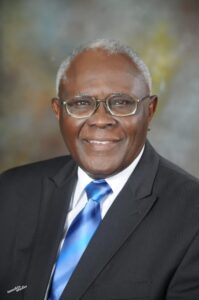
“As I approach my 75th year, I find myself practicing the bittersweet art of remembering. This is a tribute not to my own milestone, but to the enduring blueprint left behind by my mentor, Professor Emeritus Akin Mabogunje—a giant of intellect who gave an entire generation of African scholars the wings to fly.”
— Prof. Isaac Foluso Megbolugbe
Molded By an Icon: Hindsight and the Art of Remembering at 75
By Isaac Foluso Megbolugbe
June 25, 2026
Next year, on February 2, I will cross a monumental threshold and celebrate my 75th birthday. It is a milestone that naturally invites deep reflection, a quiet auditing of the years gone by, and an overwhelming sense of gratitude for the forces that shaped my trajectory. Yet, as I look toward this personal marker, my mind does not anchor on my own achievements. Instead, it drifts irresistibly to the towering figure who built the intellectual and moral scaffolding of my life: my mentor, my professional compass, and my second father, the late Professor Emeritus Akinlawon Ladipo Mabogunje.
I have already written extensively about Mabogunje, but to look back from the vantage point of 75 is to practice the bittersweet art of remembering. I miss him deeply. I miss his warm, welcoming smile, his urgent intellect, and his unhurried elegance. Yet, the grief of his passing is entirely eclipsed by a profound, boundless gratitude. I am the man I am today because I was deliberately, painstakingly molded by an icon.
[ THE MENTORSHIP ECOSYSTEM ]
PROF. AKIN MABOGUNJE PROF. ISAAC MEGBOLUGBE
(The Polymath & Anchor) (The Protégé & Expert)
│ ▲
├─► [1973: Academic Redirection] ────────────────────┤
│ (Convinced to stay in Geography at UI) │
│ │
├─► [1990–2003: Intellectual Vetting] ───────────────┤
│ (Hours of rigorous dialogue in DC) │
│ │
├─► [2003: FMBN & Ministry Orchestration] ───────────┤
│ (Introduced to Tanimu Yakubu / Ministry Offer) │
│ │
└─► [2006–2007: Strategic Platforms] ────────────────┘
(Abuja 75th Milestones & Trans-Atlantic Project)
The Genesis: A Warm Smile at Ibadan (1973)
My journey with Professor Mabogunje began in 1973 as a naive college freshman at the University of Ibadan. I had been accepted to study Geography—a subject I had not applied for and had no intention of pursuing, having gained admission to study Economics at four other universities. I went to the department entirely intent on correcting what I believed was an administrative mistake.
The late Professor Adedotun Phillips, then Acting Head of Economics, directed me to speak with Professor Mabogunje, who presided over the Geography Department. As I stepped into his office, any defensive posture I held evaporated. He radiated an immediate, genuine sense of caring, enveloping me in a smile so warm that I took an instant liking to him.
With masterful persuasion, he assured me that Geography was the “Queen of the Social Sciences” and promised that sticking with it would preserve all my future career options. He was right. After reading his world-acclaimed book, Urbanization in Nigeria, my resistance turned to fascination. I majored in Urban Geography. Under his tutelage, he recognized sparks in me that I could not see in myself, expertly planting the seeds that eventually harmonized my interests in urban studies, economics, and demography.
The Vetting and the Architectural Blueprint (1990–2003)
As the decades progressed and my career took root in the United States, our bond shifted from teacher-student to an intense, intellectually nourishing peerage. In 1990, while I was serving as a Senior Economist for the National Association of Home Builders in Washington, D.C., Professor Mabogunjesought me out during a World Bank visit. We walked the blocks around the bank’s headquarters, indulging in small talk that felt emotionally grounding. I was deeply moved that a global polymath would carve out precious hours just to be with me.
By 2003, our interactions grew highly strategic. During an annual World Bank Conference, he invited me to his hotel room, where we spent over three hours in a rigorous, exhausting dialogue on housing finance. He wanted a concrete blueprint for what a well-functioning housing market in Nigeria should look like.
I detailed a multi-level framework for him:
I explained the mechanics of securitization, the macroeconomic infrastructure required, and the compounding algorithm of gross value-added generation—the multiplier effect that housing construction exerts across an entire urban economy.
Professor Mabogunje listened, cross-examined me with laser precision, and tested my mastery. What I did not realize at the time was that this was a formal vetting. Satisfied with my answers, he joined my family for dinner at our residence in Gaithersburg, Maryland. That beautiful evening, my wife and children completely fell in love with his good-natured aura. From that day forward, my children affectionately referred to him as “that nice grandfather from Nigeria,” and I quietly adopted him as my second father.
The very next day, the true purpose of his vetting was revealed. Flattering me as the foremost expert in Nigerian housing, he attempted to recruit me to serve as the Honorable Minister of the newly established Federal Ministry of Housing and Urban Development under President Olusegun Obasanjo. Though I ultimately declined the offer for deeply personal reasons, the gesture permanently altered my confidence. He had validated my life’s work.
Orchestrating Impact: The Protégé as Catalyst
Professor Mabogunje’s belief in my capacity meant that he constantly utilized me as an extension of his own vision for Nigeria. He began sending people to me to mentor, problems to solve, and massive institutional overhauls to facilitate.
[ STRATEGIC NIGERIAN ALLIANCES ]
┌──────────────────────────┐
│ Prof. Akin Mabogunje │
└────────────┬─────────────┘
│ (Introductions)
▼
┌──────────────────────────┼──────────────────────────┐
│ │ │
▼ ▼ ▼
┌───────────────┐ ┌───────────────┐ ┌───────────────┐
│ Alhaji Tanimu │ │ Dr. Ngozi │ │ Late Hakeem │
│ Yakubu │ │ Okonjo-Iweala │ │ Sanusi │
│ (FMBN / CEO) │ │ (Min. Finance)│ │ (UDBN / ICH) │
└───────┬───────┘ └───────┬───────┘ └───────┬───────┘
│ │ │
▼ ▼ ▼
Roundtable Mod. at Technical Lead for Privatization &
Ginnie Mae (DC) Nat. Economic Team Economic Modeling
The US-Nigeria Housing Initiative (2004)
He introduced me to Alhaji Tanimu Yakubu, then CEO of the Federal Mortgage Bank of Nigeria (FMBN), where Prof served as Chairman, asking me to take Yakubu under my wing. This collaboration culminated in 2004 when the U.S. Treasury Department asked me to moderate a high-level roundtable at the Ginnie Mae Corporate Headquarters in Washington, D.C.
Formed under the White House Initiative on Housing Finance in Africa by Presidents George W. Bush and Olusegun Obasanjo, this historic session was led by Nigeria’s Minister of Finance, Dr. Ngozi Okonjo-Iweala. We focused intensely on capitalizing the mortgage sector by tapping into the massive ecosystem of expatriate diaspora remittances.
The Trans-Atlantic Platform (“Delta Mae”)
When an early, state-engineered mortgage securitization in Nigeria failed to catalyze the local market, Professor Mabogunje didn’t throw up his hands; he challenged me to find a private, market-based solution. In response, Professor Jay Sa-Audu and I drafted a comprehensive universal banking strategy for Unity Bank (where Prof was Chairman), arguing for a flexible business model focused heavily on banking the highly productive 500-kilometer West African coastal mega-region from Accra to Lagos.
Concurrently, Charles Michael Williams and I sat in Professor Mabogunje’s home in Ibadan and presented a bold business plan for the Trans-Atlantic Mortgage Finance Company, nicknamed “Delta Mae.” Styled like a Wall Street finance firm, it was designed to act as a secondary mortgage entity that drew global capital from U.S. markets to drastically lower mortgage rates for everyday Nigerian homebuyers. Prof rigorously vetted the architecture and personally cleared me to pitch it directly to top financial leadership, including Alhaji Falalu Bello and Albert Okumagba of the BGL Group.
Rescuing the Urban Development Bank (2006–2007)
In October 2006, I returned to Abuja for Professor Mabogunje’s 75th birthday celebration as a key speaker at the ‘Emerging Urban Africa Conference’, presenting on Land Management. Ever the maestro of human capital, Prof deliberately seated me next to the Minister of Housing, Dr. Olusegun Mimiko—a brilliant administrative arrangement that sparked a lifelong personal and professional friendship, leading me to later guide Governor Mimiko’s state delegation to Maryland and Johns Hopkins University.
At that same 75th milestone event, Prof pulled me aside to hand me another critical assignment: assisting the late Hakeem Olamide Sanusi. Sanusi’s firm was attempting to acquire and privatize the struggling, politically bogged-down Urban Development Bank of Nigeria (UDBN). Prof recognized that while the bank’s original mandate to mobilize multilateral funds for city infrastructure was vital, its state-run model had failed.
He tasked me with crafting a more coherent intellectual framework for the privatization. I worked side-by-side with Hakeem to resolve intense labor union disputes and construct the complex economic risk-capitalization modeling needed to transition the bank into what is now the Infrastructure Bank Plc.
Hindsight at 75: The Lion and the Lamb
As I look back at these snippets of history, I recognize the profound methodology behind Professor Mabogunje’s mentorship. He was constantly interrogating my capabilities, pushing me past what I assumed were my absolute limits, and demanding that I become the sharpest version of myself. Yet, his brilliance was entirely matched by his humility.
He expertly trained me not just how to think, but how to communicate. I remember vividly when I handed him a highly technical draft policy paper on “Affordable Housing” that I had been asked to prepare for a major political party. Prof took out his pen and aggressively slashed away the academic jargon, leaving a clean, punchy document written in plain language.
“Isaac,” he told me gently, “you must write for policymakers and politicians in their own language before you can work effectively for them as a Policy Adviser.”
It echoed a vital lesson I had received from another mentor: You must enable others to accept you as a lamb before you can be the lion of the intellect that you really are.
Professor Mabogunje lived that balance effortlessly. In his historic two-part autobiography, A Measure of Grace (2011), he documented a lifetime of public service, global academic honors—such as the Vautrin Lud Prize—and institutional triumphs. Yet, he moved among us as a complete gentleman. He never rushed. He structured his mind, his schedule, and his life so cleanly that he had an infinite supply of time and affection for anyone who crossed his path. He made the smallest person in the room feel uniquely important.
[ PROF. MABOGUNJE’S CORE MAXIMS ]
COMPLEXITY TO SIMPLICITY INTELLECTUAL HUMILITY
┌─────────────────────────┐ ┌─────────────────────────┐
│ “Write for policymakers │ │ “Walk as a lamb before │
│ in their own language │ │ you reveal the lion of │
│ to be effective.” │ │ the intellect.” │
└─────────────────────────┘ └─────────────────────────┘
The Enigma: Unbundling the Complexities of Development
Overall, Professor Mabogunje succeeded in offering us a life entirely worthy of emulation. He curated a career that served as a masterclass on how best to unbundle the complexities of development in all its diverse manifestations—be it economic development, spatial expansion, or social evolution. Because he lived a long, exceptionally full life, he allowed us the distinct privilege of witnessing how he uncovered progressive pathways for understanding the macro-development process. He clarified and refined practical insights that remain absolutely vital for unraveling structural obstacles and building strategic policy architecture.
His tremendous amiability endeared him to thousands across the globe, completely disarming the few who approached him with questionable agendas or spurious attitudes. Yet, this giant of intellect and character—a true titan among intellectuals—was also mortal, and in the quiet of reflection, he carried a few structural lamentations for the nation he loved.
[ PROF. MABOGUNJE’S LAMENTATIONS ]
THE INSTITUTIONAL PROBLEM THE TALENT DEFICIT
┌───────────────────────────┐ ┌───────────────────────────┐
│ Housing and Urban sector │ │ The country frequently │
│ diluted as an appendage │ │ failed to secure a world- │
│ to Works or Environment, │ │ class knowledge leader to │
│ denying it independent │ │ permanently manage and │
│ capacity and direction. │ │ defend the Ministry. │
└───────────────────────────┘ └───────────────────────────┘
First was the constant, frustrating dilution of institutional focus regarding his beloved urban and housing sector. It was rarely given the chance to stand completely alone as a leadpublic sector Ministry to drive independent policy and program direction. Instead, over the decades, it was repeatedly treated like anstructural appendage, tacked onto either the Environment or Works sectors where it naturally received diminished attention. Despite everything Professor Mabogunjechampioned, a coherent national effort could not permanently congeal the independence, capacity, and executive authority required for the housing sector to play its rightful role in Nigeria’s macroeconomic development.
Secondly, he found it deeply unfortunate that the country was frequently unable to secure a world-class talent and dedicated knowledge leader in housing and urban issues to consistently steer, lead, and manage that Ministry throughout its administrative history.
Looking Forward from My Own Milestone
Next February, as the calendar marks my own 75th year, I will carry his legacy forward with a heart filled with these bittersweet memories. The physical absence of this giant leaves an undeniable void in African geographical scholarship and an even larger vacancy in my personal life. Prof. Mabogunje is sorely missed—not only by the housing and urban sectors of Nigeria, which formed the nucleus of his earthly work, but by the multitudes of us who had our lives altered by associating with him.
Yet, as I stand at this major milestone, I realize that the massive investments he made in me were investments in the “total me.” Driven by a desire to excel before his eyes, I pushed myself to achieve heights I didn’t think possible, building a deep expertise in global financial architecture and counterparty risk management that anchored my entire academic tenure at Johns Hopkins University.
He gave a whole generation of us the wings to fly higher. As I step into my 75th year, I stand tall on the sturdy foundation he engineered, infinitely proud to have been molded by an icon, and eternally grateful to have called this human treasure my teacher, my mentor, and my beloved friend.
May his gentle, graceful, and historic soul continue to rest in perfect peace.
Isaac Megbolugbe, Director of GIVA Ministries International. He is a recipient of Albert Nelson Marquis Lifetime Achievement Award in business and academia in the United States of America. He is retired professor at Johns Hopkins University and a Fellow of the Royal Institution of Chartered Surveyors. He is resident in the United States of America.
