
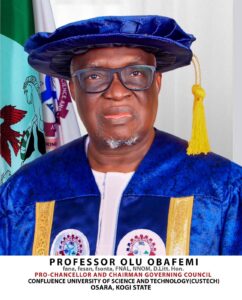
From Fragmentation to Fusion: The Anatomy of a Rebuilt Professional Self
By Isaac Megbolugbe
May 5, 2026
The Crucible of Collaboration
Dear Professor Obafemi:
Working with you has been the primary catalyst for a profound, necessary, and ultimately rewarding reconstruction of my professional and personal identity. My journey, over the past few years, has been a masterclass in endurance, forcing me to confront the limitations of my own professional persona to understand how you move with such profound authority, confidence, and ruthless effectiveness—seemingly without sweat, yet with tremendous charm.
Three years ago, the prospect of this collaboration was not merely intimidating; it was transformative in a way that initially felt destructive. My integrity was crumbling under the weight of the reality of my desire to work with you. I felt inauthentic, a fragmented self trying to match a level of mastery I had not yet internalized. My professional life in the United States has been judged exceptional over more than three decades across academia, industry and philanthropy or not-for-profit organization. Yet, I suddenly encountered a persona that was domineering, self-assured and impervious to other ways of being or practice. I perceived a crack in my professional integrity and my confidence in my leadership and managerial acumen.
The Turning Point: Resisting the Easy Way Out
My first choice, understandably, was to walk away. I parted ways with you, choosing the perceived comfort of my familiar limitations over the uncomfortable, high-stakes pressure of your mentorship. It was, I believed, the only way to save my crumbling integrity.
However, your subsequent appeal to me forced a dramatic pivot. You expressed a genuine desire to work with me, a move that shifted the narrative from “trying to match you” to “evolving with you.” I persuaded myself that a relationship with you might be equitable after all, provided I was willing to do the hard work of internal transformation.
The Rebuilding: Defining the “Unified Self”
I knew I had to recharge my lifetime journey of self-discovery. These past few years have been consequential. Through numerous articles, chats, discussions, and your candid, sometimes bracing feedback, I began to reconstruct my professional identity.
This rebuilt version of myself is not just “better”—it is unified.
My previous struggle was the result of a fractured self-identity—acting one way while feeling another, trying to emulate you while losing myself. The unified self I have become today operates with authenticity. I have reconciled my internal values with my external actions. The “ruthless effectiveness” I once feared in you, I now understand as a disciplined, focused, and unswerving commitment to excellence and purpose.
A New Chapter
I don’t feel the weight of threat to my integrity that I used to experience three years ago. I am grateful for your mentorship, for forcing me to rebuild, and for helping me document my experiences, transforming that initial, overwhelming “weight” into a solid foundation of confidence and competence.
I look forward to our continued collaboration, confident in the integrity, strength, and unity of my new professional self.
Key Takeaways on Transformation
Isaac Megbolugbe, Director of GIVA Ministries International. He is a recipient of Albert Nelson Marquis Lifetime Achievement Award in business and academia in the United States of America. He is retired professor at Johns Hopkins University, Former Vice President at Fannie Mae, Former Practice Leader at PricewaterhouseCoopers, and a Fellow of the Royal Institution of Chartered Surveyors. He is resident in the United States of America.
From Chaos to Character: Paul’s Blueprint for a New Humanity in Crete
Isaac Megbolugbe
May 5, 2026
Introduction
In his Epistle to Titus, the Apostle Paul paints a vivid picture of a culture steeped in deception and indulgence—1st-century Crete—to establish a radical “Cretan Prototype” for the divine architecture of humanity. By transforming a society notorious for being “liars, evil beasts, and lazy gluttons”, Paul demonstrates that the Gospel does not merely save souls; it reengineers social order, personal character, and public conduct.
The Problem: Crete as a Prototype of Fallen Humanity
Paul’s charge to Titus is to “set right what was left undone” on Crete. The Cretan culture was characterized by intense selfishness and dishonesty, summarized by the quote from the Cretan poet Epimenides: “Cretans are always liars, evil beasts, lazy gluttons”.
Liar (Deception): A total disregard for truth in a culture known for forgery and false claims (including claiming the tomb of Zeus).
Evil Beasts (Bestiality): A lack of moral restraint, driven by base, untamed passions.
Lazy Gluttons (Indolence): A lack of industry, emphasizing indulgence over productivity.
This description serves as a prototype of fallen human nature—chaotic, undisciplined, and self-absorbed. The challenge for Titus was to build a functioning, godly church within this volatile environment.
The Blueprint: Divine Architecture of Humanity
Paul does not advocate for isolating Christians from Cretan culture. Instead, he instructs Titus to establish a new structure—a “divine architecture”—that transforms this chaos into order and beauty.
1. Structural Support: Orderly Leadership (Titus 1)
The first step is establishing structural integrity through godly leadership. Elders must be “above reproach,” self-controlled, and holding to sound doctrine. They must possess the ability to “refute those who oppose it”. This orderly structure is designed to directly counteract the Cretan vices of deception and rebelliousness.
2. Interior Design: Transformed Households (Titus 2)
The divine architecture penetrates the private sphere, shaping specific groups within the church into models of virtue:
Older Men/Women: To be temperate, dignified, and sound in faith, acting as mentors.
Younger Women: To be self-controlled and pure, resisting the pressure of the surrounding culture.
Younger Men/Slaves: To be self-controlled and diligent, turning away from indolence and acting as productive members of society.
3. Facade: Counter-Cultural Living (Titus 3)
The most striking aspect of this architecture is its public appearance. Christians on Crete were instructed to be model citizens—peaceable, gentle, and submissive to authority. By engaging with their culture while rejecting its corrupt values, they “show the beauty of the message about our saving God”.
The Agent of Transformation: Grace
This radical transformation is not achieved through human effort but through the appearance of God’s grace.
Regeneration: The washing of regeneration and renewal by the Holy Spirit (Titus 3:5) transforms the internal nature of the individuals.
Training: This grace “trains” believers to reject ungodliness and live sensible, upright, and godly lives in the present age.
Good Works: The ultimate goal is that believers are dedicated to “good works,” showcasing a new form of humanity that is beneficial to the community.
Conclusion: The New Humanity
The epistle closes by showing that the Cretan prototype, once redeemed, becomes a powerful testimony. A culture of lying is replaced by truth; bestial behavior is replaced by godly order; laziness is replaced by good works. The Letter to Titus teaches that the divine architecture of humanity is, at its core, a, community of people who, transformed by grace, “pay no attention to… human commands of those who reject the truth” and live “sound in the faith”.
The Imago Dei Restored: The Biblical Blueprint for a Transformed Humanity
The central narrative of the Bible is not merely one of moral improvement, but of a radical structural restoration. From the opening pages of Genesis to the closing visions of Revelation, the scriptures detail a “Divine Architecture”—a plan to take a humanity fractured by its own nature and rebuild it into a vessel for the Divine.
This transformation is less about fixing what is broken and more about “new creation,” moving from the ruins of the fall to the architecture of a restored humanity.
1. The Foundation: The Fractured Image
To understand restoration, one must understand the original design. The Bible posits that humanity was constructed Imago Dei—in the image of God. This provided the “blueprints” for human dignity, creativity, and relational capacity.
However, the account of the Fall depicts a structural collapse. In biblical terms, “sin” is not just a list of mistakes; it is a systemic corruption that turned the architecture of the human soul inward. This resulted in the “Cretan” condition described by Paul: a humanity that is self-deceiving, driven by base instincts (“beasts”), and spiritually stagnant (“lazy”).
2. The Cornerstone: The Perfect Prototype
The New Testament introduces Jesus Christ as the “Second Adam”—the perfect prototype of what humanity was intended to be. He provides the standard for the restored architecture. In Him, the blueprint is realized:
Integrity instead of Deceit: He is “the Truth.”
Spirituality instead of Animality: He is led by the Spirit, not by appetite.
Service instead of Indolence: He came “not to be served, but to serve.”
Restoration, therefore, is not a solo DIY project; it is the process of being “conformed to the image of His Son.”
3. The Structural Rebuild: Regeneration and Renewal
The “construction” of a restored human happens in two primary phases, as outlined in Paul’s letter to Titus and the broader New Testament:
Internal Demolition (Regeneration): Transformation begins with what the Bible calls “the washing of regeneration.” This is a spiritual clearing of the old, corrupt foundation. It is a “heart of stone” being replaced with a “heart of flesh.”
The Framework of Grace: Grace acts as the “training” agent. It provides the scaffolding for new habits. It teaches the “architectural” disciplines of self-control, uprightness, and godliness.
4. The Interior Design: A Community of Order
A restored human does not exist in isolation. The biblical account insists that this new humanity is built into a “living temple.” The transformation is visible in how the “rooms” of society are rearranged:
Restored Households: Relationships between generations and genders are healed from power struggles to mutual honor.
Restored Purpose: Restored humanity is “zealous for good works.” The energy once spent on self-indulgence is redirected toward building up the community.
5. The Facade: The Public Witness
The “architecture” of a restored person is meant to be seen. The Bible suggests that the ultimate proof of restoration is a life that is “beautiful” to observers. By living peaceably, submissively, and gently in a chaotic world, the transformed human acts as a “light,” showing the world a glimpse of the original design.
Conclusion: The Finished Work
The biblical account of humanity ends not in a return to a garden, but in the arrival of a Great City—the New Jerusalem. This signifies that the restoration of humanity is a journey from a single “prototype” to a completed, global civilization of people fully alive. Transformation is the ongoing process of allowing the Divine Architect to strip away the “evil beast” nature and replace it with the dignity, purpose, and peace of a new creation.
From Code to Character: The Restoration of Integrity in the Digital Age
In the Apostle Paul’s letter to Titus, he addressed a “Cretan” culture defined by deception and self-interest—a world where people lived as “always liars” to gain an advantage. Today, this ancient prototype finds its digital equivalent in the world of cybercrime. Whether it is phishing, social engineering, or exploitation, the underlying architecture is the same: a life built on the “Cretan” foundation of deceit and “lazy gluttony” (the desire for unearned gain).
The biblical process of restoration provides a radical blueprint for transitioning from a life of digital exploitation to a life of structural integrity and righteousness.
1. The Glitch in the System: The Architecture of Deception
A life committed to cybercrime is built on a “Cretan” logic. It views other human beings as vulnerabilities to be patched or exploited rather than as individuals with inherent dignity. In this state, the “human architecture” is skewed:
The Mind: Becomes a tool for sophisticated lying.
The Will: Is driven by “bestial” impulses for quick wealth without labor.
The Conscience: Is “seared,” ignoring the real-world harm caused by digital theft.
Paul’s assessment of Crete was that this lifestyle is ultimately unsustainable and “unprofitable.” Restoration begins by acknowledging that the “code” of self-interest is fundamentally broken.
2. System Override: The Washing of Regeneration
Restoration does not begin by simply “trying to be an honest coder.” In the biblical account, it requires a complete system override—what Paul calls “the washing of regeneration.”
For someone entrenched in a life of digital deception, this is the “hard reset.” It involves a total shift in identity. One is no longer an anonymous operator in the shadows, but a visible member of a moral community. This spiritual regeneration provides a new “source code”—the Holy Spirit—which begins to rewire the desires from exploitation to contribution.
3. Debugging the Character: The Training of Grace
Once the foundation is reset, the “Divine Architect” begins the debugging process. Paul writes that grace “trains us to renounce ungodliness.”
Renouncing the “Liar”: The restored person replaces the habit of manipulation with the habit of radical truth. In the digital realm, this means using technical skills for transparency and protection rather than subversion.
Renouncing “Lazy Gluttony”: The desire for “fast money” through theft is replaced by the dignity of “honest labor.” The energy once used to bypass security systems is redirected toward “good works” that meet urgent needs (Titus 3:14).
4. Rebuilding the Firewall: Leadership and Accountability
In the Titus account, Paul emphasizes the need for godly leadership to keep the community from sliding back into Cretan habits.
For a person moving from cybercrime to righteousness, this means placing themselves under a new “architecture” of accountability. This involves:
Mentorship: Seeking “older,” more mature individuals who model temperance and dignity.
Service: Using one’s unique technical talents to serve the “household”—defending the vulnerable rather than victimizing them.
5. The New Interface: A Public Witness of Integrity
The final stage of restoration is a life that is “beautiful” to the public. When a former cybercriminal begins to live with integrity, they become a powerful “prototype” of change. Their life proves that the most sophisticated human “malware”—greed and deceit—can be overwritten by grace.
By being “subject to rulers and authorities” and “ready for every good work,” the restored individual demonstrates that the architecture of humanity is at its best when it is used to build up society rather than tear it down.
Conclusion: The Transformation of Talent
The “Cretan” soul is not discarded; it is redesigned. The same intelligence, focus, and strategic thinking used in a life of crime are reclaimed by the Divine Architect. Under the blueprint of the Gospel, the “deceiver” becomes a “defender,” and the “lazy glutton” becomes a “zealous worker.” The restoration process proves that no matter how corrupted the original code, a life of integrity is the only architecture built to last.
Isaac Megbolugbe, Director of GIVA Ministries International. He is a recipient of Albert Nelson Marquis Lifetime Achievement Award in business and academia in the United States of America. He is retired professor at Johns Hopkins University, Former Vice President at Fannie Mae, Former Practice Leader at PricewaterhouseCoopers, and a Fellow of the Royal Institution of Chartered Surveyors. He is resident in the United States of America.
The Unbroken Inheritance: Walking in the Blessed Legacy of Abraham
“I will bless those who bless you, and whoever curses you I will curse; and in you all the families of the earth shall be blessed.” — Genesis 12:3 (NKJV).
Isaac Megbolugbe
May 14, 2026
The promise made to Abraham in Genesis 12:3 is not merely a historical footnote of the Old Testament; it is a foundational pillar of the Christian faith. It is a divine decree that initiated a shift in human history, moving from the scattering of nations to the gathering of a chosen family. For the believer, this promise is not ancient history—it is present reality. As righteous seeds in Christ Jesus, we are partakers in an unbroken, multi-generational legacy of blessing that stretches from the plains of Mesopotamia to the lives we live today.1. The Divine Promise: Abraham’s Blessing is MineIn Genesis 12:1–3, God promises Abraham a great nation, a great name, protection, and a universal blessing. The essence of this blessing is that Abraham became a conduit of God’s grace to all families of the earth.Through the finished work of Jesus Christ, this blessing has been transferred to us. Galatians 3:29 (NKJV) clarifies: “And if you are Christ’s, then you are Abraham’s seed, and heirs according to the promise.” Because Christ is the ultimate seed of Abraham, anyone who belongs to Him inherits the spiritual, physical, and financial blessings promised to Abraham.Justification by Faith: As Abraham was declared righteous because of his faith (Genesis 15:6), we are justified not by works, but by faith in Christ.A Protected Life: The promise “I will bless those who bless you, and curse him who curses you” means that our lives are God-guarded.2. An Unbroken Righteous LegacyThe covenantal promises of God are not limited by time or geography. The blessing that began with Abraham has continued in an unbroken chain through Isaac, Jacob, the prophets, and finally through the “Seed” itself—Jesus Christ.When we accept Christ, we are grafted into this legacy, becoming part of the “true circumcision” who worship in spirit and rejoice in Christ Jesus. This legacy is passed down, not by physical bloodlines alone, but by the “seed of promise”—the righteous seed.From Mesopotamia to Today: Just as God called Abraham out of Mesopotamia, He calls us out of the world into a life of purpose.From Generation to Generation: This is a legacy of faith that is passed down, ensuring that the righteous seed is never lost.3. Walking as the Righteous SeedBeing “righteously seated” means understanding that we are authorized to walk in blessing. We are not blessed just to be comfortable; we are blessed to be a blessing.Living by Grace: Like Abraham, who lived by grace before the law was given, we are called to trust in God’s promises regardless of circumstances.A “Kabba to Megbolugbe” Experience: The journey of faith is personal. It takes us from our “Metapotamia”—our old life—to the places of destiny where we fulfill God’s purpose, impacting our own “Kabbalah to Megbolugbe”—every corner of our personal sphere of influence.ConclusionThe blessing of Abraham is not a one-time event; it is a spiritual atmosphere in which the believer lives. Because of Jesus Christ, you are the recipient of divine favor, protection, and the mandate to be a blessing. Your life is part of a glorious, unbroken legacy that God Himself preserves from generation to generation.Glory to God. Amen.
Isaac Megbolugbe is Director of GIVA Ministries International
