
The Night the Consultant Asked for My Soul: A Career Wreckage That Saved My Spirit
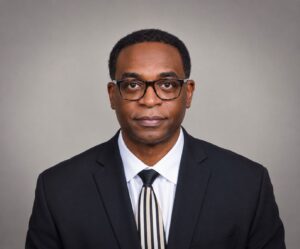
Isaac Megbolugbe
August 2026
Introduction
As I stand at seventy-four, looking toward my seventy-fifth year, the view of a lifetime changes. The horizon behind me is longer than the one ahead. This vantage point brings a quiet clarity that youth rarely allows.
When you are young, life looks like an engineering project. You are told to build a flawless, crash-proof existence. You focus on earthly survival strategies: avoiding failures, masking weaknesses, and protecting your career.
But looking back over more than seven decades, I see a different story. The moments that truly mattered—the ones with a lasting payoff—were not the times I successfully climbed the corporate ladder. The true riches of my life were born in the moments I chose what was right and Godly over what was strategic for my career. By embracing life’s failures and crashes “as unto the Lord,” I have watched human defeat turn into a canvas for His ultimate glory.
The Illusion of Earthly Success
In 2002, by all worldly standards, I had arrived. I was a successful business executive, serving as the Vice President of Research and Innovation at the Fannie Mae Foundation. I had the paraphernalia of corporate achievement: a spacious office, a comfortable six-figure salary, and a Mercedes-Benz parked in my designated space.
Then came the crash.
Fannie Mae leadership brought in a corporate consultant. His mission was to compel absolute loyalty and compliance from all management and staff under a new CEO. During a high-level session with the leadership of the Foundation, the consultant crossed a line that corporate ambition usually ignores. He looked at us and stated that our souls belonged to the Foundation. He demanded that we commit at a soul level to the vision and mission articulated by the new CEO.
Inside me, the Holy Spirit was strongly disturbed. A righteous rage welled up. The idea that a company would consider a job deserving of a loyalty and devotion that belongsolely to the Lord was offensive.
I spoke up. In that public, high-stakes setting, I disputed the consultant’s claim. “My soul belongs to God,” I said clearly. “The Foundation is only owed my best job performance.”
Against all worldly judgment and corporate survival strategies, I stood up and exited the meeting.
The Price of an Uncompromised Soul
Later, the consultant pulled me aside. He was completely befuddled. He pointed to my nice office, my salary, and my Mercedes. He could not understand why I would risk everything I had built just for a personal belief in a public setting. He urged me to make amends, to smooth things over, and to play the game.
I refused.
The backlash was swift and calculating. Because I chose what was Godly over what helped my career, I was threatened and ultimately pushed out. But the corporate machine didn’t just fire me, nor did they allow me to resign with dignity. Instead, they blackballed me. They declared me “unavailable” so no other organization could hire me. No one would write me a letter of recommendation. Whenever firms or organizations wanted to hire me, they were told I was simply not available. They branded me an “unmanageable talent.”
It was a complete and total wreckage of my business executive career. In the eyes of the corporate world, I had suffered a catastrophic,final crash.
The Unbelievable Deliverance
For a season, the trap seemed airtight. The doors of the corporate world were slammed shut, and the key had been thrown away. But human locks cannot hold a divine destiny. When human strategies designed my total professional isolation, God did something completely unbelievable.
Johns Hopkins University was conducting a highly competitive, nationwide talent search. They needed a leader to direct a multimillion-dollar endowed program in Senior Housing and Care—a prestigious faculty position at the university’s Business School.
The search committee had narrowed the field down to four top-tier candidates. Then, the Holy Spirit moved in a way that defies all corporate logic.
One of the final candidates stood before the search committee and made an unprecedented declaration. He told them that the unique blend of expertise, scholarship, and practical experience required to truly transform the program was possessed by only one person: Dr. Isaac Megbolugbe at the Fannie Mae Foundation. He then stated that if I was willing to lead the program, he would voluntarily withdraw his candidacy.
When the other three finalists heard about this development, they followed suit. They all withdrew their names from consideration.
Shortly after, my phone rang. It was the Head of Development of Real Estate hosting the program, who also happened to be a colleague of mine at the American Real Estate Society. He bypassed the entire corporate blockade. He called to offer me the job on the spot—without an interview, and without a single letter of recommendation from the Fannie Mae Foundation.
“Isaac,” he told me, “you are a thoroughly known scholar and an accomplished market innovator in financial instruments.”
I was absolutely flabbergasted. The very system that tried to bury me by declaring me “unavailable” was rendered completely powerless. God didn’t just open a door; He cleared the entire room so that only His chosen path remained.
A Covenant Relationship and Engineered Honors
God’s restoration did not begin with a title at Johns Hopkins. He had begun began to surround me with genuine, covenant relationships that corporate cutthroats could never understand. Chief among these was Professor James Webb, who was serving as the Executive Director of the American Real Estate Society at the time.
Where the corporate world sought to isolate me, Jim Webb sought to elevate me. Our relationship transcended the cold transactional nature of business. We bonded deeply as friends, families, and colleagues. Jim invited my family to spend time with his family in Cincinnati, Ohio. My wife, Josephine, our daughters, Funmilola and Modupe, and my only son, Samuel, traveled with me, creating memories that bound our households together. Later, Jim’s family traveled to visit us at our home in Gaithersburg, Maryland. We shared meals, lives, and a mutual respect.
Through this friendship, God had poured out a rain of honor that completely erased the stigma of being labeled “unmanageable” by Fannie Mae. Jim Webb had alreadyengineereda sequence of accolades that validated the gifts God had given me, culminating in a deeper realization: he was quietly grooming me for the prestigious presidency of the American Real Estate Society itself.
Through God’s alignment and Jim’s advocacy, my legacy was preserved across decades of milestones:
The corporate machine tried to ensure that I would never be heard from again. Instead, God used a loyal friend to place me on platforms of global, lifetime influence before I realized or needed it.
How Our Weakness Amplifies His Glory
Why does God allow our carefully built lives to crash? Because His strength is best displayed against the backdrop of human inadequacy. When the Apostle Paul begged God to remove his persistent “thorn in the flesh,” the divine response was absolute: “My grace is sufficient for you, for my power is made perfect in weakness” (2 Corinthians 12:9). Paul did not double down on self-reliance; he celebrated his limitations so that Christ’s power could rest on him.
When a self-sufficient executive succeeds by playing the world’s game, the world praises human grit and intellect. But when an executive chooses righteousness, suffers a total career wreckage, and is vindicated by a miracle that requires no human resume or recommendation, the world is forced to look past the human instrument. They must behold the Divine Architect. My crash stripped away the illusion that I was the author of my own security. It left a vacuum that only God’s grace could fill.
The ultimate pattern for this is the cross of Jesus Christ. On Good Friday, Calvary looked like the ultimate career crash. The ministry of Jesus appeared to end in absolute, public, and humiliating failure. Yet, within that apparent defeat lay the absolute destruction of sin and death. The resurrection proved that God does not merely bypass our crashes; He uses them as the exact mechanism to achieve His highest victories.
The View from Seventy-Four: A Doxology of Trust
Looking back through the corridor of seventy-four years, I realize a profound truth about the ways of the Lord: when my career was wrecked, I did not even know what to ask for, or how to ask it. I did not possess a strategy to undo a corporate blacklist. But I did not need one. I simply loved my Lord and trusted God completely.
In that quiet space of absolute surrender, I witnessed the precise spiritual engineering of Romans 8:28: “And we know that for those who love God all things work together for good, for those who called according to his purpose.” God took malice, exclusion, and professional wreckage, and engineered them into a beautiful tapestry of deliverance and honor.
As I prepare to turn seventy-five, my life stands as a living testament to a God who subverts human schemes. If you are facing your own corporate wilderness or an earthly crash, do not rely on your own survival strategies. Trust His sovereignty. Trust His grace.
I close this chapter of my journey with a doxology of trust—an offering of praise to the Master Architect who saw my broken path and built a monument to His glory:
“Now to him who is able to do far more abundantly than all that we ask or think, according to the power at work within us, to him be glory in the church and in Christ Jesus throughout all generations, forever and ever. Amen.” (Ephesians 3:20-21)
Isaac Megbolugbe, Director of GIVA Ministries International. He is a recipient of Albert Nelson Marquis Lifetime Achievement Award in business and academia in the United States of America. He is retired professor at Johns Hopkins University and a Fellow of the Royal Institution of Chartered Surveyors. He is resident in the United States of America.
