
The Chief Cornerstone: Why the Christian Life and Doctrine Anchor Entirely in Jesus Christ
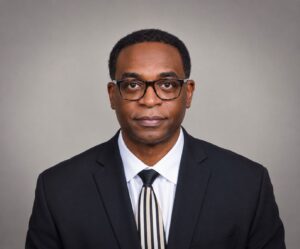
Isaac Megbolugbe
November 2026
Introduction
In Christian theology, the framework of faith is not a decentralized philosophy or a
collection of competing ideas. It is a highly structured, deliberate spiritual architecture. At the center of this structure is a single, foundational anchor: Jesus Christ is the ultimate authority, Lord, and final arbiter of all matters of Christian life and doctrine. From the declarations of God the Father to the prophecies of Moses and the theological expositions of the Apostle Paul, Scripture systematically directs believers to look to Jesus as the final word on every issue of faith and practice.
1. The Divine Architect: God’s Command to Listen to the Son
The structural integrity of Christian faith begins with the direct endorsement of God the Father. Throughout the Old and New Testaments, God consistently establishes Jesus not merely as a prophet or a teacher, but as the supreme voice of authority.
- The Transfiguration: On the Mount of Transfiguration, in the presence of Moses and Elijah, God’s voice pierced the cloud with a definitive command: “This is my beloved Son, with whom I am well pleased; listen to him” (Matthew 17:5). By commanding the disciples to listen to Jesus over the primary representatives of the Law (Moses) and the Prophets (Elijah), God established Christ as the final, overriding authority.
- The Final Revelation: The writer of Hebrews echoes this structural shift: “Long ago, at many times and in many ways, God spoke to our fathers by the prophets, but in these last days he has spoken to us by his Son” (Hebrews 1:1–2). Jesus is the complete, flawless communication of God to humanity.
2. The Prophetic Blueprint: Moses Points to the Coming Prophet
Centuries before the birth of Jesus, the structural groundwork for His authority was laid by Moses. Moses did not position the Law as the final destination for believers, but rather as a guidepost pointing toward a coming, absolute authority.
- The Promised Prophet: In Deuteronomy 18:15, Moses prophesied, “The Lord your God will raise up for you a prophet like me from among you, from your brothers—it is to him you shall listen.”
- The Consequence of Disobedience: God reinforced Moses’ prophecy by stating that anyone who refused to listen to the words spoken in His name by this coming Prophet would be held directly accountable (Deuteronomy 18:19). In the New Testament, Peter explicitly identifies Jesus as the fulfillment of this Mosaic promise (Acts 3:22–23), sealing Christ’s words as the definitive law for the believer.
3. The Master Builder: Paul’s Theology of Christ’s Supremacy
No New Testament writer labored more to explain the engineering of Christian faith than the Apostle Paul. Paul’s letters consistently strip away self-reliance and legalism to reveal Christ as the sole foundation of the Church.
- The Only Foundation: Paul explicitly defines the structural baseline of the faith in 1 Corinthians 3:11: “For no one can lay a foundation other than that which is laid, which is Jesus Christ.”
- Total Submission to His Lordship: In Philippians 2:9–11, Paul explains that God has exalted Jesus to the highest place, giving Him the name above every name, so that at the name of Jesus every knee must bow and every tongue confess that Jesus Christ is Lord. For Paul, Christian living is a state of total structural alignment with and submission to Christ.
4. The Sovereign Declaration: Jesus Asserts His Universal Lordship
The ultimate claim to Christ’s absolute authority comes from His own lips. Jesus did not leave His identity or the scope of His power open to debate; He explicitly claimed total dominion over creation.
- All Authority Granted: Following His resurrection, Jesus issued the Great Commission by first establishing His credentials: “All authority in heaven and on earth has been given to me” (Matthew 28:18).
- The Final Arbiter of Truth: Because He holds all authority, Jesus positioned His words as eternal, unchanging, and the definitive baseline for reality: “Heaven and earth will pass away, but my words will not pass away” (Matthew 24:35).
The Final Verdict: Resting Every Issue on the Words of Christ
Because the architecture of the Christian faith is anchored entirely in Jesus, every dilemma, question of morality, doctrinal dispute, and personal crisis must ultimately rest on what Jesus said, modeled, and declared.
When believers face cultural shifts, ethical gray areas, or personal trials, the engineering of their faith demands a return to the Chief Cornerstone. The Old Testament pointed forward to Him, the Epistles looked back to Him, and Christ Himself confirmed His own sovereign rule. For the believer, the words of Jesus are not merely good advice—they are the final, authoritative framework upon which the entire life of faith stands or falls.
The Divine Endorsement: How God the Father Established the Supreme Authority of Jesus Christ
In the architecture of Christian theology, the structure of faith does not rely on human philosophy, evolving cultural norms, or even a decentralized collection of religious writings. Instead, the structural integrity of the Christian faith begins with the direct endorsement of God the Father. Throughout the narrative of both the Old and New Testaments, God consistently and deliberately establishes Jesus Christ not merely as a prophet, a moral philosopher, or a profound teacher, but as the supreme, overriding voice of authority for all humanity.
By looking closely at the moments where the Father speaks directly regarding His Son, it becomes clear that Christ is the final arbiter of truth, standing above all who came before Him.
The Mount of Transfiguration: Eclipsing the Law and the Prophets
One of the most dramatic and structurally significant moments in the New Testament occurs on the Mount of Transfiguration. This event serves as a cosmic courtroom where the hierarchy of spiritual authority is permanently settled by God the Father.
- The Setup: Jesus ascends the mountain with Peter, James, and John. Suddenly, He is transfigured, His clothes becoming white as light. Alongside Him appear Moses—the ultimate representative of the Old Testament Law—and Elijah—the archetype of the Hebrew Prophets.
- The Interruption: Overwhelmed by the scene, Peter offers to build three tabernacles (or shrines): one for Jesus, one for Moses, and one for Elijah. By doing so, Peter inadvertently places Jesus on an equal plane of authority with the pillars of Israel’s religious history.
- The Direct Command: God the Father immediately corrects this misconception. A bright cloud overshadows them, and a voice pierces the cloud with a definitive command: “This is my beloved Son, with whom I am well pleased; listen to him”(Matthew 17:5).
By explicitly commanding the disciples to listen to Jesus while in the presence of Moses and Elijah, God formally signals a structural shift. The Law and the Prophets were vital, but they were precursors. Christ does not merely join their ranks; He supersedes them. His words are established as the final, overriding authority to which even the Law and the Prophets bow.
The Final Revelation: The Shift from Prophets to the Son
The structural supremacy of Jesus is not limited to a single supernatural event; it forms the backbone of New Testament theology. The writer of the Epistle to the Hebrews begins their letter by outlining this exact transition in the economy of God’s communication with mankind.
- The Old System: For generations, God utilized a fragmented approach to revelation. As Hebrews 1:1 notes, “Long ago, at many times and in many ways, God spoke to our fathers by the prophets.” This revelation was true, but it was progressive, delivered in pieces through various human vessels over centuries.
- The Ultimate Convergence: The narrative undergoes a definitive shift in the very next verse: “…but in these last days he has spoken to us by his Son” (Hebrews 1:2).
This declaration echoes the Father’s endorsement on the mountain. Jesus is not merely another voice in a long line of divine messengers. He is the complete, flawless communication of God to humanity. While the prophets carried the words of God, Jesus is the Word of God incarnate. Because He is the Son, His revelation is total, requiring no further additions, alterations, or amendments.
The Believer’s Baseline: Resting Every Issue on Christ
When God the Father issued the mandate to “listen to Him,” He effectively anchored the entire lifespan of Christian doctrine to the mouth of Jesus. For the believer, this reality simplifies the navigation of life, morality, and faith:
- The End of Ambiguity: If God the Father has declared Christ to be the supreme authority, then any and every issue a believer faces must ultimately rest on whatever Jesus said, modeled, or commanded.
- A Filter for Truth: Cultural trends, personal opinions, and competing religious philosophies must all be filtered through the lens of Christ’s teachings. If a concept contradicts the worldview or instructions of Jesus, the divine endorsement demands that the believer side with the Son.
The Unshakable Foundation
The structural integrity of a building depends entirely on its foundation. By choosing to speak directly from heaven, God the Father ensured that Christianity would never be confused for a loosely organized philosophy. By divine decree, Jesus Christ is the Chief Cornerstone. Because God the Father has explicitly transferred the finality of speech and authority to His Son, the life of a Christian remains structurally sound only when it is built entirely upon His words.
The Prophetic Blueprint: How Moses Laid the Groundwork for the Absolute Authority of Christ
In the grand architecture of Christian theology, the transition from the Old Covenant to the New Covenant is not a structural failure, but the fulfillment of a masterful design. Centuries before the birth of Jesus, the structural groundwork for His absolute authority was laid by Moses himself. Moses, the legendary lawgiver of Israel, did not position the Law as the final destination for believers. Instead, he intentionally designed it as a guidepost—a prophetic signpost pointing the people of God toward a coming, supreme authority that would supersede his own.
By examining the very texts that established Israel’s covenantal identity, it becomes clear that Moses always intended for his followers to look beyond the tables of stone to the living Word.
The Promised Prophet: Moses Foretells His Successor
For the Jewish nation, Moses was the ultimate human authority. He was the mediator of the covenant, the deliverer from Egypt, and the one who spoke with God face-to-face. Yet, at the height of his leadership, Moses made a startling declaration to the assembly of Israel regarding the future of their faith.
- The Prophetic Declaration: In Deuteronomy 18:15, Moses prophesied clearly: “The Lord your God will raise up for you a prophet like me from among you, from your brothers—it is to him you shall listen.”
- A New Blueprint: By telling Israel to look for a prophet “like me,” Moses was not just predicting another teacher in a long lineage of prophets. He was speaking of a singular Figure who would hold the same level of mediatorial and foundational authority that he held—someone who could speak authoritatively on behalf of the Almighty.
- The Mandate to Listen: The phrase “it is to him you shall listen” serves as a direct handoff of spiritual authority. Moses deliberately instructed the people that when this individual arrived, their primary allegiance and attention must shift from the lawgiver to the Law-Fulfiller.
The Consequence of Disobedience: God Reinforces the Promise
Lest the people of Israel treat Moses’ prophecy as a casual piece of advice, God the Father immediately stepped in to reinforce the absolute nature of this coming Prophet’s words. The divine decree left no room for ambiguity regarding the weight of this future revelation.
- Direct Accountability: In Deuteronomy 18:19, God declared, “And whoever will not listen to my words that he shall speak in my name, I myself will require it of him.”
- The Finality of His Words: God made it clear that rejecting this coming Prophet was equivalent to rejecting Yahweh Himself. The words spoken by this Figure would carry the weight of definitive cosmic law, demanding absolute submission and accountability from every soul.
The Fulfillment Revealed: Peter Identifies the Chief Architect
For centuries, Israel waited for this ultimate Prophet. In the New Testament, following the resurrection and ascension of Jesus, the Apostle Peter stood before the crowds in Jerusalem and explicitly solved the historical mystery of Moses’ prophecy.
- The Direct Connection: Preaching in the temple courts, Peter quoted Moses verbatim: “Moses said, ‘The Lord God will raise up for you a prophet like me from your brothers. You shall listen to him in whatever he tells you’” (Acts 3:22).
- The Danger of Rejection: Peter then reiterated the solemn warning of Deuteronomy, applying it directly to those standing before him: “And it shall be that every soul that does not listen to that prophet shall be destroyed from the people”(Acts 3:23).
By explicitly identifying Jesus of Nazareth as the fulfillment of this Mosaic promise, Peter sealed a vital theological truth: Christ’s words are the definitive, final law for the believer.
The Law as a Tutor, Christ as the Cornerstone
Understanding Moses’ prophecy fundamentally changes how a believer views the entire framework of Scripture. The Law was never meant to be a permanent, unyielding ceiling; it was a scaffolding.
When Jesus arrived and declared, “You have heard that it was said… but I say to you,”He was not violating the Old Testament system. He was acting exactly as Moses said He would. Because Moses laid the groundwork by pointing away from himself and toward Jesus, the structural integrity of a believer’s life rests entirely on their willingness to submit to Christ’s teachings. To honor Moses is to listen to Jesus; to build a life of faith is to anchor it completely in the words of the Promised Prophet.
The Master Builder: How the Apostle Paul Engineered the Faith on Christ Alone
In the structural development of the early Church, no New Testament writer labored more exhaustively to explain the spiritual engineering of the Christian life than the Apostle Paul. Across his letters, Paul acts as a master builder, systematically stripping away the faulty footings of human self-reliance, cultural privilege, and religious legalism. In their place, his theological treatises reveal a singular, non-negotiable truth: Jesus Christ is the sole foundation and supreme Lord of the Church.
For Paul, the Christian life is not a self-made philosophy, but a carefully engineered structure that stands or falls based entirely on its alignment with Christ.
The Unchanging Baseline: Christ as the Only Foundation
When writing to the fractured church in Corinth, Paul encountered a community trying to build their spiritual lives on human leaders, intellectual pride, and competing philosophies. He corrected this structural instability by pointing them back to the absolute baseline of the global Church.
- The Architectural Blueprint: In 1 Corinthians 3:10, Paul refers to himself as a “skilled master builder” who laid a foundation, but he immediately clarifies that he did not invent this foundation.
- The Definitive Decree: He establishes the ultimate structural law of theology in 1 Corinthians 3:11: “For no one can lay a foundation other than that which is laid, which is Jesus Christ.”
By declaring Christ as the only foundation, Paul eliminates all alternatives. Good works, ancestral lineage, religious rituals, and human wisdom are exposed as shifting sand. If any spiritual structure attempts to anchor itself to anything or anyone other than the person and work of Jesus, its collapse is biblically guaranteed.
Cosmic Elevation: The Total Supremacy of His Lordship
Paul’s engineering of the faith does not end with Christ as a passive foundation beneath our feet; it extends upward to Christ as the sovereign Ruler over all creation. In his letter to the Philippians, Paul maps out the cosmic hierarchy that demands the absolute submission of every believer.
- The Divine Exaltation: After detailing Christ’s humility and death on the cross, Paul explains the Father’s ultimate response in Philippians 2:9: “Therefore God has highly exalted him and bestowed on him the name that is above every name.”
- Universal Submission: The structural consequence of this exaltation is absolute. Paul declares that “at the name of Jesus every knee should bow, in heaven and on earth and under the earth, and every tongue confess that Jesus Christ is Lord, to the glory of God the Father” (Philippians 2:10–11).
For Paul, “Lord” (Kyrios) was not a casual title or a polite religious greeting. It was an assertion of total, absolute sovereignty. By noting that every knee—whether angelic, human, or demonic—will ultimately bow to Jesus, Paul establishes that Christ’s lordship is the central reality of the universe.
Structural Alignment: The Blueprint for Christian Living
Understanding Paul’s theology fundamentally reshapes how a believer approaches daily life. For Paul, Christian living is not about trying harder to be a good person; it is a state of total structural alignment with and submission to Christ.
- Stripping Away Legalism: Legalism tries to build a relationship with God from the ground up using human effort. Paul explicitly tears this down, arguing that trying to justify oneself by the Law is a rejection of the sufficient foundation Christ already laid.
- The Living Temple: Because Christ is the foundation and the supreme Lord, every decision, moral choice, and doctrinal stance must be squared against Him. Just as a builder uses a plumb line to ensure a wall is perfectly straight, the believer uses the words and character of Jesus to ensure their life is structurally sound.
The Unshakable Superstructure
The Apostle Paul’s letters leave the Church with an ultimatum: a faith built on self-reliance is a structural disaster waiting to happen. By anchoring the Church to 1 Corinthians 3:11 and Philippians 2:9–11, Paul ensures that the global body of believers remains completely unshakeable. When we abandon legalism and submit entirely to His lordship, our lives are successfully integrated into a divine architecture that will outlast heaven and earth.
From His Own Lips: How Jesus Christ Declared His Absolute Dominion and Supreme Authority
While the endorsements of God the Father, the prophecies of Moses, and the complex theological writings of the Apostle Paul form an unshakeable framework, the ultimate claim to Christ’s absolute authority comes directly from His own lips. Jesus did not leave His identity, the scope of His power, or His position in the cosmos open to human debate or cultural reinterpretation. Instead, through clear, uncompromising declarations, He explicitly claimed total dominion over all creation, establishing Himself as the supreme Ruler and the final arbiter of cosmic truth.
All Authority Granted: The Cosmic Credentials of the King
The most sweeping claim to absolute power occurs following Christ’s triumph over death. Having conquered the grave, Jesus met with His disciples on a mountain in Galilee to deliver their global marching orders—the Great Commission. However, before issuing a single directive, He first established His supreme right to command them.
- The Ultimate Declaration: In Matthew 28:18, Jesus approached them and stated unequivocally: “All authority in heaven and on earth has been given to me.”
- Zero Structural Limitations: The word “all” leaves no room for rival jurisdictions. Christ did not claim partial authority, localized regional power, or merely spiritual influence. His domain encompasses the seen and the unseen, the physical and the metaphysical, the political rulers of earth and the angelic hosts of heaven.
- The Foundation of the Commission: By anchoring the command to “go and make disciples” to His universal authority, Jesus signaled that the Church does not operate on human permission, but under the sovereign decree of the ultimate King.
The Final Arbiter of Truth: Words That Outlast Creation
Because Jesus holds all authority in heaven and on earth, the words He spoke carry a structural weight that exceeds the laws of nature itself. Jesus did not position His teachings as mere helpful advice, situational ethics, or temporal philosophies. Instead, He established His words as the definitive baseline for reality.
- An Eternal Standard: In Matthew 24:35, Jesus made a monumental claim about the permanence of His message: “Heaven and earth will pass away, but my words will not pass away.”
- Superseding the Physical Universe: To the ancient mind, nothing was more permanent than the earth beneath their feet and the heavens above their heads. Yet, Jesus boldly declared that the entire physical universe is temporary compared to the enduring nature of His truth.
- The Baseline for Judgment: By placing His words above creation, Jesus established that His declarations are the absolute law by which all human history, morality, and individual lives will ultimately be evaluated.
The Structural Reality: Resting Every Issue on Whatever Jesus Said
When Jesus asserted His universal authority and the eternal nature of His words, He effectively closed the door to any compartmentalized or selective obedience. For the believer, Christ’s self-declarations demand a precise structural response:
- The Ultimate Filter for Life: If all authority belongs to Jesus, then no human institution, cultural trend, or personal desire can claim a higher allegiance. Every ethical dilemma, doctrinal question, and personal value must be brought into direct submission to His teachings.
- An Unshakable Anchor: In a world where moral landscapes and societal standards shift like sand, the words of Jesus remain a fixed point. Building a life on His declarations means anchoring oneself to something more permanent than the universe itself.
The Sovereign Cornerstone
Jesus Christ did not leave the world with the option to view Him merely as a good moral teacher or a tragic martyr. From His own lips, He demanded to be recognized as the absolute Sovereign of creation. By declaring His total authority in Matthew 28:18 and the eternal supremacy of His words in Matthew 24:35, Jesus solidified His place as the Chief Cornerstone of human existence. The engineering of Christian faith is structurally sound only when it bows to His self-proclaimed lordship, recognizing that everything in heaven and on earth ultimately rests on whatever Jesus said.
The Chief Cornerstone: Why Every Matter of Faith and Life Aligns with Christ Alone
Throughout our architectural exploration of Christian theology, a singular, unyielding truth has emerged: the entire framework of Christian life and doctrine is structurally sound only when it is anchored to a single point. Because the architecture of the Christian faith is anchored entirely in Jesus Christ, every dilemma, question of morality, doctrinal dispute, and personal crisis must ultimately rest on what Jesus said, modeled, and declared.
Christianity is not a loose assembly of disparate ideas; it is a unified, divinely engineered structure. When believers face cultural shifts, ethical gray areas, or personal trials, the integrity of their faith demands an immediate return to the Chief Cornerstone.
The Convergence of All Scriptural Architecture
To understand why every issue must rest on Christ, we must look at how the entire timeline of biblical history converges upon His person. The scriptures do not present competing authorities; they present a perfectly synchronized handoff of dominion to the Son:
- The Old Testament Pointed Forward to Him: From the prophetic blueprints laid out by Moses in Deuteronomy to the sacrificial systems and warnings of the prophets, the Old Covenant was explicitly designed as a temporary scaffolding. It existed to point God’s people toward the coming, absolute authority of the promised Messiah.
- The Epistles Looked Back to Him: The theological engineering of the Apostle Paul and the early Church writers was not focused on inventing a new religion. Instead, their letters served to unpack the cosmic implications of Christ’s life, death, resurrection, and supreme lordship, establishing Him as the only foundation upon which the Church can be built.
- Christ Himself Confirmed His Sovereign Rule: From His own lips, Jesus settled any debate regarding His status. By declaring that all authority in heaven and on earth belongs to Him, and that His words will outlast the physical universe, He positioned Himself as the ultimate anchor of absolute truth.
Standing Plainly on the Words of Christ
When the winds of cultural change blow or personal tragedies strike, human philosophies and situational ethics offer no structural stability. They shift like sand beneath our feet. For the true believer, the words of Jesus are not merely good advice, inspirational poetry, or optional suggestions—they are the final, authoritative framework upon which the entire life of faith stands or falls.
If a question arises regarding how we are to love our enemies, navigate wealth, handle anxiety, or understand justice, we do not need to look any further than the life and commands of the Savior. He is the plumb line. If our modern ideas, personal desires, or cultural trends do not align with His character and spoken truth, it is our lives that must be adjusted to match the foundation, never the foundation adjusted to match us.
The Unshakable Superstructure
A building that loses alignment with its cornerstone will inevitably crack, lean, and collapse under pressure. The same is true for a faith that attempts to bypass the supremacy of Jesus. By grounding our doctrine, our morals, and our personal devotion strictly in what Jesus declared, we ensure that our spiritual houses are built upon the rock. No matter what storms may rage in the world around us, a life structurally aligned with Jesus Christ will remain completely, eternally unshakeable.
Isaac Megbolugbe, Founder and President of GIVA Ministries International is an ambassador of Jesus Christ. He is also a recipient of Albert Nelson Marquis Lifetime Achievement Award in business and academia in the United States of America. He is retired professor at Johns Hopkins University, Former Vice President at Fannie Mae, Former Practice Leader at PricewaterhouseCoopers, and a Fellow of the Royal Institution of Chartered Surveyors. He is resident in the United States of America.
