
Temporal Architecture: Aligning Hindsight and Intentionality for a Visionary Life
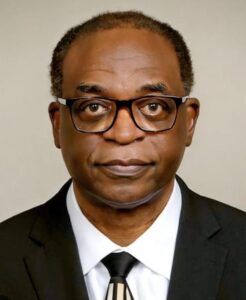
Isaac Megbolugbe
April 15, 2026
Introduction
The interplay across temporal structuring implies a consequential architecture of backward and forward linkages, bridging the wisdom of the past with the demands of the future to create a “confluencing of mindsets”. By anchoring reality in the intentionality of opportune moments—or kairos—individuals and organizations can develop a compelling, inspiring, and empowering vision of life that transforms hindsight into proactive foresight.
The Consequential Architecture of Temporal Linkages
Life and strategic planning are not linear, but a “confluencing” where the past, present, and future continuously loop and interweave. This structure requires:
Backward Linkages (Hindsight):Discernible insights from the past are essential to understanding the present. As Søren Kierkegaard famously noted, “Life can only be understood backwards; but it must be lived forwards”. Reflection allows us to turn past experiences—mistakes, successes, and missed opportunities—into a roadmap for future action.
Forward Linkages (Foresight):Leveraging these insights allows for the creation of a vision that is not mere fantasy but a structured, realistic projection of potential. This “designing for temporal harmony” ensures that actions in the present (behavioral continuity) are aligned with long-term goals (intrinsic continuity).
Anchoring in Opportune Moments (Kairos)
The “needful clarity and intentionality” mentioned refers to the ability to identify kairos—the opportune moment—rather than simply focusing on chronos (clock time).
Intentionality: Anchoring reality means that, instead of letting life happen to them, individuals must proactively look for meaning within their daily circumstances and act upon it.
Opportune Moments: Leaders often view time differently by recognizing moments that appear ordinary to others as “opportune moments” to advance a project or initiative. This requires being present in the moment to make the “right” decision rather than just a quick one.
Achieving Congruence and Empowerment
The “confluencing of mindsets” refers to the alignment between an individual’s or organization’s “real self” (current reality) and “ideal self” (future vision). This concept of congruence, rooted in Carl Rogers’ work, is essential for a productive life.
The Path to Congruence: When individuals acknowledge and work toward bridging the gap between who they are and who they want to be, they achieve a state of congruence. This involves translating hindsight into daily, actionable steps (the “beginning of a path”).
Inspiring and Empowering: This alignment is not merely a tactical goal; it is a transformative, personal development process. It cultivates an internal source of energy, where work and actions are seen as an expression of the self rather than mere external obligations. It moves one from a state of anxious, fragmented existence to a state of focused, authentic, and “inspiring” living.
In conclusion, the architecture of a purposeful life is built by merging the lessons of the past with the possibilities of the future. By intentionally anchoring oneself in the “opportune moment” and achieving congruence between reality and vision, individuals can turn hindsight into a powerful, inspiring force for future success.
The Consequential Architecture of Temporal Linkages: Navigating the Confluence of Time
In the traditional view of life and strategic planning, time is often treated as a straight line—a series of disconnected points moving from yesterday to tomorrow. However, a more profound understanding reveals that time is a “confluencing” ecosystem. The past, present, and future do not merely follow one another; they continuously loop, interweave, and inform the structural integrity of our lives. This “consequential architecture” relies on two primary pillars: backward and forward linkages.
Backward Linkages: The Wisdom of Hindsight
The foundation of any stable future is built upon the lessons of the past. These backward linkages are more than just memories; they are “discernible insights” that provide the necessary context for our current reality.
As the philosopher Søren Kierkegaard famously noted, “Life can only be understood backwards; but it must be lived forwards.” This paradox highlights the necessity of reflection. Without looking back, we are prone to repeating cycles of inefficiency or error. Reflection allows us to audit our history—categorizing successes, mistakes, and missed opportunities—and transform them into a functional roadmap. By analyzing the “why” behind past outcomes, we strip away the chaos of experience and extract the signal from the noise, turning raw history into actionable intelligence.
Forward Linkages: The Structure of Foresight
If backward linkages provide the map, forward linkages (foresight) provide the destination. True foresight is not “mere fantasy” or wishful thinking; it is a structured, realistic projection of potential based on the data gathered from hindsight.
Leveraging these insights allows us to design for “temporal harmony.” This is the state where our current actions—our behavioral continuity—are in total alignment with our long-term objectives, or our intrinsic continuity. When these linkages are strong, the future stops being a source of anxiety and starts being a deliberate construction. We are no longer guessing at what might work; we are projecting what is possible based on the established architecture of our experiences.
The Power of Congruence
The ultimate goal of mastering these linkages is to achieve a confluencing of mindsets. When the wisdom of the past (hindsight) meets the intentionality of the future (foresight), it creates a sense of congruence in the present.
This alignment is what makes a vision truly inspiring and empowering. It moves the individual from a reactive state to a proactive one, where every “opportune moment” is recognized and seized because it fits into the broader temporal structure. By treating life as an architectural project rather than a series of accidents, we gain the clarity needed to build a legacy that is both grounded in reality and soaring in its potential.
The Power of Kairos: Anchoring Reality in Opportune Moments
In the modern world, we are often slaves to chronos—the relentless, linear ticking of the clock that measures seconds, minutes, and deadlines. However, true fulfillment and strategic mastery require a shift toward kairos: the ancient Greek concept of the “opportune moment.” While chronos is quantitative, kairos is qualitative. It is the “thick” moment where time and opportunity meet, demanding a unique blend of “needful clarity and intentionality.”
The Engine of Intentionality
To anchor oneself in kairos is to refuse a passive existence. Many people allow life to simply “happen” to them, drifting through the sequence of chronos without a rudder. Anchoring reality requires a proactive mindset where meaning is not found, but created.
Intentionality is the filter through which we view our daily circumstances. It involves a conscious commitment to look beneath the surface of routine to find the potential for growth or change. When an individual operates with intentionality, they don’t just see a meeting, a conversation, or a setback; they see a data point or a pivot. By acting upon these circumstances with purpose, they transform a static reality into a dynamic path forward.
Recognizing the Opportune Moment
The hallmark of great leadership and visionary living is the ability to perceive what others overlook. Where the average observer sees an ordinary Tuesday, a leader tuned into kairos sees an “opportune moment” to advance a project, mend a relationship, or initiate a bold new strategy.
This recognition requires two distinct skills:
Presence: You cannot identify an opportune moment if your mind is stuck in the past or racing toward a distant future. Being fully present allows you to catch the subtle shifts in momentum—the “opening” in the window of opportunity that is often fleeting.
Discernment: Kairos is not about making the fastest decision, but the right one. It is the wisdom to know that a specific action taken now will have a disproportionate impact compared to that same action taken an hour later.
Anchoring the Vision
When we anchor our reality in these moments, we bridge the gap between our internal vision and the external world. We stop waiting for the “perfect” conditions and start recognizing the “opportune” ones. This shift from clock-watching to moment-seizing creates a life characterized by flow and impact.
By prioritizing the qualitative value of time over its quantitative passage, we achieve a state of readiness. We are no longer victims of the clock; we are architects of the moment. This is where inspiration becomes empowerment—when the clarity of our intent meets the reality of the now.
Achieving Congruence and Empowerment: The Confluence of Mindsets
The ultimate realization of a purposeful life lies in the “confluencing of mindsets”—the profound alignment between an individual’s or organization’s “real self” (the current reality) and their “ideal self” (the future vision). This state of congruence, a concept pioneered by psychologist Carl Rogers, is not just a psychological luxury; it is the essential bedrock of a productive and meaningful existence.
The Path to Congruence: Bridging the Gap
Congruence is achieved when there is consistency between our internal beliefs and our external actions. For many, a painful gap exists between who they are today and who they aspire to be. Closing this gap is the “beginning of a path” that requires both honesty and strategy.
To move toward congruence, one must master the art of translation. This involves taking the “discernible insights of hindsight”—the lessons learned from past successes and failures—and distilling them into daily, actionable steps. When we align our hourly behavior with our long-term vision, we stop living in a state of contradiction. We move from dreaming about a future self to actively constructing that self through the “intentionality of the moment.”
From Fragmentation to Empowerment
When our “real self” and “ideal self” are out of alignment, we experience a “fragmented existence.” This state is characterized by chronic anxiety, a sense of being an impostor, and the feeling that our daily work is merely a series of external obligations or “drudgery.”
However, achieving congruence triggers a transformative personal development process. It shifts the source of our motivation from the external to the internal.
An Internal Source of Energy: In a state of congruence, work and actions are no longer “tasks” to be checked off a list; they become an expression of the self. This alignment generates a natural, sustainable energy because you are no longer fighting against your own nature.
Inspirational Living: This shift moves an individual from a fractured state to one that is “focused and authentic.” When your outward reality matches your inward vision, you become “inspiring” to others—not because of what you say, but because of the visible integrity of how you live.
The Empowered Outcome
Empowerment is the natural byproduct of this confluence. It is the strength that arises when you know that your “backwards and forwards linkages” are secure. By reconciling the past and anchoring the future in the present, you achieve a state of flow.
In this state, life is no longer a series of accidental events, but a “consequential architecture.” You are empowered because you are whole. You are no longer chasing a distant ideal; you are living it, one congruent step at a time.
The Ultimate Vision: A Life Anchored in Divine Sovereignty and Purpose
While human strategic planning relies on hindsight and foresight, the highest form of visionary living transcends human temporal structuring. From a biblical perspective, a truly visionary life is not built on personal ambition, but is anchored in the sovereignty of God, governed by obedience to His Word, and realized through a total surrender to His purpose.
The Foundation: Seeking the Kingdom First
The blueprint for this life is found in Matthew 6:33: “But seek first the kingdom of God and His righteousness, and all these things shall be added to you.” This is the ultimate “confluence of mindsets.” To seek the Kingdom first is to align one’s internal “ideal self” with God’s eternal reality.
In this divine architecture, priorities are reordered. Instead of being consumed by the chronos of daily anxieties—provision, status, or security—the visionary believer focuses on the kairos of God’s assignments. When the heart is anchored in the Kingdom, the “needful clarity” of life is no longer a human achievement but a divine gift.
The Pillar of Obedience and the Power of the Word
A visionary life requires a roadmap that does not fail. For the believer, this is the Word of God. Obedience is the “behavioral continuity” that bridges our current reality with God’s promised future.
The Word provides the “backwards linkages” of God’s faithfulness throughout history and the “forward linkages” of His prophetic promises. By living in obedience, an individual moves from a “fragmented existence” of trial and error to a “focused and authentic” life of faith. The Word provides the light for the path, ensuring that every “opportune moment” is met with biblical wisdom rather than worldly impulse.
The Architecture of Surrender and Sovereignty
The most empowering realization a person can reach is that they are not the primary architect of their own destiny. Sovereignty means God is in control; surrender means we trust His design more than our own.
This is the essence of Romans 8:28: “And we know that all things work together for good to those who love God, to those who are the called according to His purpose.”This is the ultimate “consequential architecture.” Even the mistakes of the past, the setbacks of the present, and the uncertainties of the future are woven together by a sovereign God for two specific ends: our good and His glory.
The Most Visionary Path
What could be more visionary than a life that looks past the visible and the temporary to the invisible and the eternal? A life anchored in God is not a life of passive waiting, but one of high-level intentionality. It is a life where:
Hindsight becomes a testimony of God’s grace.
The Present becomes an altar of worship and service.
The Future is a secure inheritance.
By surrendering to His purpose, we move from the exhaustion of self-effort to the empowerment of divine grace. We no longer strive to “make things happen”; we position ourselves to “receive what God is doing.” This alignment is the truest form of congruence—where the human spirit finds its home in the Will of the Creator.
Isaac Megbolugbe, Director of GIVA Ministries International. He is a recipient of Albert Nelson Marquis Lifetime Achievement Award in business and academia in the United States of America. He is retired professor at Johns Hopkins University, Former Vice President at Fannie Mae, Former Practice Leader at PricewaterhouseCoopers, and a Fellow of the Royal Institution of Chartered Surveyors. He is resident in the United States of America.
