

From Fig Leaves to Final Judgment: The Congruent Story of God’s Redemption and Judgment
Isaac Megbolugbe
April 26, 2026
Introduction
The narrative of Scripture is not merely a collection of stories, but a singular, unfolding drama defined by the dual themes of God’s redemptive grace and His righteous judgment. To understand the full counsel of God—from the Garden of Eden to the creation of a new heaven and new earth—one must juxtapose these two threads, observing how they act as spiritual conduits for the sovereign lordship of Jesus Christ.
The narrative reveals that God’s redemptive acts and His judgments are not contradictory, but rather congruent actions that ultimately culminate in the restoration of creation and the immediate dwelling of God among His people.
I. The Garden Initiative: The First Covering and The First Curse
The story begins with a paradox of grace and severity in Genesis 3. After humanity’s rebellion, God pronounces judgment (curses) while simultaneously providing redemption.
II. The Unfolding Story of Redemption (From Eden to Jesus)
The sacrificial system introduced after the fall was not meant to fully cleanse, but to foreshadow the perfect substitute.
III. The Unfolding Story of Judgment (From the Curses to the Day of the Lord)
Concurrent with the story of redemption is the increasing severity of God’s judgment against sin, showcasing His holiness.
IV. Spiritual Congruence: The Whole-Sight View of Sovereignty
When juxtaposed, redemption and judgment reveal the “whole-sight” view of God’s sovereignty. They are not opposites; rather, judgment is a continuation of the work of redemption.
The spiritual congruence is this: God’s judgment preserves the holiness required for the new creation, while His redemption provides the means to enter it.
V. The End of History: New Heaven and New Earth
The unfolding drama concludes where it began, but in a perfected state. The Garden was a paradise, but it was “unfinished”. The New Jerusalem, however, is the “New Eden” perfected.
Conclusion
The full counsel of God reveals that the killing of animals to clothe Adam and Eve and the impending Day of the Lord are two threads in the same tapestry. God’s judgment is not an act of malice but of necessary holiness, which sets the stage for the profound mercy of redemption. Understanding this dual narrative brings the believer to a “whole-sight” view of God’s sovereignty—a view where every act of justice leads to the grand ultimate purpose: that God, through the lordship of Jesus, will be all in all, dwelling intimately with His people in a perfected, eternal kingdom.
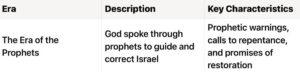
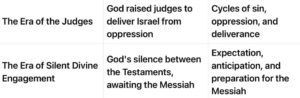
The Unfolding Story of Redemption: A Journey Through the Covenants
The Abrahamic Covenant, a pivotal moment in biblical history, serves as the foundation for the unfolding story of redemption. This covenant, established with Abraham, marked the beginning of a special relationship between God and His people, promising a righteous seed that would bless all nations (Genesis 12:1-3).
The Torah of Moses: The Tree of Life
The Torah, given to the Israelites through Moses, represents the tree that God planted, providing guidance and life to those who followed its precepts (Deuteronomy 30:15-20). The Mosaic Covenant, established at Sinai, was a conditional agreement between God and Israel, promising blessings for obedience and curses for disobedience (Exodus 19:5-6, Deuteronomy 28).

The Gospel of Jesus Christ: Fulfillment and New Covenant
The Gospel of Jesus Christ marks a new era in God’s dealings with humanity, fulfilling the promises made to Abraham and inaugurating a new covenant (Matthew 1:1, Luke 1:68-75, Hebrews 8:6-13). Through Jesus’ life, death, and resurrection, God provided the ultimate sacrifice for sin, establishing a new relationship with humanity (John 3:16, Romans 3:21-26).
The Endtimes and the Second Coming of Jesus Christ
The current era, often referred to as the Endtimes, sees the fulfillment of God’s plan of redemption, with Jesus Christ returning to establish His kingdom (Revelation 19:11-16). The Second Coming marks the culmination of history, as Jesus returns to judge the living and the dead, ushering in a new heaven and a new earth (Revelation 21:1-4).
In this unfolding story of redemption, God remains faithful to His promises, working through various covenants and eras to ultimately bring about the salvation of humanity through Jesus Christ. As believers, we are part of this grand narrative, called to live in light of God’s redemptive plan (2 Peter 3:9-14).
When was the promise of God’s redemption pronounced?
The promise of God’s redemption was first pronounced in the Garden of Eden, immediately after humanity’s fall into sin. Genesis 3:15 records God’s words to the serpent: “I will put enmity between you and the woman, and between your offspring and hers; he will crush your head, and you will strike his heel.” This verse is often referred to as the Protoevangelium, or the first gospel, and it foretells the coming of a Redeemer who would defeat Satan and restore humanity’s relationship with God.
Abraham Covenant was the inauguration of the promise of the righteous seed ?
The Abrahamic Covenant (Genesis 12:1-3, 15:1-21, 17:1-14) marked a pivotal moment in the unfolding promise of God’s redemption. It was with Abraham that the promise of a righteous seed, through whom all nations would be blessed, was specifically inaugurated and established.
God promised Abraham:
– A land for his descendants (Canaan)
– A multitude of descendants (as the stars in the sky)
– Blessing for all nations through his offspring (the Messiah)
This covenant solidified God’s plan to bring redemption through a specific lineage, starting with Abraham’s offspring, ultimately pointing to Jesus Christ (Galatians 3:16).
Jesus Christ as Messiah was the fulfillment of God’s Promise of Redemption
Jesus Christ, as the Messiah, is the fulfillment of God’s promise of redemption, tying together the threads of prophecy and covenant throughout the Bible. He embodies the ultimate fulfillment of:
– The Abrahamic Covenant’s promise of blessing for all nations (Galatians 3:16)
– The Davidic Covenant’s promise of an eternal kingdom (Luke 1:32-33)
– The New Covenant’s promise of forgiveness and a transformed heart (Jeremiah 31:31-34, Hebrews 8:6-13)
Through His life, death, and resurrection, Jesus accomplished redemption, providing salvation and a new covenant relationship with God for all who believe in Him (John 3:16, Romans 3:21-26).
The Second Coming of Jesus Christ will be end of human history and the unified region as Lord and King of the World and Heaven
The Second Coming of Jesus Christ marks a pivotal turning point in human history, ushering in the culmination of God’s plan for redemption. According to biblical prophecy, Jesus will:
– Return to earth in power and glory (Matthew 24:30, Revelation 1:7)
– Establish His kingdom, reigning as Lord and King over all creation (Revelation 11:15, 19:11-16)
– Bring an end to sin, suffering, and injustice (Revelation 21:1-4, Isaiah 65:17-25)
– Unify heaven and earth under His rule, bringing harmony and restoration (Ephesians 1:10, Colossians 1:20)
This event will mark the beginning of a new era, where God will dwell with His people, and Jesus will reign supreme as King of kings and Lord of lords (Revelation 21:3, 1 Timothy 6:15).
The Unfolding Story of Divine Judgment: From Eden’s Expulsion to the Final Day of the Lord
The narrative of human history, as chronicled in the biblical text, is an unfolding story of the righteousness, patience, and absolute sovereignty of God. Woven directly into the fabric of creation and redemption is the recurring theme of divine judgment. To understand the full counsel of God is to recognize that His judgments are not arbitrary acts of malice, but holy responses to humanity’s repeated drifts into rebellion.
By tracing the major epochs of judgment from the dawn of creation to the anticipated return of Christ, a distinct pattern of human defiance and divine accountability emerges.
I. The Expulsion from Eden: The Loss of Innocence
The first act of human history establishes the baseline for all subsequent divine judgments. Placed in a perfected garden,
and
lived in unbroken communion with their Creator.
and
out of the Garden of Eden. To safeguard the Tree of Life and ensure that humanity did not live forever in a fallen, corrupted state, God placed a flaming sword and cherubim at the entrance.
This initial expulsion fractured the perfect harmony of creation and introduced physical and spiritual death into the world.
II. The Worldwide Flood: The Erasure of Total Depravity
Following the Fall, human wickedness did not plateau; it escalated aggressively. Genesis records that the thoughts of human hearts were only evil continually.
, a righteous man in his generation, commanding him to build an Ark. Through this vessel, God preserved both human and animal life, offering humanity a fresh start.
III. The Tower of Babel: The Dissolution of Unified Rebellion
The post-flood world quickly forgot the lessons of the deluge. Rather than filling the earth as God commanded, humanity clustered together in the land of Shinar.
IV. The Exile in Babylon: The Judgment of the Chosen
Divine judgment is not reserved solely for the pagan nations; it applies directly to those who claim to be God’s people. The history of the Israelites is a cycle of covenantal obedience followed by severe apostasy.
V. The Reconstitution of Wickedness and the New Babylon
The narrative of judgment extends beyond ancient history into the prophetic future and the present day. In the book of Zechariah, a profound vision outlines the global scale of end-times rebellion.
Conclusion: The Day of the Lord and the Second Coming
The unfolding story of judgment does not end with geopolitical shifts. All historical judgments serve as mere tremors pointing to the final, cosmic earthquake: the Day of the Lord.
When Jesus Christ returns in His second coming, He will not come as a suffering servant to be judged, but as the King of Kings to execute perfect judgment on a global scale. This final act will permanently eradicate sin, evil, and death from the cosmos, paving the way for a new heaven and a new earth where righteousness will finally dwell in unbroken perpetuity.
The Shadow of Shinar: Theological Parallels Between Ancient Babylon and Modern Superpowers
Throughout the biblical narrative,
Babylon
is far more than a simple Mesopotamian city-state on the banks of the Euphrates. It operates as a master archetype—a persistent, trans-historical spirit of organized human rebellion against the Creator. From the defiant brick-and-mortar of the Tower of Babel to the lavish, blood-drunk “Mystery Babylon” in the Book of Revelation, Babylon represents the pinnacle of humanity’s attempt to construct a world entirely apart from God.
When theologians examine the characteristics of ancient Babylon alongside the behavioral traits of modern global superpowers, staggering parallels emerge. These connections reveal that the spiritual blueprint of ancient Babylon remains very much alive in the contemporary geopolitical landscape.
I. The Institutionalization of Humanism and Self-Deification
The primary theological marker of the Babylonian spirit is the elevation of human capability to the level of the divine.
II. The Seduction of Hyper-Materialism and Economic Dominance
Both the historical records of the ancient world and the prophetic accounts in Revelation paint Babylon as the absolute center of global commerce and luxury.
III. The Exportation of Culture and Moral Relativism
Babylon did not merely conquer nations; it digested them and replaced their native identities with its own cultural norms.
IV. The Hubris of Military Invincibility
A defining feature of any superpower is the belief that its defensive walls and military superiority make it completely untouchable.
Conclusion: The Call to “Come Out of Her”
To map these parallels is not to engage in mere political commentary, but to understand a profound theological warning. In Revelation 18:4, as the final judgment of Mystery Babylon looms, a voice from heaven calls out: “Come out of her, my people, so that you will not share in her sins, so that you will not receive any of her plagues.”
This is not necessarily a physical command to flee a specific geographic territory, but a spiritual mandate. It is a call for believers living within the reach of modern superpowers to separate themselves from the Babylonian mindset. It is a warning to guard against self-deification, to resist the seductive pull of hyper-materialism, and to refuse assimilation into cultures of moral compromise. By recognizing the ancient spirit at work today, believers are better equipped to anchor their allegiance not in the passing empires of men, but in the eternal Kingdom of God.
The Fall of the Great City: Analyzing Prophetic Scriptures on the Collapse of the Babylonian System
The Book of Revelation stands as the ultimate climax of biblical prophecy. Within its visionary pages, the Apostle John paints a vivid picture of the end of human history, dominated by the collapse of a global system referred to as “Mystery Babylon.” This system represents the zenith of human rebellion, economic greed, and spiritual apostasy.
To understand the destiny of this world system, one must analyze the specific prophetic scriptures in Revelation 17 and 18 that describe its sudden and total annihilation. These passages reveal that no matter how invincible a human empire appears, it remains entirely subject to the sovereign judgment of God.
I. The Nature of the System: Revelation 17:1-5
Before describing its fall, John is shown the true nature of this system. He sees a “great prostitute” sitting on many waters, riding a scarlet beast.
II. Sudden and Catastrophic Destruction: Revelation 18:8-10
The fall of this system is not described as a slow, gradual decline, but as a sudden, catastrophic, and unexpected event.
III. The Economic Collapse of Globalism: Revelation 18:11-13
One of the most detailed portions of the prophecy concerns the grief of the merchants. The destruction of Babylon is, at its core, a complete and final disruption of global commerce.
IV. The Instrument of Judgment: Revelation 17:16-17
Paradoxically, God does not destroy the system directly from heaven with fire and brimstone in this specific phase. Instead, He uses the very forces of evil that supported the system to tear it down.
Conclusion: The Millstone and the New Reality
The finality of Babylon’s fall is symbolized in Revelation 18:21, where a mighty angel picks up a boulder the size of a large millstone and throws it into the sea, saying, “With such violence the great city of Babylon will be thrown down, never to be found again.”
The fall of the Babylonian system is not a tragedy for the believer, but a cause for ultimate celebration (Revelation 19:1-3). It signals the removal of the primary obstacle to the Kingdom of God, clearing the way for the return of Jesus Christ and the establishment of a new earth where righteousness will finally dwell without rival.
Spiritual Congruence: The Whole-Sight View of Divine Sovereignty
The overarching narrative of human history is often viewed through fractured lenses. Many see God as a deity of wrath in the Old Testament and a deity of pure mercy in the New Testament. However, a holistic reading of Scripture reveals a profound “spiritual congruence.”
When juxtaposed, divine redemption and divine judgment are not opposing forces engaged in a celestial tug-of-war. Instead, they reveal a “whole-sight” view of God’s absolute sovereignty. Judgment is not the antithesis of redemption; rather, it is a necessary continuation of it.
To understand the full counsel of God and His mindset toward the cosmos, we must explore how these two pillars work in tandem and what this reality demands of humanity.
I. The Pillars of Whole-Sight Sovereignty
To achieve a whole-sighted view of the Creator, one must hold two seemingly paradoxical truths in perfect tension:
II. The Core of Spiritual Congruence
The spiritual congruence of the divine mindset can be summarized in a singular, powerful reality:
God’s judgment preserves the holiness required for the new creation, while His redemption provides the means for humanity to enter it.
If God were to redeem humanity without executing judgment on sin, Heaven would eventually become as corrupted, violent, and broken as the current earth. Conversely, if God only executed judgment without offering redemption, the entire human race would be justly eradicated, leaving no one to inhabit the new creation.
Judgment cleanses the canvas of history, while redemption paints the believers into the eternal portrait. They are two hands of the same sovereign Creator working toward the exact same end: a perfected kingdom where God can dwell directly with His people.
III. The Implications for Humanity
Understanding this balanced counsel of God is not merely an academic exercise in theology. It carries massive, practical implications for how human beings must live, think, and respond to their Creator.
1. The Eradication of Cheap Grace
When humanity overemphasizes redemption and ignores judgment, it produces a culture of “cheap grace.” This mindset treats God’s mercy as a license to continue in rebellion, assuming that a loving God would never actually execute justice. Recognizing spiritual congruence destroys this illusion. It reminds us that God is a consuming fire and that the price of ignoring His redemptive offer is to face His sovereign judgment.
2. The Foundation for Unshakable Hope
Conversely, when humanity focuses solely on judgment, it leads to legalism, fear, and despair. Understanding that judgment is actually serving the ultimate goal of redemption provides believers with an anchor of hope. It means that the evil, injustice, and pain we see in the modern world are not permanent. God’s judgment will eventually eradicate them entirely, guaranteeing a future free from suffering.
3. The Call to Urgent Allegiance
Because God is sovereign in both pushing back darkness (judgment) and pulling in the lost (redemption), humanity cannot afford to remain neutral. This truth forces a decision. We are living in the tension between the first covering in Eden and the final Day of the Lord. Humanity is urged to step out of the systems of rebellion (the spirit of Babylon) and actively align with the Lordship of Jesus Christ.
Conclusion
The whole-sight view of God’s sovereignty requires us to worship Him both for His fierce justice and His tender mercy. They are not competing attributes, but a congruent expression of His perfect nature. He is restoring all things, and He has provided the blood of the Lamb as the only safe passage through the coming storm of His holy judgment.
Walking the Razor’s Edge: Applying the Balance of Judgment and Redemption in a Polarized World
In a world fractured by intense political, social, and ideological polarization, the message of the Christian church often gets pulled into extreme caricatures [1]. On one side, some emphasize God’s judgment and moral standards so aggressively that they appear hostile, self-righteous, and devoid of grace. On the other side, some emphasize redemption and love to the point of “cheap grace,” abandoning moral truth and the reality of divine accountability.
However, the “whole-sight” view of God’s sovereignty proves that judgment and redemption are not opposites, but congruent expressions of God’s holy love. To mirror this divine character, both individual believers and the local church must learn to hold these two truths in perfect tension.
Here is how to practically apply this balanced view to daily witness in a deeply polarized culture.
I. Individual Application: The Daily Witness of a Believer
For the individual follower of Christ, living out the balance of judgment and redemption requires a daily commitment to speaking truth while embodying scandalous grace in personal relationships.
II. Corporate Application: The Witness of the Local Church
The local church is called to be a living, breathing embassy of the Kingdom of God. In a polarized society, the church must resist being co-opted by political tribalism and instead offer a distinct, third-way alternative.
Conclusion: The Gospel of Both-And
To witness effectively in a polarized world, we must abandon the “either-or” mentality of human culture and embrace the “both-and” reality of the full counsel of God. God is both perfectly just and perfectly merciful.
When believers and churches hold judgment and redemption together, they stop reflecting the fractured spirit of the age and start reflecting the beautiful, terrifying, and life-saving reality of the Lord Jesus Christ.
Isaac Megbolugbe, Director of GIVA Ministries International. He is a recipient of Albert Nelson Marquis Lifetime Achievement Award in business and academia in the United States of America. He is retired professor at Johns Hopkins University, Former Vice President at Fannie Mae, Former Practice Leader at PricewaterhouseCoopers, and a Fellow of the Royal Institution of Chartered Surveyors. He is resident in the United States of America.
