
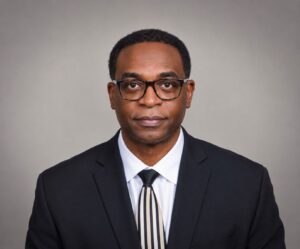
The Blueprint of Becoming: Reflections on a Transdisciplinary Journey at 74
Isaac Megbolugbe
September 2026
Introduction
In the Gospel of Matthew, Jesus poses a deceptively simple yet foundational question to his disciples: “Who do you say that I am?” It is a question not of mere identity, but of essence, impact, and alignment with a higher purpose. As I stand at the vantage point of 74 years of age, looking forward to my 75th birthday next year, this scriptural inquiry has become a powerful lens for self-reflection. In launching The 75 Echoes series, I am compelled to turn that question inward: As a scholar, mentor, and seeker of truth, who have I become, and what forces have shaped the architecture of my life’s work?
Looking back over a lifetime career, I see that the pursuit of knowledge is never just about accumulation; it is about transformation. To echo through the next quarter-century and beyond, our work must be anchored in deep principles. In interrogating my own journey, I have detected seven core pillars—metaphorical echoes—that have characterized my path and define who I am today as I transition from 74 to 75.
1. The Call to Think Transdisciplinarity
The world does not neatly organize its challenges into academic departments. Early in my journey, I realized that true understanding requires breaking down the artificial silos of knowledge. Thinking transdisciplinarity means moving beyond the comfort zone of a single field to weave together insights from economics, sociology, theology, and spatial sciences. It is at the intersection of these disparate realms that the most profound truths are discovered and the most enduring solutions are forged.
2. The Duality of Reality: What Is vs. What Ought to Be
A rigorous intellectual life requires a dual vision. First, we must possess the courage to observe reality exactly as it is, refusing to sugarcoat systemic failures or structural flaws. However, observation alone breeds cynicism. Therefore, we must simultaneously study reality as it should or ought to be. This tension between current fact and future ideal is where hope resides. It transforms research from a passive recording instrument into an active agent of human flourishing.
3. Unveiling the Architecture: Patterns, Processes, and Structures
Surface-level observation is insufficient for deep transformation. My analytical philosophy has always dictated that analysis must reveal the underlying patterns, processes, and structures of reality. We must seek to understand the “essencing“—the very core nature—and the practical functioning of the systems around us. When you understand the architecture of a problem, you gain the power to redesign it for the common good.
4. The Discipline of Diagnostic Clarity
In the rush to fix the world’s ailments, there is a dangerous temptation to rush straight to prescriptions. Yet, a doctor cannot heal without an accurate assessment. In my career, I have championed the principle that problem-solving must always lead with diagnostic clarity. Defining a problem accurately, with precision and nuance, is more than half the battle won. Without this clarity, our solutions are merely Band-Aids on deep-seated wounds.
5. Balancing the Scales: Experience and Evidence
With decades of life comes a wealth of personal insight. However, the authority of experience must always be disciplined with the expertise of evidence. While experiential wisdom gives us intuition and empathy, data and rigorous evidence keep us grounded in truth. The harmony of these two forces ensures that our leadership remains both deeply human and intellectually unassailable.
6. Lifelong Learning: The Engine of Becoming
We never truly arrive; we are always in a state of creation. Lifelong learning is the ultimate antidote to stagnation and the primary engine behind “becoming.” Remaining curious at 74 requires the humility to admit that there is always more to know. Every book read, every student mentored, and every theory challenged has been a fuel injection into the engine that propels me toward my 75th year with a young heart and an eager mind.
7. The Ultimate Alignment: Revelation and Discovery Knowledge
Perhaps the most foundational pillar of my life is the relationship between faith and intellect. I have come to understand that revelation knowledge must serve as the overarching framework for understanding discovery knowledge. Secular research and scientific discovery reveal the mechanics of the universe, but divine revelation provides the meaning. When we place our academic discoveries within the grand framework of God’s revealed truth, our intellect finds its ultimate purpose.
Who Have I Become?
So, who is Isaac Megbolugbe at 74, standing on the threshold of 75?
I am a man who has learned that the ultimate objective of education is not the cultivation of intellect alone, but the refinement of the soul. I am a tapestry woven from the threads of rigorous science and unshakeable faith. I am a student who used the first seven decades of life to learn how to think, so that I might spend the rest of my days learning how to love, serve, and leave an echo that inspires the generations to come. As I look forward to next year’s celebration, I do so not as one who has finished the race, but as one who is eagerly preparing for the next leg of the journey.
Isaac Megbolugbe, Founder and President of GIVA Ministries International. He is a recipient of Albert Nelson Marquis Lifetime Achievement Award in business and academia in the United States of America. He is retired professor at Johns Hopkins University, Former Vice President at Fannie Mae, Former Practice Leader at PricewaterhouseCoopers, and a Fellow of the Royal Institution of Chartered Surveyors. He is resident in the United States of America.
