
The Sovereignty of Witness: Reclaiming Lived Experience from the Flattening Gazeof Secular Theory
Introduction
To reach seventy-four years of life is to possess a repository of memory, choice, and conviction that no academic discipline can fully map. As I approach my milestone seventy-fifth birthday, I find myself looking backward through a sacred lens—one forged in the crucible of real-world trials and illuminated by the unyielding light of divine revelation. Yet, when this seventy-four-year journey is viewed through the dominant frameworks of modern academia, a profound disconnect emerges. The sacred, messy, and deeply personal texture of an individual life is systematically dismantled by two powerful secular forces: the clinical reductionism of social science and the sterile deconstruction of modern literary theory.
Together, these disciplines form an epistemological front that seeks to strip humanity of its God-given agency, free will, and spiritual wisdom. Where social science replaces the living soul with an objectified statistic, modern literary criticism converts sacred personal testimony into a secularized, aesthetic artifact. In both realms, human-concocted theories are elevated as normative, while the revelation knowledge that guides and sustains the believer is dismissed as mere coping mechanism or subtext. The story of a faithful life is thus caught in a pincer movement—squeezed on one side by sociological stereotypes and on the other by academic literary filters like trauma theory.
The two articles that follow serve as a dual act of defiance and reclamation, charting a deliberate path to liberate personal history from these reductive cages:
Ultimately, this discussion moves beyond mere critique to propose a radical solution: a unique memoir architecture designed to act as a spiritual fortress. By establishing a non-traditional blueprint for memory, this series refuses to let secular theorists act as the curators of a holy legacy. It reclaims the inherent authority of the believer’s voice, ensuring that seventy-five years of lived wisdom stand not as a clinical specimen or a literary artifact, but as a living testimony to the grace of God.
The Eclipse of my Soul: Reclaiming My 75-Year Journey from the Reductions of Social Science
As I stand at 74 years of age, looking forward to my 75th birthday celebration next year, I find myself deeply reflecting on the narrative of my life. When I look back with the invaluable benefit of hindsight, I do not see a collection of data points, demographic trends, or predictable social behaviors. I see a journey of faith, a series of conscious choices, and a deeply personal relationship with the Creator.
Yet, when I look at how modern social science frames human existence, I feel a profound sense of erasure. Secular disciplines have objectified human and social reality, substituting sterile academic models for the living, breathing humanity that inhabits our existential reality. For a person of faith like myself, this framing is deeply problematic. It attempts to fit my 75-year echo into a box that completely misses the music.
The Three Ways Secular Academia Erases My Experience
In reviewing my life’s history, I realize that modern sociological and psychological frameworks commit three structural errors that strip away the essence of who I am.
1. They Objectify My Existential Self
Social science tends to treat individuals as specimens in a lab. It replaces my lived reality—the actual, emotional, and spiritual texture of my day-to-day existence—with an “object” of study. To the academic tracker, I am a statistic, a member of an age cohort, or a product of my socio-economic background. This iron out and completely flattens the unique, intimate reality of my personal history.
2. They Stereotype My Earned Wisdom
By searching strictly for broad patterns, secular frameworks dismiss my unique personal insights as mere cultural conditioning or predictable “stereotypes.” This denies the genuine wisdom and discernment I have earned through decades of personal triumphs, trials, and quiet reflections. My insights are treated as default reactions rather than hard-won knowledge.
3. They Rob Me of My God-Ordained Agency
Perhaps most destructively, secular framing views human behavior through strict environmental determinism. It assumes I am entirely shaped and bound by external social forces. In doing so, it robs me of the God-ordained free will I was given to choose, observe, learn, and pivot. It ignores the reality that I have frequently acted against social expectations precisely because I was answering a higher spiritual calling.
The Battle of Knowledge: Discovery vs. Revelation
The core tension I feel between academic framing and my life story comes down to a clash of authorities. Secular academia has established a rigid hierarchy that places Discovery Knowledge above Revelation Knowledge.
[The Secular Academic Hierarchy] [The Hierarchy of My Faith]
▲ 1. Discovery Knowledge ▲ 1. Revelation Knowledge
│ (Empirical Data, Science) │ (Divine Truth, Scripture)
│ │
│ 2. Revelation Knowledge │ 2. Discovery Knowledge
▼ (Dismissed as Subjective) ▼ (Informed & Guided by Faith)
Secular institutions treat discovery knowledge—empirical data and human logic—as the universal, normative truth for all of humanity. They relegate revelation knowledge to a secondary, subjective status, defining it as something that merely separates the “believer” from the “non-believer.”
But in my own life, revelation knowledge is paramount. It is the divine truth that has guided my moral compass, motivated my behavior, and sustained me through my darkest valleys. Making secular, empirical knowledge the norm for humanity forces me to view my life through a lens that deliberately blinds itself to the providential, the supernatural, and the sacred elements of my journey.
Evaluating My 75-Year Echo: Contextual and Consequential Realities
My life story stands as a direct counter-narrative to this secular reductionism. As I curate my 75-Year Echo Series, I choose to evaluate my history through two lens that academia cannot replicate:
Conclusion: My Defiant Reflection
My life story is not a collection of stereotypes to be filed away in a sociological textbook. It is a testament to human agency operating under divine guidance.
At 74, this reflection is my act of defiance against a secular framing that seeks to minimize the weight of my faith. By asserting the superiority of a life lived through revelation and free will, I am reclaiming the true narrative of my existence—one where data bows to wisdom, and discovery is forever illuminated by faith.
The Deconstruction of Witness: How Literary Theory Weaponizes Human Experience Against Faith
As I continue to shape my 75-Year Echo Series and look ahead to my 75th birthday celebration next year, I find that my conflict with secular frameworks extends far beyond the bounds of social science. When I turn my gaze toward the modern literary field, I encounter a parallel mindset that troubles me just as deeply.
Just as sociology objectifies our social reality into data points, literary criticism uses human-made concepts and academic frameworks—such as trauma theory, psychoanalysis, and structuralism—as lenses to reshape lived human experiences into “creative narrative artifacts.” In doing so, the literary world commits a similar act of erasure. It takes the raw, sacred testimonies of our lives, strips away the divine wisdom earned through enduring them, and reduces them to mere aesthetic objects or political tropes.
For a person whose life has been anchored in faith, this academic filtering is highly problematic. It intercepts the learning, the redemption, and the spiritual insights derived from my lived experiences, replacing them with sterile, secularized definitions of human suffering and resilience.
The Literary Crucible: Transforming Testimony into Artifact
When a life story passes through the sieve of modern literary theory, a destructive transformation occurs. What begins as a sacred witness of human survival and divine intervention is systematically broken down and reconstructed to fit an academic agenda.
[The Lived Experience] ──► [The Academic Lens] ──► [The Literary Artifact]
(Raw trial, faith, (Trauma theory, (A sterile text stripped
divine deliverance) secular frameworks) of spiritual agency)
1. The Reduction of Suffering to “Trauma Theory”
In the modern literary lexicon, suffering is rarely allowed to exist alongside spiritual refinement or ultimate redemption. Instead, it is immediately categorized under “trauma theory.”
2. The Theft of Hard-Won Wisdom
When my lived experiences are treated as “creative narrative artifacts,” the insights I have gathered over 74 years are dismissed as mere subtext or cultural conditioning. Literary criticism tends to view a believer’s testimony through a cynical lens, analyzing the language I use rather than the truth I lived. This denies me the authority of my own story, suggesting that my faith-based interpretations are just naive coping strategies rather than deep, existential wisdom.
3. The Flattening of Divine Narrative into “Aesthetics”
To the secular academic, a story of deliverance is evaluated based on its plot structure, its use of metaphor, or its alignment with current ideological trends. When academia prioritizes the craft over the spirit, it commits a grave error. It treats the hand of God in my life as a literary device and my free will as a mere character arc.
The Eclipse of Revelation in the Creative Arts
This shared mindset between social science and literature stems from the exact same epistemological arrogance: the insistence that secular human theory is normative for all of humanity.
In the literary world, human-concocted theories are placed on a pedestal, while the revelation knowledge that actually motivates and sustains a believer is treated as an outdated superstition.
|
Dimension of Life |
The Academic Literary Lens |
The Reality of My Faith-Based Experience |
|
Pain & Suffering |
A secular “trauma” that permanently fragments the self. |
A crucible that produces perseverance, character, and hope. |
|
Human Choice |
A byproduct of social conditioning or psychological damage. |
God-ordained free will acting in alignment with or defiance of the world. |
|
The Outcome |
A creative artifact meant for critical analysis and critique. |
A living testimony of grace meant to instruct, inspire, and glorify God. |
When I view my life through their lens, I am forced to pretend that my survival was a matter of psychological luck or systemic privilege. But my 74 years of hindsight tell a completely different story. I survived because of a real, active faith. I learned because the Holy Spirit illuminated my experiences. To allow literary theory to re-write my history would be to allow it to erase my altar stones of remembrance.
Reclaiming the Narrative: My History is a Testimony, Not an Artifact
As I look forward to reaching the milestone of 75 years, I refuse to let the literary establishment or the social sciences act as the curators of my legacy. My life is not an artifact to be dissected by secular theorists who lack the spiritual tools to understand its depth.
My experiences have yielded real, consequential wisdom. I have chosen, I have observed, and I have learned—not under the guidance of passing academic trends, but under the unchanging light of divine revelation. By writing my own story, in my own words, I am reclaiming my narrative. I am asserting that the lived experience of a person of faith carries an inherent authority that no human theory can ever diminish, replicate, or erase.
The Architecture of Witness: Structuring My Memoir to Defy Secular Reductions
As I approach my milestone 75th birthday, I am acutely aware that simply writing my story is not enough; I must carefully design the very scaffolding of my memoir. If I adopt the traditional chronological or psychological structures favored by modern publishing, I risk leaving my life open to the creeping distortions of secular criticism. If my book looks like a standard autobiography, an academic reviewer or secular reader will instinctively try to map it onto trauma theory or sociological trends.
To protect the integrity of my 75-Year Echo Series, I must design a structural format that acts as a spiritual fortress. The architecture of my book must actively resist being treated as a mere “creative artifact.” It must force the reader to engage with my life on the terms of God-ordained free will and revelation knowledge.
Below is the blueprint I have designed to ensure my faith-based testimony remains entirely uncompromised and shielded from secular distortion.
The Three Structural Pillars of My Sacred Narrative
To actively subvert secular literary and sociological lenses, I am organizing my memoir around three non-traditional structural pillars.
┌─────────────────────────────────────────────────────────────────────────┐
│ THE TRI-ARCHITECTURAL FRAME │
├────────────────────┬────────────────────────────┬───────────────────────┤
│ 1. THE ALTAR STONE │ 2. THE AGENCY TRACK │ 3. THE PROVIDENCE AXIS│
│ Replaces secular │ Defies environmental │ Replaces trauma │
│ “turning points” │ determinism by mapping │ theory with divine │
│ with monuments │ conscious spiritual │ sovereignty and │
│ of divine grace. │ choices and outcomes. │ redemption. │
└────────────────────┴────────────────────────────┴───────────────────────┤
1. Altar Stones Over “Turning Points”
Traditional memoirs rely heavily on dramatic plot twists or psychological breakdowns to move the story forward. Instead of using these secular literary tropes, I will structure my chapters around Altar Stones—inspired by the biblical practice of setting up physical monuments of remembrance after a divine intervention.
2. The Agency Track Over Environmental Determinism
Social science wants to prove that I am merely the sum total of my demographic background, my generation, or my socio-economic environment. To smash this assumption, my memoir will explicitly feature a structural layout I call the Agency Track.
3. The Providence Axis Over Trauma Theory
Modern literary theory loves to view human history through the broken lens of unresolved trauma. If you leave a wound open in a text, secular theorists will dissect it. I will shield my painful seasons by organizing them along the Providence Axis.
A Contrast of Biographical Layouts
To visualize how this structure shields my testimony, we can compare how a secular publisher would layout my 74 years of lived experience versus how I am choosing to build it:
|
Secular Biographical Blueprint |
My Faith-Fortified Structural Blueprint |
|
Chronological/Linear Layout: Treats life as a passive journey through time and aging. |
Providential Climax Layout: Treats life as a series of circles expanding outward from a fixed center of faith. |
|
Thematic Focus on Conflict: Magnifies wounds, victimhood, and systemic limitations. |
Thematic Focus on Deliverance: Magnifies the sovereignty of God and the active exercise of human agency. |
|
Resolution via Human Triumph: Ends with self-actualization, therapy, or secular success. |
Resolution via Doxology: Ends in praise, leaving my 75-year echo as an altar for the next generation to observe and learn from. |
Conclusion: Writing from the Fortress
By intentionally formatting my memoir this way, I am taking a stand at 74. I am ensuring that when my family, my community, and even secular onlookers read the pages of my life, they are denied the ability to reduce it to a stereotype or an academic artifact.
They will not find a passive subject molded by the 20th and 21st centuries. They will find an active agent of faith who looked at the world through the superior lens of revelation knowledge. This structural fortress ensures that my 75-Year Echo remains exactly what God intended it to be: a pure, unadulterated shout of praise to His faithfulness.
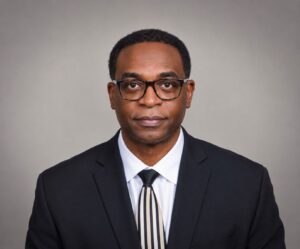
Isaac Megbolugbe, Director of GIVA Ministries International. He is a recipient of Albert Nelson Marquis Lifetime Achievement Award in business and academia in the United States of America. He is retired professor at Johns Hopkins University, Former Vice President at Fannie Mae, Former Practice Leader at PricewaterhouseCoopers, and a Fellow of the Royal Institution of Chartered Surveyors. He is resident in the United States of America.
