
The Sovereignty of Faith: Moving from the Tyranny of Sight to the Rule of Christ
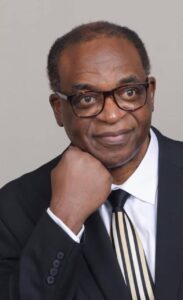
Isaac Megbolugbe
October 2026
Prologue: A Legacy of Changed Sovereigns
To the Men and Women, I Am Discipling,
I am writing this to you in my 74th year of lifelooking forward to my 75th birthday celebration next year.
Over more than seven decades, I have watched the shifting tides of human history and personal experience. I have seen economies fluctuate, health realities challenge our resolve, and the world demand our absolute submission to what can be perceived with the human eye. For a long time, like many of you, I viewed the human struggle through a conventional lens: mind over matter—the idea that if we just grit our teeth, exert our willpower, and forge mental toughness, we can achieve sovereignty over our circumstance.
But after walking with God across the terrain of a long life, a deeper, far more elegant reality has crystallized. The language to frame what my soul has lived for decades is finally clear, and I am passing it directly to you.
The world’s formula of mind over matter is an exhausting, upward climb where you are forced to play the role of the sovereign. But in the Kingdom of God, that equation is beautifully translated: Faith over sight is God’s sovereignty over your circumstance.
When you make this shift, you realize that faith is not a psychological trick, positive thinking, or emotional management. Faith is absolute agreement with Sovereignty. It is a declaration of allegiance. It means your mind—renewed by Who God is—looks past physical matter and refuses to let the circumstance dictate your internal reality.
Throughout my life, I have learned that when a man is drowning in anxiety or paralyzed by a crisis, well-meaning advice like “stop being afraid” is completely powerless. Fear is a perfectly logical response if your circumstances are your ruler. The key to freedom is not emotional management; it is a change of government.
Do not try to stop being afraid. Instead, change your sovereign.
I have lived this truth through the decades, and now I give you the language to pass it on. As you read this manuscript, my prayer is that you will step out from the exhausting kingdom of what is seen, defect from the tyranny of your circumstances, and step into the quiet, unshakeable majesty of Who He is.
You do not live under the sovereignty of what you see. You live under the sovereignty of the Living God.
In Agreement with the Sovereign,
Isaac Megbolugbe
Introduction: The Battle for the Mind
Human experience is a constant battle for ownership of the mind. From our earliest years, we are conditioned to believe that mind over matter is a prize won through sheer human willpower, grit, and psychological stamina. We are taught to look at our surroundings, analyze the data, and somehow force our internal state to conquer external limitations. In this conventional paradigm, we define success as achieving sovereignty over circumstance.
Yet, true spiritual maturity unmasks this philosophy as an exhausting illusion. True victory is never found in straining to control our environments; it is found in a radical relocation of our ultimate authority. The defining struggle of the human soul is not a battle against difficult environments, but a choice between two competing rulers. It is a choice to step out from the Tyranny of Sight and surrender to the Sovereignty of Faith.
As this discussion unfolds, we will trace the architecture of this profound shift, moving from abstract spiritual theory into the visceral realities of human history and modern life:
This is not a manual for behavioral modification or emotional control. It is an invitation to defect from the exhausting kingdom of what is seen, and to step into the quiet, unshakeable majesty of Who He is.
Chapter 1: Changing Sovereigns
For generations, the human struggle has been framed as a battle of mind over matter. We are taught that to achieve mastery over our lives, we must exercise willpower, grit, and mental fortitude to triumph over our physical limitations and difficult environments. We define this internal strength as sovereignty over circumstance.
But for those walking a path of deep spiritual maturity, a deeper paradigm eventually reveals itself. True victory is not about bending circumstances to your will through positive thinking. It is about a fundamental relocation of your trust. It is about changing who rules you.
When we look through the lens of Scripture, the equation shifts beautifully: “Mind over matter” is ultimately realized when “Faith over sight” becomes our reality.
When the world says “Mind over matter,” it is trying to use a flawed human instrument (the natural mind) to dominate a hostile environment (matter). It is an exhausting, upward battle of willpower. It forces you to play the role of the sovereign, trying to protect your own heart from the storm.
But when you translate that into Kingdom language—“Faith over sight“—the burden completely shifts. Your mind is no longer fighting the circumstance. Your mind is simply choosing its allegiance. You are electing to let God’s Sovereignty step into the arena on your behalf.
The Two Sovereigns Fighting for Your Life
At any given moment, your heart is answering to one of two competing authorities. There is no middle ground. You are either being governed by what is happening around you, or by Who is standing above you.
|
The Sovereign |
The Mechanism |
The Core Message |
The Result |
|
Circumstance |
The Sovereignty of Sight |
“What you see is what is. Fear is reasonable.” |
Bondage to the physical world |
|
Christ |
The Sovereignty of Faith |
“What God is, is what is. Rest is reasonable.” |
Freedom in the spiritual reality |
1. The Sovereignty of Sight (Matter Governs Mind)
To live by sight is to allow your external environment to dictate your internal state. When the waves are high, panic is logical. When resources are low, despair is inevitable. Sight demands that your mind bow to matter. It says that your circumstances have the final, authoritative word on your identity, your security, and your future. Under this sovereign, fear is the only rational response.
2. The Sovereignty of Faith (Mind Governs Matter)
To live by faith is to have a mind so thoroughly renewed by God’s sovereign attribute that it refuses to take its cues from the material world. Faith looks past the immediate crisis to behold the unchanging character of God. It doesn’t deny the existence of the storm; it simply denies the storm the right to rule the heart. Under this sovereign, absolute rest becomes the only reasonable response.
Faith is Agreement with Sovereignty
This shift changes our entire understanding of spiritual life. Faith is not positive thinking. It is not a psychological trick to build up self-confidence or manifest a better outcome.
Instead, faith is agreement with Sovereignty.
To have faith means to look at what God says, who God is, and how God rules, and to say, “I agree.”
When you agree with His sovereignty, you stop trying to engineer your own safety. You stop trying to manipulate matter with your mind. You simply align your mind with the Ultimate Reality. You no longer live under the tyranny of what you see; you live securely under the majesty of Who He is.
The Paradigm Shift for Discipleship
This truth completely revolutionizes how we guide, mentor, and disciple others. Too often, we give well-meaning but powerless advice. We tell people, “Stop being afraid, “or “Just have more courage.” But fear is a natural, involuntary byproduct of living under the wrong ruler. If circumstances are your sovereign, you should be afraid, because circumstances change on a whim.
The message of true discipleship is radically different. Do not tell men to stop being afraid. Teach them to change sovereigns.
When someone is drowning in anxiety, the solution is not a lecture on emotional control. The solution is an invitation to defect from the kingdom of sight and swear allegiance to the King of Kings. When a man changes his sovereign, his internal atmosphere changes instantly. Fear loses its legal right to his mind, and the peace that passes understanding takes its place.
It is a simple, elegant frame for a lifelong truth: Stop fighting the circumstances, and start resting in the Sovereign.
Chapter 2: Masters of the Shift (The Biblical Narratives)
Every great narrative in Scripture pivots on a single, silent decision: which sovereign will the protagonist choose to obey? When faced with the towering giants of physical reality, the human instinct is to bow to the Tyranny of Sight. Yet, the heroes of the faith are not those who possessed flawless circumstances, but those who learned the grueling, triumphant art of changing sovereigns mid-crisis.
By looking at the lives of Abraham, Peter, and David, we see exactly how “mind over matter” is realized when the mind agrees completely with the sovereignty of God.
1. Abraham: Choosing the Promise Over the Body
Abraham is the ultimate case study in allowing a mind renewed by God’s attribute to completely govern physical matter.
2. Peter: The Friction Between Wind and Word
Peter’s brief walk on the Sea of Galilee is a vivid, real-time demonstration of how rapidly a human being can bounce between two conflicting authorities.
3. David: Juxtaposing the Armies of Israel with the Lord of Hosts
The valley of Elah provides a stark contrast between an entire nation trapped under the sovereignty of sight and a single young man walking under the sovereignty of faith.
The Universal Framework for the Disciple
When we analyze these three men, a universal template emerges for how we are to live and how we are to disciple others:
[Physical Circumstance] ───> Dictates the Heart ───> The Tyranny of Sight (Fear)
VS.
[God’s Character/Word] ───> Dictates the Heart ───> The Sovereignty of Faith (Rest)
To disciple men like Abraham, Peter, and David, we must stop managing their surface-level symptoms. If a man is sinking like Peter, don’t just tell him to tread water better. If a man is hiding in a tent like Saul’s army, don’t just lecture him on courage.
Show him what Abraham saw. Point him back to the Word that Peter stepped out on. Remind him of the living God David served. When a person’s mind finally agrees with the absolute supremacy of God, the shift occurs. Fear evaporates, circumstances lose their grip, and they step into the quiet, unshakeable sovereignty of faith.
Chapter 3: Modern Applications
The ancient battle between the Tyranny of Sight and the Sovereignty of Faith did not end on the shores of Galilee or in the valleys of ancient Israel. It plays out every single day in the concrete, high-stakes arenas of the modern world.
Today, the “wind and waves” look like market crashes, medical diagnoses, and structural collapses. The “giants” we face are systemic crises, paralyzing anxieties, and seemingly insurmountable odds. Yet, the spiritual equation remains entirely unchanged: Mind over matter is still realized when faith over sight becomes our reality.
When we observe modern leaders, innovators, and everyday overcomers, we see the exact same paradigm shift that anchored Abraham, Peter, and David.
1. The Corporate Boardroom: Navigating the Market Crash
In the fast-paced world of business and global economics, leaders are trained to worship the sovereignty of sight. They rely heavily on data, spreadsheets, and immediate market indicators to dictate their peace of mind.
2. The Oncology Ward: The Reality of the Diagnosis
Perhaps no environment in modern life enforces the tyranny of sight more ruthlessly than a hospital room. The cold, sterile reality of medical equipment and laboratory reports demands absolute submission from the human mind.
3. The Crisis of Modern Anxiety: Defeating the Giant of the Mind
We live in an era plagued by an invisible giant: chronic anxiety and mental health crises. For many, the battlefield is not an external corporation or a hospital ward, but the silent wilderness of their own thoughts.
Chapter 4: Concluding Remarks (The Architecture of Allegiance)
We have traced the profound shift from the Tyranny of Sight to the Sovereignty of Faith through the timeless halls of Scripture and into the gritty trenches of modern life. We have seen that true victory is never a matter of human willpower straining against difficult circumstances. It is a radical relocation of authority.
Yet, to fully master this shift—to truly live out the reality that “Mind over matter is sovereignty over circumstance”—we must understand the underlying spiritual architecture that makes it possible. Faith is not a blind leap into the dark, nor is it a hollow psychological exercise. Faith is a response to Reality. Specifically, it is the human heart coming into absolute alignment with three distinct dimensions of the Divine: God’s Essence, His Attributes, and His Principles.
It is this triune foundation that governs, anchors, and fuels our ability to walk by faith and not by sight.
┌─────────────────────────┐
│ GOD’S ESSENCE │
│ (Who He Is: The Rock) │
└────────────┬────────────┘
▼
┌─────────────────────────┐
│ GOD’S ATTRIBUTES │
│ (How He Rules: Character)│
└────────────┬────────────┘
▼
┌─────────────────────────┐
│ GOD’S PRINCIPLES │
│(How He Acts: Laws/Word) │
└────────────┬────────────┘
▼
=========================
THE SOVEREIGNTY OF FAITH
=========================
1. The Essence of God: The Ground of Our Reality
The Essence of God speaks to His intrinsic nature—His fundamental being. God does not merely have power or possess life; He is Power, He is Life, and He is Truth. He is the I AM—the self-existent, uncaused Creator of all physical and spiritual matter.
2. The Attributes of God: The Character That Commands Trust
If essence is who God is, His Attributes are the specific expressions of His character. These are His defining qualities: His omniscience (all-knowing), His omnipotence (all-powerful), His omnipresence (ever-present), His absolute goodness, His perfect justice, and Hisunswerving faithfulness.
3. The Principles of God: The Framework for Consistent Operation
God’s Principles are the spiritual laws, covenants, and commands He has woven into the fabric of creation and revealed through His Word. Just as the physical world is governed by unyielding laws like gravity, the spiritual realm is governed by divine principles—such as the law of sowing and reaping, the mechanics of covenantal protection, and the promise that all things work together for the good of those who love Him.
The Ultimate Conclusion: Passing on the Legacy
For 74 years, you have watched the shifting tides of human history and personal experience. You have seen empires rise and fall, markets fluctuate, and human strength fade. But beneath the surface of all those shifting circumstances, you saw a pattern. You saw that those who bow to what they see are perpetually enslaved by fear, while those who bow to Who He is step into an unshakeable, supernatural rest.
The language is now clear, absolute, and ready to be passed to the next generation of men:
Faith is not a tool to manipulate your circumstances; it is an act of total surrender to the only True Sovereign.
When you teach a man to stop trying to manage his fear and instead teach him to change his sovereign, you give him a gift that the world can neither give nor take away. He stops begging his circumstances to change and starts commanding his mind to agree with God. He steps out of the kingdom of sight. He anchors himself in the Essence, rests in the Attributes, and executes the Principles of the Most High.
He stands tall in the boardroom, the hospital ward, or the wilderness, declaring with absolute, quiet certainty:
“I do not live under the sovereignty of what I see. I live under the sovereignty of Who He is.”
Isaac Megbolugbe, Founder and President of GIVA Ministries International. He is a recipient of Albert Nelson Marquis Lifetime Achievement Award in business and academia in the United States of America. He is retired professor at Johns Hopkins University, Former Vice President at Fannie Mae, Former Practice Leader at PricewaterhouseCoopers, and a Fellow of the Royal Institution of Chartered Surveyors. He is resident in the United States of America.
