
The Myth of the Virtuous Statesman
Why Flawed Leaders, Cynical Bargains, and Political Theater—Not Historical Purists—Forge Geopolitical Reality
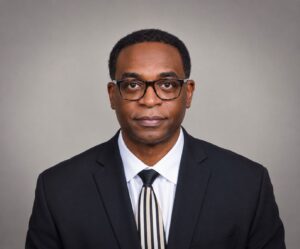
Isaac Megbolugbe
November 2026
Abstract:
Contemporary commentary often dismisses high-stakes diplomatic summits among rival powers as hollow propaganda whenever the participants are burdened by domestic vulnerabilities or authoritarian impulses. Challenging the romanticized contrast between the 1945 Yalta Conference and the trilateral summit in Shenzhen between Donald Trump, Vladimir Putin, and Xi Jinping, this essay argues that history’s most enduring geopolitical realignments have rarely been forged by virtuous statesmen acting above self-interest. Drawing on historical turning points—from the compromised bargains of Yalta and the 1972 Nixon–Mao rapprochement to the Congress of Vienna—the piece demonstrates how political theater, narrative signaling, and self-preservation serve as essential instruments of statecraft. Ultimately, separating moral disapproval from strategic analysis is vital to understanding how power actually operates in international politics.
Introduction
There is a persistent, almost romantic amnesia that overtakes political commentary whenever modern leaders gather to negotiate the shape of the world. In her recent dispatch for The Atlantic, historian and columnist Anne Applebaum dismisses the trilateral summit in Shenzhen between Donald Trump, Vladimir Putin, and Xi Jinping as a hollow exercise in vanity—a “sillier” shadow of the 1945 Yalta Conference designed merely to produce propaganda clips that “mask their political failures.”
Yet in contrasting the supposed gravity of Yalta with the perceived theater of Shenzhen, such commentary falls into a familiar narrative trap: the illusion that the defining geopolitical benchmarks of history were forged by pure, unimpeachable statesmen acting above self-interest.
In reality, history’s most enduring geopolitical realignments have almost always been brokered by deeply flawed, compromised, and self-serving leaders—figures whose domestic vulnerabilities, cynical calculations, and hunger for spectacle were not obstacles to statecraft, but its very engine.
I. What We Misremember About Yalta
To hold up the February 1945 Yalta Conference as a gold standard of substantive diplomacy against which modern summits must be measured is to fundamentally misremember what Yalta actually was. The three men who sat at the Livadia Palace—Franklin D. Roosevelt, Winston Churchill, and Joseph Stalin—were hardly paragons of moral purity or harmonious consensus. In truth, Yalta was a gritty, cynical collision of competing weaknesses, ruthless self-interest, and carefully managed illusion.
- A Desperate and Compromised Trio: Roosevelt arrived in Crimea visibly dying, suffering from severe congestive heart failure and hypertension that he and his inner circle had carefully concealed from the American electorate just months earlier. Preoccupied with securing Soviet entry into the war against Japan, he made sweeping concessions in Eastern Europe and Asia that would haunt U.S. foreign policy for decades. Churchill, acutely aware that the British Empire was financially bankrupt, militarily exhausted, and rapidly being eclipsed by Washington and Moscow, fought a desperate rearguard action merely to salvage a semblance of British relevance. Stalin, a totalitarian dictator responsible for the deaths of millions of his own citizens, used the summit to legitimize the subjugation of Eastern Europe—a reality only thinly veiled by the lofty rhetoric of the “Declaration on Liberated Europe.”
- The Power of Stagecraft: Even in 1945, the imagery was the message. The iconic photograph of the “Big Three” seated in the sunlit courtyard of Livadia Palace was meticulously curated to project Allied unity, vigor, and historical inevitability. Carefully cropped and framed, it hid Roosevelt’s physical frailty, papered over Churchill’s growing despair about the fate of Poland, and masked the bitter mistrust and irreconcilable ideologies that would erupt into the Cold War just months later.
Yalta did not endure for nearly half a century because its architects were noble. It endured because three compromised leaders recognized the raw distribution of power on the ground and formalized a sphere-of-influence reality that reflected those facts.
II. The Alchemy of Self-Interest
When modern commentators view a meeting like the Shenzhen summit strictly through the lens of personal failings or domestic political theater, they risk missing how geopolitical shifts actually happen. Conventional wisdom suggests that historic breakthroughs require leaders of unimpeachable integrity operating from positions of serene domestic consensus. In reality, political security often breeds caution; leaders who face no crises at home rarely risk the political capital required to overturn decades of orthodoxy.
Across eras, leaders burdened by domestic crises, ideological contradictions, or outsized egos are frequently the only figures capable of breaking entrenched diplomatic deadlocks:
- Nixon and Mao (1972): When Richard Nixon traveled to Beijing in 1972, skeptics rightly noted the brazen political theater of the trip. Nixon was mired in the Vietnam War, facing fierce anti-war protests at home and preparing for a reelection campaign; Mao Zedong was presiding over a nation devastated by the Cultural Revolution and rattled by border clashes with the Soviet Union. Both men desperately needed a foreign-policy triumph to shore up their standing at home—and used choreographed television broadcasts to deliver it. Yet that “propaganda exercise” shattered decades of Cold War orthodoxy, drove a permanent wedge between Beijing and Moscow, and altered the global balance of power for generations.
- The Congress of Vienna (1814–1815): The architects of post-Napoleonic Europe—figures like Austria’s Prince Metternich and France’s Talleyrand—were notorious for personal corruption, financial greed, intrigue, and reactionary suppression. Their negotiations were famously derided by contemporaries as an indulgent distraction (“Le Congrès ne marche pas, il danse”—”The Congress does not move; it dances”). Nevertheless, beneath the lavish banquets and pageantry, their cynical horse-trading produced the Concert of Europe—a geopolitical framework that prevented a continent-wide war for nearly a hundred years.
III. The Theater of Power
Recognizing how self-interest drives history also exposes the central flaw in dismissing contemporary summits as mere public relations. The irony of writing off the Shenzhen trilateral meeting as empty “propaganda” is that all summitry among rival powers is, at its core, a contest of narratives. In international politics, theater is not a distraction from diplomacy; it is one of its primary instruments.
When Xi Jinping greets Donald Trump on the tarmac in Shenzhen—projecting Chinese centrality and indispensable leadership—when Vladimir Putin invokes the legacy of World War II victors to assert Russia’s continued seat at the high table, and when Trump celebrates the grandeur and personal rapport of the occasion to bypass bureaucratic deadlocks, each leader is engaging in the oldest currency of international relations: signaling status, leverage, and alignment to both domestic and foreign audiences.
Critics operating within a tidy moral framework often expect diplomacy to resemble a seminar among virtuous technocrats—a clinical process where problems are solved cleanly, binding treaties are signed on the spot, and bad actors are publicly chastised rather than photographed. When messy geopolitical reality fails to meet that sterile standard, the entire event is written off as inconsequential. Yet the images broadcast from Shenzhen alter the diplomatic landscape simply by existing: they signal to third-party nations that rigid blocs are fluid, force allies to recalibrate their assumptions, and create domestic political space for leaders to pursue deals that would otherwise be unthinkable.
IV. Restoring Realism to How We Read Geopolitics
Ultimately, one of the greatest hazards in foreign policy analysis is confusing moral disapproval with strategic irrelevance.
To acknowledge that Trump, Putin, and Xi are flawed leaders pursuing self-interested agendas does not validate their policies, nor does it excuse aggression or democratic backsliding. Rather, it restores a necessary realism to how we read international politics. It is entirely possible—and often necessary—to condemn a leader’s domestic repression or territorial ambitions while simultaneously taking their diplomatic maneuvers seriously.
History rarely waits for saints to take the stage. Geopolitical orders are built, revised, and dismantled in smoky rooms, behind curated photo-ops, by imperfect leaders navigating their own political survival. Dismissing a historic convergence of the world’s three foremost nuclear powers simply because the participants are compromised is not a triumph of clear-eyed analysis—it is a refusal to see how power actually operates in the real world.
Isaac Megbolugbe is the Senior Advisor and Managing Principal of GIVA International, LLC, a strategic advisory firm based in the United States. An accomplished scholar, policy advisor, and commentator, his work examines global political economy, institutional governance, and the realpolitik forces shaping international alignments.
