
 The Myth of the Virtuous Statesman: Why Flawed Leaders—Not Historical Purists—Forge Geopolitical Reality
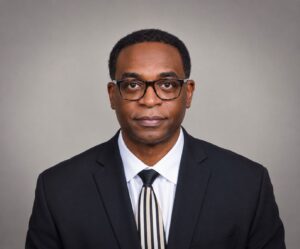
Isaac Megbolugbe
November 2026
Introduction
There is a persistent, almost romantic amnesia that overtakes political commentary whenever modern leaders gather to negotiate the shape of the world. In her recent dispatch for The Atlantic, historian and columnist Anne Applebaum dismisses the trilateral summit in Shenzhen between Donald Trump, Vladimir Putin, and Xi Jinping as a hollow exercise in vanity—a “sillier” shadow of the 1945 Yalta Conference designed merely to produce propaganda clips that “mask their political failures”.
Yet in contrasting the supposed gravity of Yalta with the perceived theater of Shenzhen, such commentary falls into a familiar narrative trap: the illusion that the defining geopolitical benchmarks of history were forged by pure, unimpeachable statesmen acting above self-interest.
In reality, history’s most enduring geopolitical realignments have almost always been brokered by deeply flawed, compromised, and self-serving leaders—men whose domestic vulnerabilities, cynical calculations, and hunger for spectacle were not obstacles to statecraft, but its very engine.
The Unvarnished Reality of Yalta
To hold up the February 1945 Yalta Conference as a gold standard of substantive diplomacy against which modern summits must be measured is to misremember what Yalta actually was. The three men who sat at the Livadia Palace—Franklin D. Roosevelt, Winston Churchill, and Joseph Stalin—were hardly paragons of moral purity or harmonious consensus.
- A Desperate and Compromised Trio: Roosevelt arrived in Crimea visibly dying, concealing the severity of his failing health from the American public while making sweeping concessions to secure Soviet entry into the war against Japan. Churchill, acutely aware that the British Empire was bankrupt and rapidly being eclipsed by both Washington and Moscow, fought desperately to salvage a semblance of relevance. Stalin, a totalitarian dictator responsible for the deaths of millions of his own citizens, used the summit to legitimize the subjugation of Eastern Europe—a reality that was only thinly veiled by the lofty rhetoric of the “Declaration on Liberated Europe.”
- The Power of Stagecraft: Even in 1945, the imagery was the message. The iconic photograph of the “Big Three” seated in the courtyard of Livadia Palace was meticulously curated to project Allied unity and inevitability, masking the bitter mistrust and irreconcilable ideologies that would erupt into the Cold War just months later.
Yalta did not endure because its architects were noble; it endured because three compromised leaders recognized the raw distribution of power on the ground and formalized a sphere-of-influence reality that lasted for nearly half a century.
Why Flawed Leaders Drive Geopolitical Realignment
When commentators view a meeting like the Shenzhen summit strictly through the lens of personal failings or domestic political theater, they risk missing how geopolitical shifts actually happen. Across eras, leaders burdened by domestic crises, ideological contradictions, or personal ego are often the only figures capable of breaking entrenched diplomatic deadlocks.
- Nixon and Mao (1972): When Richard Nixon traveled to Beijing in 1972, critics rightly noted the brazen political theater of the trip. Nixon was facing mounting domestic pressure over the Vietnam War and an upcoming reelection campaign; Mao Zedong was presiding over a country devastated by the Cultural Revolution. Both men desperately needed a foreign-policy triumph to shore up their standing at home. Yet that “propaganda exercise” shattered decades of Cold War orthodoxy and permanently altered the global balance of power.
- The Congress of Vienna (1814–1815): The architects of post-Napoleonic Europe—figures like Prince Metternich and Talleyrand—were notorious for personal corruption, intrigue, and reactionary suppression. Their negotiations were famously derided by contemporaries as an endless round of banquets and pageantry (“The Congress does not move; it dances”). Nevertheless, their cynical horse-trading produced a century of relative great-power stability in Europe.
The Irony of the Narrative Bubble
The irony of dismissing the Shenzhen trilateral meeting as mere “propaganda” is that all summitry among rival powers is, at its core, a contest of narratives.
When Xi Jinping greets Donald Trump on the tarmac, when Vladimir Putin invokes the legacy of World War II victors to assert Russia’s continued seat at the high table, and when Trump celebrates the pageantry of the occasion, each leader is engaging in the oldest currency of international relations: signaling status, leverage, and alignment to both domestic and foreign audiences.
Critics operating within a tidy moral framework often expect diplomacy to look like a seminar among virtuous technocrats—where problems are solved cleanly, treaties are signed on the spot, and bad actors are chastised rather than photographed. When reality fails to meet that standard, the event is written off as inconsequential.
Looking Beyond the Spectacle
To acknowledge that Trump, Putin, and Xi are flawed leaders pursuing self-interested agendas does not validate their policies, nor does it excuse aggression or democratic backsliding. Rather, it restores a necessary realism to how we read international politics.
History rarely waits for saints to take the stage. Geopolitical orders are built and dismantled in smoky rooms, behind curated photo-ops, by imperfect leaders navigating their own political survival. Dismissing a historic convergence of the world’s three foremost nuclear powers simply because the participants are compromised is not a triumph of clear-eyed analysis—it is a refusal to see how power actually operates in the real world.
The Myth of the Noble Summit: What We Misremember About Yalta—and How Diplomacy Actually Works
Whenever modern world leaders gather for high-stakes diplomacy, a familiar refrain echoes through political commentary: This is no Yalta. The February 1945 summit on the Black Sea coast has been elevated in popular memory to a golden age of statecraft—a moment when serious, visionary titans sat down to architecture a durable world order.
Yet to hold up the Yalta Conference as a gold standard of substantive, virtuous diplomacy against which modern summits must be measured is to fundamentally misremember what Yalta actually was. The three men who sat at the Livadia Palace—Franklin D. Roosevelt, Winston Churchill, and Joseph Stalin—were hardly paragons of moral purity or harmonious consensus. In truth, Yalta was a gritty, cynical collision of competing weaknesses, ruthless self-interest, and carefully managed illusion.
A Desperate and Compromised Trio
The myth of Yalta relies on the comforting fiction that the “Big Three” negotiated from positions of lofty principle and unassailable strength. In reality, each leader arrived in Crimea burdened by profound vulnerabilities and ulterior motives.
- Franklin D. Roosevelt: The American president arrived in Yalta visibly dying, suffering from severe congestive heart failure and hypertension that he and his inner circle had carefully concealed from the American electorate just months earlier. Preoccupied with securing Soviet entry into the war against Japan to spare American lives, and placing disproportionate faith in his ability to personally charm Stalin into joining a postwar United Nations, Roosevelt made sweeping concessions in Eastern Europe and Asia that would haunt U.S. foreign policy for decades.
- Winston Churchill: The British prime minister was acutely aware that he was presiding over the twilight of an empire. Britain was financially bankrupt, militarily exhausted, and rapidly being eclipsed by the emerging superpowers in Washington and Moscow. Churchill’s primary objective at Yalta was not to birth a utopian new world, but to fight a desperate rearguard action to salvage a semblance of British relevance, preserve imperial lifelines, and prevent Europe from being carved up entirely without London’s input.
- Joseph Stalin: Fresh from the Red Army’s bloody march across Eastern Europe, the Soviet dictator held the strongest cards on the ground—and played them without scruple. A totalitarian ruler responsible for the deaths of millions of his own citizens, Stalin used the summit to extract formal recognition for a Soviet sphere of influence and to legitimize the subjugation of Poland and neighboring states. The lofty democratic pledges of the “Declaration on Liberated Europe” were, to Moscow, merely diplomatic window dressing for a fait accompli already enforced by Soviet tanks.
The Power of Stagecraft
Modern critics often dismiss contemporary summits as hollow exercises in public relations, complaining that leaders care more about optics than outcomes. Yet even in 1945, the imagery was the message.
The iconic photograph of Roosevelt, Churchill, and Stalin seated side-by-side in the sunlit courtyard of Livadia Palace was meticulously curated to project Allied unity, vigor, and historical inevitability. Carefully cropped and framed, the image hid Roosevelt’s physical frailty, papered over Churchill’s growing despair about the fate of Poland, and gave Stalin a veneer of statesmanlike legitimacy alongside Western democratic leaders.
Behind the camera lenses, the atmosphere was thick with suspicion, mutual deception, and irreconcilable ideologies. Within weeks of the summit’s conclusion, disputes over the implementation of the Yalta accords began tearing the Grand Alliance apart, setting the stage for the Cold War that would erupt in full force shortly thereafter.
Realpolitik, Not Romance
If Yalta was neither pure nor harmonious, why did its geopolitical framework endure for nearly half a century?
The answer lies in a truth that romanticized history often obscures: durable international orders are rarely built by saints acting in perfect agreement. Yalta endured not because its architects were noble, but because three compromised leaders recognized the raw distribution of military and political power on the ground—and formalized a sphere-of-influence reality that reflected those facts.
By looking back at Yalta through rose-colored glasses, we set an impossible standard for modern diplomacy. Statecraft has always been the domain of imperfect leaders navigating domestic pressures, personal ambitions, and harsh geopolitical constraints. Understanding Yalta for what it truly was—a hard-nosed, flawed bargain among self-interested powers—does not diminish its historical significance. Instead, it reminds us that real diplomacy begins not when leaders become virtuous, but when they confront the world as it actually is.
The Alchemy of Self-Interest: Why Flawed Leaders and Political Theater Drive Geopolitical Shifts
In modern political commentary, there is a reflex to dismiss high-stakes diplomatic gatherings as mere vanity projects whenever the participants are burdened by domestic scandals, authoritarian impulses, or a hunger for cameras. When critics view a major convergence—such as the Shenzhen summit—strictly through the lens of personal failings or domestic political theater, they risk missing a fundamental truth about how international relations actually evolve.
Across eras, history shows that leaders weighed down by domestic crises, ideological contradictions, or outsized egos are not anomalies in statecraft. Frequently, they are the only figures capable of breaking entrenched diplomatic deadlocks.
The Paradox of the Compromised Statesman
Conventional wisdom suggests that historic breakthroughs require leaders of unimpeachable integrity operating from positions of serene domestic consensus. In reality, political security often breeds diplomatic caution; leaders who face no crises at home rarely risk the political capital required to overturn decades of foreign policy orthodoxy.
Conversely, leaders cornered by domestic turmoil or driven by personal ambition possess a powerful incentive to disrupt the status quo. What looks to observers like cynical stagecraft is often the very mechanism through which rigid geopolitical alignments are melted down and recast.
1. Nixon and Mao (1972): Theater That Shattered the Cold War
When President Richard Nixon stepped off Air Force One in Beijing in February 1972 to shake hands with Chairman Mao Zedong, skeptics on both sides of the political spectrum rightly noted the brazen political theater of the moment.
- A Mutual Need for Spectacle: Neither man was acting out of sudden ideological affinity or pure altruism. Nixon was mired in the quagmire of the Vietnam War, facing fierce anti-war protests at home and preparing for a high-stakes reelection campaign. Mao, meanwhile, was presiding over a nation economically and socially devastated by the Cultural Revolution, rattled by border clashes with the Soviet Union, and desperate to break out of international isolation.
- The Outcome: Both leaders desperately needed a dramatic foreign-policy triumph to shore up their standing at home—and both used meticulously choreographed television broadcasts and photo-ops to deliver it. Yet that “propaganda exercise” shattered more than two decades of rigid Cold War orthodoxy, drove a permanent wedge between Beijing and Moscow, and altered the global balance of power for generations.
2. The Congress of Vienna (1814–1815): Dancing Toward a Century of Peace
A century and a half earlier, the diplomats who gathered to redraw the map of Europe after the defeat of Napoleon Bonaparte were hardly models of civic virtue. The key architects of the Congress of Vienna—men like Austria’s Prince Klemens von Metternich and France’s Charles-Maurice de Talleyrand—were notorious across the continent for personal corruption, financial greed, romantic intrigue, and reactionary suppression.
- Pageantry Over Substance? To contemporary observers, the summit looked like an extravagant distraction. As the famous quip of the era put it, “Le Congrès ne marche pas, il danse” (“The Congress does not move; it dances”). Month after month of lavish balls, banquets, and theatrical spectacles led critics to dismiss the gathering as an indulgent farce orchestrated by self-serving aristocrats.
- The Outcome: Beneath the glittering surface, however, those deeply flawed figures were engaged in ruthless, pragmatic horse-trading. By balancing competing ambitions and integrating a defeated France back into the European system rather than humiliating it, their cynical diplomacy produced the Concert of Europe—a geopolitical framework that prevented a continent-wide war for nearly a hundred years.
Looking Past the Optics
None of this means that political theater is harmless, or that the personal flaws of world leaders do not carry grave consequences for their citizens and neighbors. Propaganda can mask aggression, and domestic desperation can lead to reckless gambles.
However, reducing major diplomatic summits to nothing more than vanity or distraction blinds analysts to the underlying shifts in power taking place behind the podiums. History rarely waits for virtuous leaders to arrive before rearranging the chessboard. More often than not, durable geopolitical change emerges precisely when imperfect leaders use the tools of spectacle and self-interest to do what conventional statesmen dare not attempt.
The Theater of Power: Why Narrative and Pageantry Are the Real Currency of Summitry
When the leaders of rival superpowers gather under the glare of global media, the immediate reaction from many political commentators is to separate the “substance” from the “show.” Following the trilateral summit in Shenzhen between Xi Jinping, Donald Trump, and Vladimir Putin, skeptics were quick to wave away the event as a hollow exercise in public relations—a stage-managed spectacle designed for domestic consumption rather than genuine problem-solving.
Yet the irony of dismissing the Shenzhen meeting as mere “propaganda” is that all summitry among rival powers is, at its core, a contest of narratives. In international politics, theater is not a distraction from diplomacy; it is one of its primary instruments.
The Oldest Currency in International Relations
Long before modern television cameras or social media feeds, rulers understood that how power is displayed directly shapes how power is perceived—and ultimately, how it is respected. Every gesture at a high-level summit is a calculated signal sent simultaneously to domestic populations, nervous allies, and watchful adversaries.
- Xi Jinping’s Tarmac Diplomacy: When Xi greets Donald Trump on the tarmac in Shenzhen, the visual is carefully calibrated. By hosting the leaders of the United States and Russia on Chinese soil—specifically in a city that symbolizes China’s rapid technological and economic ascent—Beijing projects an image of centrality, stability, and indispensable global leadership.
- Vladimir Putin’s Historical Framing: When Putin invokes the legacy of the World War II Allied victors, he is not indulging in idle nostalgia. He is deploying a deliberate historical narrative to break diplomatic isolation, assert Russia’s enduring status as a co-equal great power, and remind the world that Moscow cannot be excluded from the high table of global security.
- Donald Trump’s Embrace of Pageantry: When Trump celebrates the grandeur and personal rapport of the occasion, he is utilizing spectacle as leverage—signaling to both voters at home and counterparts abroad that personal leader-to-leader engagement can bypass entrenched bureaucratic deadlocks.
Each of these moves relies on the oldest currency in statecraft: signaling status, leverage, and alignment. To dismiss these signals as empty vanity is to ignore the strategic messages embedded within them.
The Illusion of the Technocratic Seminar
Why, then, do so many observers treat narrative-building as proof that a summit lacks serious intent? Much of the skepticism stems from a modern, idealized view of how international disputes ought to be managed.
Critics operating within a tidy moral framework often expect diplomacy to resemble a seminar among virtuous technocrats—a clinical process where complex problems are dissected objectively, binding treaties are signed on the spot, and authoritarian or rival actors are publicly lectured rather than photographed.
In that worldview, a handshake is seen as a moral concession, a banquet is viewed as a distraction, and the absence of an immediate, legally binding communiqué is taken as evidence of failure. When messy geopolitical reality fails to meet that sterile standard, the entire event is written off as inconsequential.
How Narratives Reshape Reality
In truth, great-power summits rarely produce instant, tidy resolutions to decades-old rivalries. Instead, they establish the psychological and political boundaries within which future diplomacy will occur.
The images broadcast from Shenzhen—three leaders standing together, projecting mutual recognition despite profound strategic friction—alter the diplomatic landscape simply by existing. They signal to third-party nations that rigid Cold War-style blocs are fluid, force allies to recalibrate their assumptions, and create domestic political space for leaders to pursue deals that would otherwise be unthinkable.
Reading the Signals
Recognizing the role of narrative in summitry does not require naivety. Leaders undoubtedly use international stages to mask domestic vulnerabilities, burnish their personal brands, and outmaneuver rivals in the court of public opinion.
However, serious geopolitical analysis demands looking through the pageantry rather than merely sneering at it. In the high-stakes arena of rival powers, the cameras are never incidental. The story the leaders tell the world—and the images they choose to project—are often the clearest indicators of where global power is shifting next.
Beyond the Moral Comfort Zone: Restoring Realism to How We Read Geopolitics
In an era defined by deep ideological polarization and fierce competition among great powers, it is tempting to evaluate international diplomacy through a purely moral lens. When leaders with controversial records, authoritarian methods, or brazen personal ambitions gather on the global stage, the instinct of many observers is to recoil—treating any engagement among them as either a betrayal of democratic values or a hollow exercise in vanity.
Yet as we step back from the immediate commentary surrounding the trilateral convergence of Donald Trump, Vladimir Putin, and Xi Jinping, a broader truth comes into focus. To acknowledge that these leaders are flawed figures pursuing self-interested agendas does not validate their policies, nor does it excuse aggression or democratic backsliding. Rather, it restores a necessary realism to how we read international politics.
Separating Moral Judgment from Strategic Analysis
One of the greatest hazards in modern foreign policy analysis is the confusion between moral disapproval and strategic irrelevance. It is entirely possible—and often necessary—to condemn a leader’s domestic repression, human rights record, or territorial aggression while simultaneously taking their diplomatic maneuvers seriously.
When analysts dismiss a summit of the world’s three foremost nuclear powers simply because the participants are compromised, they indulge in a form of analytical wishful thinking. They mistake the ugliness of the actors for the insignificance of the act. In international relations, however, consequences are dictated by capabilities and leverage, not by the moral purity of the men holding the levers of power.
How History Actually Moves
Across centuries, from the gilded ballrooms of the Congress of Vienna to the tense, stage-managed courtyards of Yalta and the televised handshakes of Cold War Beijing, the architecture of global order has rarely been designed by saints.
History does not pause until virtuous, universally admired statesmen arrive to solve the world’s crises cleanly. Instead, geopolitical orders are built, revised, and dismantled in smoky rooms, behind curated photo-ops, by imperfect leaders navigating their own political survival, domestic pressures, and national ambitions. The theatricality, the ego, and the self-serving propaganda are not evidence that nothing is happening; they are the familiar friction of great-power politics in motion.
The Cost of Looking Away
Refusing to engage seriously with what happens when Washington, Moscow, and Beijing converge carries real risks. When commentators write off such moments as mere silliness or distraction, they blind themselves—and the public—to the subtle shifts in alignment, deterrence, and spheres of influence that often begin behind closed doors and beneath the glare of cameras.
Clear-eyed realism demands that we look at the world as it is, not as we wish it to be. Recognizing the agency and impact of flawed leaders is not an act of cynicism or capitulation. On the contrary, it is the essential first step toward understanding how power actually operates in the real world—and preparing for the geopolitical realities that will follow long after the photo-ops have faded.
Isaac Megbolugbe, Senior Advisor and Managing Principal at GIVA International. He is a recipient of Albert Nelson Marquis Lifetime Achievement Award in business and academia in the United States of America. Formerly at Fannie Mae as vice president and at PricewaterhouseCoopers as a global practice leader. He is retired professor at Johns Hopkins University and a Fellow of the Royal Institution of Chartered Surveyors. He is resident in the United States of America.
