
From Royal Courts to Living Faith: The Forensic Legacy of a Spiritual Journey
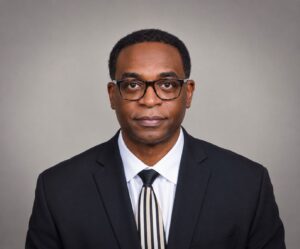
Isaac Megbolugbe
October 2026
Introduction
Rooting a life’s biography, legacy, and heritage across the dimensions of biology, family, culture, roles, and experience is both a forensic and diagnostic examination. It requires a careful uncovering of the past and a precise understanding of the spiritual forces that shape identity. For a man who has lived a life of walk by faith and not by sight, this examination leads to a singular, foundational truth: my biography is irrevocably rooted in Christ—a living faith first witnessed in the courageous lives of my parents.
The Great Separation: A Royal Heritage Exchanged for Christ
The spiritual foundation of my life was built upon a profound cultural and religious disruption. Both of my parents were born into prominent royal families, inheriting deep-seated pagan traditions, religions, and substantial ancestral influence. Within their respective lineages, they were positioned as sovereign personalities, expected to embody and carry forward the ancient customs of their heritage.
Yet, they chose to forsake the royal courts and pagan altars to embrace the gospel of Jesus Christ. Like a modern-day Abraham called out of Mesopotamia, my father broke away from the spiritual landscape of his youth. He made a definitive Joshua-like pledge for his household: “As for me and my house, we will serve the Lord.” Together, my parents confounded expectations, broke ancestral molds, and established the Kabba Methodist Church and Missions, planting the seeds of Christian faith in a region dominated by traditional religion.
The Mother of the Church: A Century of Devotion
Though my father passed away at a young age, the spiritual architecture they designed did not crumble. My mother lived a long, beautifully evolved life that spanned into her 100s. As the decades passed, her roles and responsibilities deepened. She transformed into the revered Mother of the Church, standing as the most significant female figure in her community and family.
Her footprints within the Kabba Methodist Church left an indelible mark. In 2003, I returned to my hometown from abroad to attend her funeral. There, I witnessed an outpouring of magnificent and inspiring tributes rendering honor to her decades of unshakeable service. Her life stood as a monument of what it means to be a living testimony for Christ.
[ Royal Ancestral Lineages ]
(Pagan Traditions & Sovereignty)
│
[ The Abrahamic Turning ]
(Parents’ Radical Conversion)
│
┌─────────────────┴─────────────────┐
▼ ▼
[ My Father’s Pledge ] [ My Mother’s Century ]
(Modern-day Abraham/Joshua) (Mother of Kabba Methodist)
│ │
└─────────────────┬─────────────────┘
▼
[ Spiritual Baptism: Isaac ]
│
[ Transatlantic Diaspora ]
(Evangelical Life in the USA)
│
┌─────────────────┴─────────────────┐
▼ ▼
[ 2003 Return ] [2023 Return ]
(Mother’s Funeral) (Infrastructure & Biography)
Faith in Exile: The Transatlantic Diaspora
While my spiritual roots were firmly planted in the soil of Kabba, the geography of my adult life unfolded thousands of miles away. Living far from my homeland, I built my own faith life in the United States as an evangelical Christian.
Navigating life in a foreign country required the same “faith and not sight” that led my parents out of royal paganism. The distance did not dilute my heritage; rather, it tested and refined it. The Christ I served in America was the very same Christ my parents preached and served in West Africa.
Closing the Circle: The 2023 Commissioning
In 2023, exactly twenty years after my mother’s passing, I returned once more to my spiritual birthplace. This return was a deliberate, diagnostic alignment of my past, present, and future. I came to commission a formal biography of my father, ensuring that the history of his radical faith would never be lost to time.
To anchor this legacy in the physical world, I invested heavily in the infrastructure of the Kabba Methodist Church. This investment was an act of profound gratitude:
Despite the geographic distance that has defined most of my life, this forensic look backward proves that spiritual geography transcends physical borders. The royal heritage of my ancestors was replaced by a far greater kingdom—a sovereign legacy of faith that continues to yield fruit across generations.
The Cost of the Covenant: Sovereignty, Banishment, and the Boundaries of Faith
Rooting a personal biography in Christ is rarely a passive inheritance; often, it is a forensic excavation of a quiet, multi-generational war between earthly sovereignty and heavenly allegiance. To truly comprehend the weight of a faith lived “by sight” versus one lived “by faith,” one must examine the specific thrones, altars, and cultural systems left behind. For my family, the choice to follow Christ was not a simple change of religious affiliation. It was a radical, costly disruption of the Ilajo Royal Family of Kabba and the ancient spiritual architectures of Oweland.
The Crown Prince and the Native Authority
My father, Samuel Gbadebo Megbolugbe, was born into the absolute apex of traditional and civic power. He was the Crown Prince to his father, Obaro AtikekerejoluOluyori, who ascended the throne as the King of Oweland(headquartered in Kabba) in 1923. This was the era of British Indirect Rule in Nigeria, a period when traditional rulers wielded massive, consolidated colonial and administrative authority.
My father was the literal fulcrum of this society. He served as the Majji (Treasurer and Chief Administrator) for his own father and subsequently for five successive Obaroswho followed. As the Majji of the Kabba Native Authorities, his responsibilities were immense and paramount:
When a man positioned as the administrative heartbeat of a kingdom makes a public declaration for Christ, the foundations shake. In a definitive break from his royal lineage, my father dropped his royal family name, Oluyori, and chose instead the name Megbolugbe—symbolizing a life anchored in a different type of sovereignty. It was a highly consequential decision. In the deeply entangled spiritual and political ecosystem of the time, this radical defection from pagan traditions was viewed as an existential threat to the institutional order, a sacrifice that arguably cost him his life and led to his untimely demise.
The Convergence of Royal Altars
This spiritual battlefield was mirrored symmetrically on my maternal side. My maternal grandfather was not merely a participant in traditional religion; he was the Head of the Babalawo (the high priests of Ifá divination) throughoutthe vast hinterland of Kabba, a region known spiritually as Ikowopa. He later reigned as the Oba of Aiyedun.
Therefore, my biological heritage converges at the highest seats of both temporal power (the Obaro monarchy) and esoteric spiritual authority (the Babalawo priesthood). It was out of these dual strongholds of sovereign paganism that my parents walked, choosing instead to plant the Kabba Methodist Church.
[ THE ROYAL MATERNAL LINE ] [ THE ROYAL PATERNAL LINE ]
Oba of Aiyedun & Head of Obaro Atikekerejolu Oluyori
the Babalawo (Ikowopa Region) (King of Oweland, Elected 1923)
│ │
▼ ▼
[ A Courageous Mother ] [ Samuel Gbadebo Megbolugbe ]
(Stood firmly in the break) (Crown Prince / Majji of Native Authority)
│ │
└────────────────────┬────────────────────┘
▼
[ THETRANSATLANTIC ECHO ]
Dr. Isaac Megbolugbe (USA)
│
┌─────────────────────────────┴─────────────────────────────┐
▼ ▼
[ 1979 Ultimatum ] [ The Modern Stance ]
Refused to reclaim “Oluyori“; Recommissioned Father’s Biography;
Banished by the reigning Obaro. Enforced boundaries as Christ’s Ambassador.
The 1979 Crisis and Banishment
The true cost of this inheritance fell squarely upon my shoulders in 1979. Having just graduated with my professional master’s degree in town planning, I had quickly risen to become a prominent figure within the Kwara State Government. Recognizing my growing civic influence, the Ilajo royal family approached me with a calculated, heavy request: reverse my surname back to Oluyori. They openly stated that I was the catalyst—if the prominent young administrator reclaimed the royal name, the rest of the fractured lineage would follow back to the old ancestral folds.
In that moment of immense structural pressure, my mother stepped forward. She delivered a powerful, unyielding testimony of my father’s original covenant—recounting the sheer weight of his decision to break permanently from his pagan roots despite his glittering royal heritage.
Strengthened by her witness, I refused the monarchy. I chose to remain a Megbolugbe.
The backlash was swift and absolute. The reigning Obaro of Kabba formally banished me from my homeland, stating overtly that for my own physical safety, I had to uproot myself entirely from the community. Like my father, choosing the name of Christ over the name of kings meant exile. I relocated permanently to the United States, returning to Kabba only a handful of times across the decades under highly restricted, specialized dispensation and permission structures.
Enforcing the Boundaries of an Ambassador
The pressure to assimilate back into the royal framework does not cease with time or distance. Recently, I was faced yet again with ongoing institutional maneuvers to formally induct me as one of the prominent elders of the Ilajo Royal Family of Kabba.
Once more, a public declaration was required. I rejected the appointment, explicitly clarifying that my primary, unalterable identity is as a child of God.
Living as an evangelical Christian in the diaspora while honoring my heritage requires the precise diplomacy of a foreign official. I have fully embraced my role and responsibility as an ambassador of Christ. An ambassador does not hate the foreign nation they reside in or visit, nor do they disrespect its customs—but they belong strictly to another Kingdom.
I have drawn clear, uncompromised spiritual and civic boundaries. While I will joyfully invest in the town’s infrastructure, honor my parents’ memory, and engage righteously with family requests, I firmly refuse to participate in or identify with the institutional, compromised affairs of the traditional palace. My name remains Megbolugbe, my baptismal identity remains Isaac, and my citizenship remains anchored securely in the court of the King of Kings.
Isaac Megbolugbe, Founder and President of GIVA Ministries International. He is a recipient of Albert Nelson Marquis Lifetime Achievement Award in business and academia in the United States of America. He is retired professor at Johns Hopkins University, Former Vice President at Fannie Mae, Former Practice Leader at PricewaterhouseCoopers, and a Fellow of the Royal Institution of Chartered Surveyors. He is resident in the United States of America.
