
Mapping the Legacy: Spatial Coordinates, Sovereign Intellect, and the Structural Blueprint of Urban Science
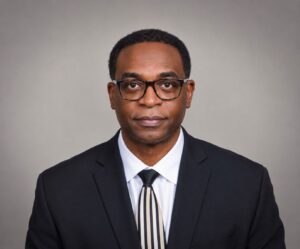
Isaac Megbolugbe
July 28, 2026
Introduction
As I approach the threshold of my 75th year next year, I find myself practicing the bittersweet art of remembering and juxtaposition. This personal milestone naturally invites a quiet auditing of the years gone by, a deep reflection on a professional trajectory spanning across continental boundaries. Yet, as I map the coordinates of my own legacy, my mind does not anchor on my personal accolades. Instead, it drifts irresistibly to the towering figure who built the intellectual, moral, and conceptual scaffolding of my life: my mentor, my professional compass, and my second father, the late Professor Emeritus Akinlawon Ladipo Mabogunje.
To map my legacy is to track a journey that began with a foundational promise made at the University of Ibadan in 1973. It was there that Professor Mabogunje unrolled a map of the world and redefined geography not as a passive, descriptive study of landforms, but as a sovereign science of space—a launching pad engineered to grant scholars the cognitive liberty to command capital, advise governments, and design the future of human civilization. Standing on the sturdy foundation he engineered, my life’s work across academia and global industry has been an exercise in tracing his spatial coordinates, translating his macro-philosophies of regional development into the micro-mechanics of global financial architecture and urban econometrics.
The Ibadan Blueprint: Geography as a Sovereign Science
Professor Mabogunje was an archetypal leader who completely revolutionized African academic discourse. As the first Black African to earn a Ph.D. in geography and later the first African President of the International Geographical Union, he unified the study of the city and its periphery into a single spatial system. His seminal 1968 work, Urbanization in Nigeria, established the “limiting conditions” required for complex human settlements—the structural linkages between food surpluses, institutional control, and merchant classes.
For those of us fortunate enough to serve as his students and research assistants, Mabogunje’s classroom was a masterclass in the “Pierian spring” of enlightened scholarship. He possessed a legendary cadence that could distill complex, multi-layered spatial data into crystal-clear, actionable public policy truths. He taught us that space is a canvas of opportunity rather than a prison of rigid boundaries. This precise philosophy—that a true geographer possesses a boundaryless license to think across and operate within any industry on Earth—became the ultimate catalyst for my own career.
The Duality of Execution: From the Academy to Fannie Mae
Driven by a profound desire to excel before my mentor’s eyes, I pushed myself to translate his spatial logic into spheres where geography had rarely been explicitly named. After completing my faculty tenures at institutions like Florida State University and the University of Ibadan, my career assumed a distinct duality that bridged high-level corporate execution with rigorous academic research.
At Fannie Mae, where I served as Vice President and Senior Director of Research and Development, I applied Mabogunje’s emphasis on systematic, quantitative modeling to the housing and mortgage industries. I had the privilege of:
This transition from the lecture halls to multi-billion-dollar global markets was not a departure from geography; it was its ultimate validation. While a segment of the modern academy unfortunately retreated into insular, postmodern enclaves focused on identity-based grievances and theoretical critiques, my work aimed to remain aggressively pragmatic. I sought to build, scale, and fix real-world financial systems—demonstrating that spatial analytics are the bedrock of global economic durability.
The Carey Tenure and the Wilderness of Policy Reform
Returning to active academia as a professor of real estate and director at the Johns Hopkins University Carey Business School (2003–2013), I synthesized these parallel tracks. I wanted to teach my students how to look at a city’s financial architecture through a spatial lens, understanding the fluid interplay between public policy, municipal land management, and private capital.
Yet, like my mentor—who spent decades advising administrations with unshakeable integrity—my journey has also included its own “unrequited walks in the wilderness”. For over twenty years, I have embarked on a relentless quest to revolutionize Nigeria’s financial landscape, advocating for a modern mortgage and capital market architecture that can provide deep, liquid institutional credit to ordinary households, farmers, and entrepreneurs.
Just as Mabogunje noted that land management is the ultimate metaphor for municipal governance, I have argued that Nigeria’s vast informal sector cannot be fully integrated into a robust, first-world economy without formalizing property rights and expanding access to long-term finance. Though this dream of systemic macro-reform remains largely deferred, the fight for an inclusive urban economic base is a direct inheritance from Mabogunje’s vision.
The Art of Remembering: Faith, Failure, and Transformation
A comprehensive mapping of a life cannot merely celebrate its triumphs; it must also account for its topographies of pain. In the shadow of the global financial crisis of 2007–2008, a series of profound personal and professional losses pushed me to the brink of collapse. It was during this crucible of tribulation that my career evolved into a deeper, spiritual transformation. Guided by my deep Christian faith and an early, childhood determination to live up to my namesake, Isaac—a journey defined by obedience, resilience, and ultimate redemption—I learned to view failures not as final destinations, but as essential coordinates in God’s broader design.
Today, through GIVA Ministries International and Development Integrated Analytics, I focus on distilling the wisdom of my successes and failures alike. Through the writing of my autobiography, I am engaging in the deliberate, therapeutic process of seeking closure, cultivating deep gratitude, and passing on the intellectual torch to the next generation of builders.
Conclusion: The Coordinates Endure
Professor Emeritus Akin Mabogunje gave an entire generation of African scholars the wings to fly higher. He proved that an individual armed with analytical rigor and unwavering ethical standards can stand before kings and leave an indelible mark on the world.
As a Fellow of the Royal Institution of Chartered Surveyors and a recipient of the Albert Nelson Marquis Lifetime Achievement Award, I know that whatever heights I have reached are entirely due to the intellectual and moral scaffolding he engineered for me. My legacy is not a separate entity; it is a continuation of his map, an active, living set of coordinates plotted firmly in the rich soil of his enduring vision.
Isaac Megbolugbe, Senior Advisor and Managing Principal, GIVA International. He is a recipient of Albert Nelson Marquis Lifetime Achievement Award in business and academia in the United States of America. Former Vice President, Fannie Mae. Former Globa Practice Leader, PricewaterhouseCoopers. He is retired professor at Johns Hopkins University and a Fellow of the Royal Institution of Chartered Surveyors. He is resident in the United States of America.
