
Rooted in the Living Legacy: A Forensic, Diagnostic Exploration of Faith, Heritage, and Covenant
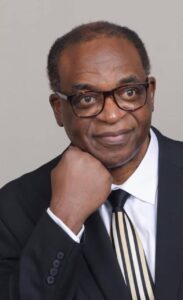
Isaac Megbolugbe
October 2026
Introduction
Rooting my biography, legacy, and heritage in the interconnected soils of biology, family, culture, roles, responsibilities, faith, and experience has been both a forensic and a diagnostic endeavor. It is a forensic examination because it requires a careful, rigorous unearthing of ancestral truths. It is diagnostic because it reveals the precise, unchanging spiritual DNA that animates my existence. As a man who has lived a life of faith and not of sight, I have chosen to root my entire biography not in mere geography or social status, but in Christ—a living faith I first witnessed in my parents.
Part I: The Sovereign Departure — Confounding Pagan Royalty
My spiritual lineage begins with a radical departure from earthly power. My parents were born into prominent royal families, positioned as sovereign personalities within lineages defined by substantial pagan religion, deep-seated traditions, and centuries of cultural authority. To human eyes, their earthly inheritance was secure, and their social standing was absolute. Yet, they chose to convert to Christianity.
By turning away from the pagan altars of their ancestors to embrace the cross, they confounded their respective families and completely redefined our lineage. They traded an earthly crown for an eternal covenant, effectively transplanting our family tree into the fertile soil of the Gospel.
[ Ancestral Royal Lineage ] [The Radical Pivot ] [ The Living Heritage ]
┌───────────────────────────────┐ ┌─────────────────────────┐ ┌────────────────────────┐
│ • Sovereign Social Standing │ ───> │ • Renunciation of Altars│ ───> │ • The Eternal Covenant │
│ • Pagan Traditions & Rituals │ │ • Embracing the Cross │ │ • Soil of the Gospel │
└───────────────────────────────┘ └─────────────────────────┘ └────────────────────────┘
To their contemporaries, my parents’ choice was not just radical; it was entirely illogical. In traditional societies where royal privilege and religious duty are inextricably linked, abandoning ancestral altars was viewed as an act of cultural treason. They walked away from guaranteed wealth, prestige, and the collective expectations of an elite class that measured success by the preservation of historical structures.
By refusing to bow to the systems that birthed them, they proved that true royalty is defined by whom you serve, not where you sit. Their defection from pagan royalty was the catalyst that allowed a new, spiritual legacy to form.
Part II: Architects of the Altar — The Pioneering of Kabba
The transformation of a community rarely begins in the halls of consensus; it bursts forth from individual acts of radical defiance. My father was a man of immense traditional stature, surrounded by the complexities of a royal, polygamous household that included dozens of wives. Within this sprawling, traditional dynamic, it was my mother who uniquely and most profoundly embraced the radical conversion to Christianity alongside him.
This shared conversion was far from a quiet, private sentiment. It was an explosive, foundational movement that shattered old paradigms. Together, my parents became the spiritual architects of a new community, co-founding and establishing Kabba Methodist Church and Missions.
[Royal Heritage & Pagan Traditions] ➔Disowned/Exchanged for Christ
↓
[Founding of Kabba Methodist Church]
↓
┌───────────────────────────┴───────────────────────────┐
▼ ▼
[The Father: A “Modern Abraham“] [The Mother: A Century of Devotion]
• Died young, but set the standard. • Lived into her 100s.
• Joshua Pledge: “As for me and my house…” • Maintained church footprints for decades.
My father lived his life as a modern-day Abraham. Just as Abraham was called out of Mesopotamia—away from the familiar gods, comforts, and territorial entitlement of his ancestry—my father walked away from the deeply entrenched pagan traditions of his royal heritage to claim a promised spiritual inheritance. He lived by the absolute conviction of the Joshua pledge: “As for me and my house, we will serve the Lord.” Though he died young, the trajectory he set was permanent. He did not live to see the full canopy of the oak tree he planted, but the foundational roots he drove into the earth were completely unshakeable.
Following my father’s early passing, the mantle of this spiritual revolution fell heavily upon my mother. Her roles and responsibilities evolved monumentally. Rather than retreating into the traditional expectations of a grieving widow within a royal estate, she stepped directly into the vanguard of the burgeoning movement.
Living into her 100s, she transitioned seamlessly from the supportive wife of a young pioneer into the revered, towering matriarch of the entire region—the Mother of the Church. Standing as the most significant female figure in both her family and the broader community, she became the living archive of Kabba’s Christian heritage. Her deep, indelible footprints are etched into every facet of the church’s history, leaving behind a lifetime of magnificent contributions that continue to testify to a century lived in absolute, unwavering service.
Part III: The Unshakeable Graft — Faith Beyond Borders
The true measure of a parental sacrifice is found in the very composition of the soil where they choose to replant their family. The ground of the Gospel does not offer the immediate, fragile security of political power, but it yields an unshakeable resilience. By grafting our family tree into Christ, my parents ensured that subsequent generations would inherit a legacy that cannot be devalued by shifting political tides, cultural upheavals, or historical erosion.
[ THE ROYAL NURSERY ] [ THE REPLANTING ] [ THE UNENDURING CANOPY ]
┌─────────────────────────────────┐ ┌────────────────────────────┐ ┌─────────────────────────────────┐
│ • Fragile Political Power │ ───> │• Grafted into Christ │ ───> │ • Generational Resilience │
│ • Shifting Cultural Tides │ │ • Soil of the Gospel │ │ • Immune to Historical Erosion │
│ • Fleeting Earthly Crowns │ │ • Absolute Obedience │ │ • Permanent Spiritual Mandate │
└─────────────────────────────────┘ └────────────────────────────┘ └─────────────────────────────────┘
The dividend of their obedience was fully realized in my own journey. While my roots were firmly planted in the soil of Kabba, the geography of my life unfolded thousands of miles away in the United States. Living far from my hometown and country, I had to build an independent faith life as an evangelical Christian.
The true test of a spiritual heritage is whether it survives translation across cultures and oceans. In the diaspora, away from the immediate support of the church my parents built, the Christ I found in them became my own anchor. Walking by faith and not by sight became a daily, practical reality in a foreign land. By prioritizing the spiritual over the sovereign, they left a wealth that could not be inflated away or seized by earthly authorities, proving that the kingdom of God transcends national borders.
Part IV: The Twin Homecomings — Honoring the Legacy
The validity of a spiritual inheritance is proven when the child returns to the altars of the parents. The resilience of the legacy they forged was publicly tested and powerfully vindicated through two pivotal homecomings, separated by exactly twenty years.
2003: THE MATRIARCH’S FUNERAL 2023: THE PATRIARCH’S COMMISSION
┌──────────────────────────────────────────┐ ┌──────────────────────────────────────────┐
│ • Witnessing a Cloud of Witnesses │ │ • Commissioning the Father’s Biography │
│ • Tributes to a Century of Devotion │ │ • Investing in Church Infrastructure │
│ • Validation of the Mother’s Footprints │ │ • Publicly Joining the Spiritual Roots │
└──────────────────────────────────────────┘ └──────────────────────────────────────────┘
2003: The Matriarch’s Funeral
The first profound convergence of my past and present occurred in 2003, when I traveled back to my hometown for my mother’s funeral. Standing in the sanctuary of Kabba Methodist Church, I witnessed an extraordinary rendering of tributes. It was a forensic validation of her magnificent and inspiring service. As voice after voice rose to testify to her deep, indelible footprints, it became undeniably clear that the spiritual kingdom she and my father chose over earthly royalty had captured the heart of the entire community. The crown they traded away had been replaced by a living, breathing monument of faith.
2023: The Abrahamic Covenant Refortified
Twenty years later, in 2023, I returned once again. If the first homecoming was about honoring my mother’s departure, the second was about securing my father’s historical foundation and identifying my own faith life with my spiritual origin.
I returned to commission the biography of my father—the modern-day Abraham who had brought the Joshua pledge to Kabba. To make this honor tangible, I invested directly in the infrastructure of Kabba Methodist Church. This act of stewardship was a deliberate tribute to my parents, ensuring that the shelter they built for believers would endure for generations to come. It was a declaration that though my life had played out across the ocean, my allegiance belonged to the covenant established at home.
Conclusion: Publicly Joining the Spiritual Roots
This final return was my own public declaration of identity. At the very altars where I was baptized as Isaac—a name signaling promise and the continuation of a covenant—I stood as a mature man of faith to publicly link my life’s work with the living legacy of Christ that passed through my parents.
The geography of the diaspora can easily dilute a man’s heritage, but the graft my parents executed was too deep to be severed by distance. By anchoring my family’s history in text and refortifying the church’s infrastructure, I closed the loop of generations. The sovereign choice my parents made decades ago to leave pagan royalty was not lost in translation; it remains alive, active, and fully realized. I honored and publicly joined my spiritual roots in the living legacy of Christ in my parents that is now in me, despite the predominant geography of my life.
Rooted in the Living Legacy: A Forensic Examination of Faith, Heritage, and the Covenant of Kabba
Rooting my biography, legacy, and heritage in the interconnected soils of biology, family, culture, roles, responsibilities, faith, and experience has been both a forensic and a diagnostic endeavor. It is a forensic examination because it requires a careful unearthing of ancestral truths, and diagnostic because it reveals the precise spiritual DNA that animates my existence. As a man who has lived a life of faith and not of sight, I have chosen to root my entire biography not in mere geography or social status, but in Christ—a living faith I first witnessed in my parents.
The Sovereign Departure: Confounding Pagan Royalty
My spiritual lineage begins with a radical departure from earthly power. My parents were born into prominent royal families, positioned as sovereign personalities within lineages defined by substantial pagan religion, deep-seated traditions, and centuries of cultural authority. To human eyes, their inheritance was secure, and their social standing absolute. Yet, they chose to convert to Christianity.
By turning away from the pagan altars of their ancestors to embrace the cross, they confounded their respective families and redefined our lineage. They traded an earthly crown for an eternal covenant, effectively transplanting our family tree into the fertile soil of the Gospel.
The Pioneers of Kabba Methodist Church
This radical conversion was not a private sentiment; it was a foundational movement. My parents co-founded and established Kabba Methodist Church and Missions. They became the spiritual architects of a new community.
[Royal Heritage & Pagan Traditions] ➔Disowned/Exchanged for Christ
↓
[Founding of Kabba Methodist Church]
↓
┌───────────────────────────┴───────────────────────────┐
▼ ▼
[The Father: A “Modern Abraham“] [The Mother: A Century of Devotion]
• Died young, but set the standard. • Lived into her 100s.
• Joshua Pledge: “As for me and my house…” • Maintained church footprints for decades.
My father, much like a modern-day Abraham called out of Mesopotamia, left behind the familiar territory of his ancestry to claim a promised spiritual inheritance. He lived by the conviction of the Joshua pledge: “As for me and my house, we will serve the Lord.” Though he died young, the foundation he laid was unshakeable.
Following his early passing, my mother’s roles and responsibilities evolved monumentally. Living into her 100s, she transitioned from a young pioneer’s wife to the revered matriarch—the Mother of the Church. She stood as the most significant female figure in her family and the community, leaving deep, indelible footprints and a lifetime of contributions that continue to testify to her magnificent and inspiring service.
Faith Beyond Borders: The Diaspora Experience
While my roots were firmly planted in the soil of Kabba, the geography of my life unfolded thousands of miles away in the United States. Living far from my hometown and country, I had to build an independent faith life as an evangelical Christian.
The true test of a spiritual heritage is whether it survives translation across cultures and oceans. In the diaspora, away from the immediate support of the church my parents built, the Christ I found in them became my own anchor. Walking by faith and not by sight became a daily, practical reality in a foreign land, proving that the kingdom of God transcends national borders.
The Return: Anchoring the Past and Present
Two pivotal homecomings came to define the intersection of my personal journey and my spiritual heritage:
Publicly Joining the Spiritual Roots
Returning to Kabba was more than a nostalgic trip; it was a profound identification of my current faith life with my spiritual origin. It was a return to the very altars where I was baptized as Isaac—a name signaling promise and the continuation of a covenant.
By investing in the church’s infrastructure and documenting our history, I have honored and publicly joined my spiritual roots. The living legacy of Christ that once defined my parents now lives actively in me. No matter where my physical geography has taken me, my biography remains anchored in the sovereign choice my parents made decades ago: to leave the palaces of men to build a temple for the living God.
The Sovereign Exchange: Trading an Earthly Crown for an Eternal Covenant
My spiritual lineage begins with a radical departure from earthly power. My parents were born into prominent royal families, positioned as sovereign personalities within lineages defined by substantial pagan religion, deep-seated traditions, and centuries of cultural authority. To human eyes, their inheritance was secure, and their social standing was absolute. Yet, they chose to convert to Christianity.
By turning away from the pagan altars of their ancestors to embrace the cross, they confounded their respective families and completely redefined our lineage. They traded an earthly crown for an eternal covenant, effectively transplanting our family tree into the fertile soil of the Gospel.
[ Ancestral Royal Lineage ] [The Radical Pivot ] [ The Living Heritage ]
┌───────────────────────────────┐ ┌─────────────────────────┐ ┌────────────────────────┐
│ • Sovereign Social Standing │ ───> │ • Renunciation of Altars│ ───> │ • The Eternal Covenant │
│ • Pagan Traditions & Rituals │ │ • Embracing the Cross │ │ • Soil of the Gospel │
└───────────────────────────────┘ └─────────────────────────┘ └────────────────────────┘
Unearthing the Foundation: A Forensic Auditing of Identity
To truly understand the weight of this inheritance, one must examine it through both a forensic and a diagnostic lens. Forensically, it requires looking back at the concrete structures of power my parents walked away from. They were not merely participants in their culture; they were its custodians. Their daily lives were intended to be living monuments to ancestral deities and unbroken lines of royal succession.
Diagnostically, their conversion reveals a profound spiritual shift. It was an active, costly choice to exchange visible, territorial dominion for an invisible, cosmic kingdom. When they stepped away from the royal courts, they broke the spiritual inertia of generations. In doing so, they provided their descendants with an entirely new blueprint of identity—one rooted not in bloodlines or tribal prestige, but in the person of Jesus Christ.
Confounding the Kingdom of Men
To their contemporaries, my parents’ choice was not just radical; it was entirely illogical. In traditional societies where royal privilege and religious duty are inextricably linked, abandoning the ancestral altars was viewed as an act of cultural treason. They walked away from:
By refusing to bow to the systems that birthed them, they proved that true royalty is defined by who you serve, not where you sit. Their defection from pagan royalty was the catalyst that allowed a new, spiritual legacy to form.
The Lasting Yield of Fertile Soil
The true measure of their sacrifice is found in the soil where they chose to replant our family. The ground of the Gospel does not offer the immediate, fragile security of political power, but it yields an unshakeable resilience. By grafting our family tree into Christ, my parents ensured that subsequent generations would inherit a legacy that cannot be devalued by shifting political tides or historical erosion.
They traded a fleeting earthly crown for a permanent spiritual mandate. Today, that choice stands as a monument of courage, demonstrating that the most profound legacy a parent can leave is a clear path to the cross, forged out of absolute obedience and lived entirely by faith.
Architects of the Altar: How a Royal Exodus Formed the Kabba Methodist Church
The transformation of a community rarely begins in the halls of consensus; it bursts forth from individual acts of radical defiance. In the history of our lineage, that defiance belonged to my parents. My father was a man of immense traditional stature, surrounded by the complexities of a royal, polygamous household that included dozens of wives. Within this sprawling, traditional dynamic, it was my mother who uniquely and most profoundly embraced the radical conversion to Christianity alongside him.
This shared conversion was far from a quiet, private sentiment. It was an explosive, foundational movement that shattered old paradigms. Together, my parents became the spiritual architects of a new community, co-founding and establishing Kabba Methodist Church and Missions. They traded the security of an earthly dynasty to pioneer a kingdom that would outlast them both.
[Royal Heritage & Pagan Traditions] ➔Disowned/Exchanged for Christ
↓
[Founding of Kabba Methodist Church]
↓
┌───────────────────────────┴───────────────────────────┐
▼ ▼
[The Father: A “Modern Abraham“] [The Mother: A Century of Devotion]
• Died young, but set the standard. • Lived into her 100s.
• Joshua Pledge: “As for me and my house…” • Maintained church footprints for decades.
The Father: A Modern-Day Abraham and the Joshua Pledge
My father lived his life as a modern-day Abraham. Just as Abraham was called out of Mesopotamia—away from the familiar gods, comforts, and territorial entitlement of his ancestry—my father walked away from the deeply entrenched pagan traditions of his royal heritage to claim a promised spiritual inheritance.
In a cultural landscape where status was measured by adherence to ancestral customs, he anchored his household to a counter-cultural reality. He lived by the absolute conviction of the Joshua pledge: “As for me and my house, we will serve the Lord.”
Though he died young, the trajectory he set was permanent. He did not live to see the full canopy of the oak tree he planted, but the foundational roots he drove into the earth were completely unshakeable. He left behind a blueprint of faith that time could not erode.
The Mother: A Century of Devotion and Indelible Footprints
Following my father’s early passing, the mantle of this spiritual revolution fell heavily upon my mother. Her roles and responsibilities evolved monumentally. Rather than retreating into the traditional expectations of a grieving widow within a royal estate, she stepped directly into the vanguard of the burgeoning movement.
Living into her 100s, she transitioned seamlessly from the supportive wife of a young pioneer into the revered, towering matriarch of the entire region—the Mother of the Church. Standing as the most significant female figure in both her family and the broader community, she became the living archive of Kabba’s Christian heritage.
For decades, her presence was the cornerstone of Kabba Methodist Church. Her long life allowed her to nurture the seeds my father had sown, ensuring that the mission survived the lean years of infancy to become a regional sanctuary. Her deep, indelible footprints are etched into every facet of the church’s history, leaving behind a lifetime of magnificent contributions that continue to testify to a century lived in absolute, unwavering service to the Almighty.
The Unshakeable Graft: How a Generational Replanting Defied Historical Erosion
The true measure of a parental sacrifice is rarely fully understood by the generation that makes it. Instead, it is found in the very composition of the soil where they choose to replant their family.
When my parents turned away from their ancestral thrones and the sovereign privileges of their royal lineages, they did not merely change their religion; they executed a profound generational relocation. The ground of the Gospel does not offer the immediate, fragile security of political power, but it yields an unshakeable resilience. By grafting our family tree into Christ, my parents ensured that subsequent generations would inherit a legacy that cannot be devalued by shifting political tides, cultural upheavals, or historical erosion.
They traded a fleeting earthly crown for a permanent spiritual mandate. Today, that choice stands as an enduring monument of courage, demonstrating that the most profound legacy a parent can leave is a clear path to the cross, forged out of absolute obedience and lived entirely by faith.
[ THE ROYAL NURSERY ] [ THE REPLANTING ] [ THE UNENDURING CANOPY ]
┌─────────────────────────────────┐ ┌────────────────────────────┐ ┌─────────────────────────────────┐
│ • Fragile Political Power │ ───> │• Grafted into Christ │ ───> │ • Generational Resilience │
│ • Shifting Cultural Tides │ │ • Soil of the Gospel │ │ • Immune to Historical Erosion │
│ • Fleeting Earthly Crowns │ │ • Absolute Obedience │ │ • Permanent Spiritual Mandate │
└─────────────────────────────────┘ └────────────────────────────┘ └─────────────────────────────────┘
The Vulnerability of Earthly Soil
To understand the genius of their sacrifice, one must first recognize the volatile nature of the soil they left behind. Royal lineages and political regimes are built upon the shifting sands of human favor, military dominance, and social structures. Crowns tarnish, empires fall, and family names that once held absolute sovereignty can be reduced to mere footnotes in secular history textbooks.
Had my parents chosen to remain embedded within the pagan traditions and royal expectations of their birth, our family’s identity would have been tethered to a specific, localized era. We would have inherited an identity vulnerable to the friction of modern political transitions. By choosing a spiritual exile over a temporal kingdom, they saved their lineage from the inevitable decay that claims all human institutions.
Grafting Into the Eternal Vineyard
The process of grafting requires a deliberate wound—acutting away of the old branch so that it may be bound to a completely new rootstock. For my parents, this cutting away was absolute:
Because the root stock—Christ—is eternal, the branches grafted into Him share in that same immutability. The resilience yielded by the Gospel is not defensive; it is structural. It produces an internal strength that allows a family line to bend under the weight of changing centuries without ever breaking.
A Legacy Untouched by Time
Today, the dividend of their obedience is fully realized. The path to the cross that they cleared through the dense overgrowth of deep-seated pagan traditions remains open, wide, and clearly marked for their descendants. It is a highway of faith that requires no political validation, relies on no earthly treasury, and fears no historical revisionism.
By prioritizing the spiritual over the sovereign, they left us a wealth that cannot be inflated away or seized by earthly authorities. Their life of faith and not of sight stands as a timeless monument. It reminds us that the greatest gift a parent can offer their children is not a throne on earth, but an unbroken connection to the throne of heaven.
The Twin Homecomings: Honoring a Century of Faith and Securing the Kabba Foundation
The true validity of a spiritual inheritance is proved when the child returns to the altars of the parents. My life’s geography has been defined largely by the United States, where for decades I have built an independent faith life as an evangelical Christian, walking by faith and not by sight. Yet, the roots driven into the soil of Kabba by my pioneering parents never withered. The resilience of the legacy they forged was publicly tested and powerfully vindicated through two pivotal homecomings, separated by exactly twenty years.
2003: THE MATRIARCH’S FUNERAL 2023: THE PATRIARCH’S COMMISSION
┌──────────────────────────────────────────┐ ┌──────────────────────────────────────────┐
│ • Witnessing a Cloud of Witnesses │ │ • Commissioning the Father’s Biography │
│ • Tributes to a Century of Devotion │ │ • Investing in Church Infrastructure │
│ • Validation of the Mother’s Footprints │ │ • Publicly Joining the Spiritual Roots │
└──────────────────────────────────────────┘ └──────────────────────────────────────────┘
2003: The Cloud of Witnesses and the Mother’s Tribute
The first profound convergence of my past and present occurred in 2003, when I traveled back to my hometown for my mother’s funeral. Standing in the sanctuary of Kabba Methodist Church, the very institution my parents co-founded, I witnessed an extraordinary rendering of tributes.
My mother had lived into her 100s, evolving from a young pioneer’s wife into the undisputed Mother of the Church. The funeral was not merely a time of mourning; it was a forensic validation of her magnificent and inspiring service. As voice after voice rose to testify to her deep, indelible footprints, it became undeniably clear that the spiritual kingdom she and my father chose over earthly royalty had captured the heart of the entire community. The crown they traded away had indeed been replaced by a living, breathing monument of faith.
2023: The Abrahamic Covenant Refortified
Twenty years later, in 2023, I returned once again. If the first homecoming was about honoring my mother’s departure, the second was about securing my father’s historical foundation and identifying my own faith life with my spiritual origin.
I returned to commission the biography of my father—the modern-day Abraham who had brought the Joshua pledge to Kabba. To make this honor tangible, I invested directly in the physical and spiritual infrastructure of Kabba Methodist Church. This act of stewardship was a deliberate tribute to my parents, ensuring that the shelter they built for believers would endure for generations to come. It was a declaration that though my life had played out across the ocean, my allegiance belonged to the covenant established at home.
Publicly Joining the Spiritual Roots
This final return was my own public declaration of identity. At the very altars where I was baptized as Isaac, I stood as a mature man of faith to publicly link my life’s work with the living legacy of Christ that passed through my parents.
The geography of the diaspora can easily dilute a man’s heritage, but the graft my parents executed was too deep to be severed by distance. By anchoring my family’s history in text and refortifying the church’s infrastructure, I closed the loop of generations. The sovereign choice my parents made decades ago to leave pagan royalty was not lost in translation; it remains alive, active, and fully realized in the man I have become.
Isaac Megbolugbe, Director of GIVA Ministries International is focused on empowering believers to embrace a grace-driven life of holiness and obedience, passionately pursuing a deeper relationship with God within the boundaries of His sovereignty, and reflecting Christ’s character in their daily lives. He is retired professor at Johns Hopkins University, member of 2024 Marquis Organization’s Class of Top Executives in the United States of America and a Fellow of the Royal Institution of Chartered Surveyors. He is resident in the United States of America.
