
Spiritual Adaptation to Emerging Geopolitical Realities of the 21st Century
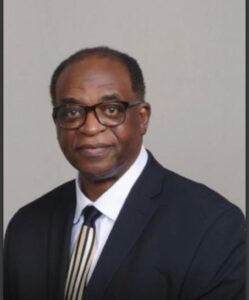
Isaac Megbolugbe
May 24, 2026
Introduction
The 21st century is defined by rapid technological advancements, shifting global powers, and ideological polarization. For Christian believers, remaining grounded requires navigating this complex landscape while actively discerning how current global events intersect with end-times prophecies. The Body of Christ must balance esological anticipation with present, actionable Kingdom responsibilities.
The Intersection of Prophecy and Geopolitics
Understanding global developments through a biblical lens requires great discernment. Believers are often tempted to align specific headlines—such as conflicts in the Middle East or the rise of new global coalitions—with highly specific, speculative end-times chronologies. While scripture points toward ultimate realities, over-identifying specific political figures or nations with exact prophetic roles can result in theological error and misplaced priorities.
Instead, Christians should view geopolitical instability as a general indicator of the brokenness of the world, serving as a reminder of the foundational truth of God’s sovereignty. It is important to remember that:
Individual Adaptation: The Life of the Disciple
As global institutions shift and societal pressures mount, individual believers must focus on spiritual resilience.
Corporate Adaptation: The Body of Christ
Corporate adaptation requires a significant cultural and missional shift within the Church itself. For generations, especially in the Western world, the Church has operated from a place of cultural privilege and majority influence. The shifting geopolitical realities of the 21st century suggest a transition to a more marginalized or minority status in many regions, mirroring the conditions of the early Church.
Conclusion
Navigating the 21st century requires a delicate balance of eschatological awareness and missional faithfulness. Christians must be knowledgeable about the world without allowing global anxieties to dictate their spiritual state. By centering on the Gospel, serving the marginalized, and maintaining unity, the Body of Christ can adapt to emerging geopolitical realities, standing as a beacon of enduring truth and redemption.
Navigating Global Chaos: A Biblical Framework for Geopolitical Discernment
Believers today face a constant barrage of breaking news, shifting global alliances, and international conflicts. Understanding global developments through a biblical lens requires great discernment. Believers are often tempted to align specific headlines—such as conflicts in the Middle East or the rise of new global coalitions—with highly specific, speculative end-times chronologies. While scripture points toward ultimate realities, over-identifying specific political figures or nations with exact prophetic roles can result in theological error and misplaced priorities.
Instead, Christians should view geopolitical instability as a general indicator of the brokenness of the world, serving as a reminder of the foundational truth of God’s sovereignty. To navigate these turbulent times without losing sight of the Gospel, the Church must anchor itself in two core principles.
The Message Takes Precedence
The primary mandate of the Church remains unchanged: proclaiming the Gospel, loving enemies, and being peacemakers. When believers become overly consumed with mapping current events onto prophetic timelines, anxiety often replaces activism. The Great Commission calls the Church to active engagement, not passive observation.
Avoid Imperial Traps
Historically, apocalyptic theology has sometimes been used to justify imperial agendas. When the Church hitches its theological wagon to specific political empires or nationalistic movements, it compromises its witness. The New Testament consistently warns against relying on the weapons and strategies of worldly empires to accomplish divine purposes.
Conclusion
Geopolitical shifts are not a signal for Christians to retreat into fear or speculation. They are a reminder that human systems are fragile and temporary. By keeping the Gospel central and avoiding the temptation to weaponize prophecy for political ends, the Body of Christ can stand as an unshakeable beacon of hope in a fractured world.
From Hindsight to Foresight: Breaking the “Imperial Trap” in Christian History
The “imperial trap” occurs when the Christian Church mistakes the expansion or defense of a human empire for the advancement of the Kingdom of God. Throughout history, whenever believers have aligned apocalyptic fervor or prophetic timelines with specific geopolitical powers, the result has been the corruption of the Church’s witness.
By analyzing these historical missteps, modern believers can transform hindsight into strategic foresight. This shift allows the Church to navigate contemporary geopolitical shifts with biblical discernment rather than political anxiety.
Historical Case Studies of the Imperial Trap
1. The Constantinian Shift and the Eusebian Theology (4th Century)
When Emperor Constantine legalized Christianity, the Church shifted from a persecuted minority to a protected majority. The historian Eusebius of Caesarea pioneered a theology that viewed the Roman Empire as the physical manifestation of God’s Kingdom on earth.
2. The Crusades and Apocalyptic Militancy (11th–13th Centuries)
In 1095, Pope Urban II launched the First Crusade by framing the military recapture of Jerusalem as a holy duty. Apocalyptic expectations were weaponized, convincing knights that they were purging the earth of antichrist forces to prepare for the return of Christ.
3. Modern Religious Nationalism and the Cold War (20th Century)
During the mid-to-late 20th century, Western evangelical movements frequently mapped Cold War dynamics directly onto biblical prophecy. Specific nations were labeled as the ultimate forces of darkness, while western democratic capitalism was explicitly equated with God’s chosen vehicle for global righteousness.
Transforming Hindsight into Foresight
To avoid repeating these historical failures amid the shifting global powers of the 21st century, the Body of Christ must cultivate actionable foresight.
[ Historical Mistake: Imperial Co-Optation ]
│
▼
[ Foresight Pivot: Maintain Holy Distances ]
│
▼
[ Actionable Result: Uncompromised Witness ]
Pivot 1: From “Empire Defense” to “Kingdom Permanence”
Pivot 2: From “Headline Mapping” to “Systemic Discernment”
Pivot 3: From “Power Over” to “Presence Among”
Conclusion
The imperial trap thrives on fear—fear of losing cultural status, national security, or political influence. Transforming history into foresight requires the Church to surrender the desire for worldly control. By recognizing that the Kingdom of God cannot be driven by political machinery, believers can engage with modern global realities with peace, integrity, and an unshakeable hope.
Fortress of the Soul: Cultivating Individual Spiritual Resilience in a Fractured World
Modern society moves at an exhausting pace, driven by rapid institutional shifts and continuous news cycles. As global institutions shift and societal pressures mount, individual believers must focus on spiritual resilience [1]. True resilience is not passive survival. It is an active, deeply anchored faith that transforms external chaos into opportunities for internal growth.
To withstand the pressures of a changing world, disciples must anchor their daily lives in three core spiritual disciplines.
Cultivate Discernment
The modern digital landscape thrives on outrage, fear, and sensationalism. To stay grounded, believers must engage deeply with the Word of God to distinguish between secular panic and biblical hope [1].
Scripture provides a timeless lens that de-escalates current anxieties. It reminds believers that history is securely held in God’s hands.
Prioritize the Kingdom First
The pressures of the 21st century are not just political; they are deeply spiritual. With the rise of secularization and materialism competing for the focus of modern believers, disciples must consciously reorder their lives around virtues like humility, generosity, and inner transformation [1].
Materialism promises security through accumulation, while the secular world pressures individuals to find identity in status or political tribes.
[ Secular Pressures ] [ Kingdom Priorities ]
Materialism & Accumulation ───> Radical Generosity
Self-Promotion & Status ───> Quiet Humility
Secular Panic & Tribalism ───> Inner Transformation
Maintain Unwavering Hope
Biblical prophecy and the study of end times (eschatology) were never intended to cause fear or inspire isolation. Eschatological hope is meant to inspire action, not passivity [1].
True biblical hope acts as a catalyst. It drives believers directly into a hurting world with confidence and love.
Conclusion
Spiritual resilience is built quietly, day by day, through intentional choices. By filtering out cultural noise, reordering personal priorities, and channeling future hope into present action, individual believers become unshakeable. In a world defined by instability, a resilient disciple stands as a living testament to an unchanging Kingdom.
The Exile Advantage: Reclaiming the Early Church Identity in a Post-Christian Era
The geopolitical and cultural landscape of the 21st century is forcing a radical reevaluation of the ecclesiastical status quo. Corporate adaptation requires a significant cultural and missional shift within the Church itself. For generations, especially in the Western world, the Church has operated from a place of cultural privilege and majority influence.
However, the shifting geopolitical realities of the 21st century suggest a transition to a more marginalized or minority status in many regions, mirroring the conditions of the early Church. Rather than a sign of defeat, this shift offers a profound opportunity to reclaim a pure, resilient, and highly potent corporate witness.
The Paradigm Shift: From Center Stage to the Margins
For centuries, Western Christianity functioned under a “Christendom” model. In this framework, the Church enjoyed institutional power, societal alignment, and systemic influence.
Today, secularization, pluralism, and shifting geopolitical power dynamics are dismantling this structure. The Church is rapidly moving from the center of cultural influence to the periphery.
[ THE OLD PATTERN: CHRISTENDOM ]
Institutional Power ──► Cultural Privilege ──► Majority Influence
│
▼ (Geopolitical & Cultural Shift)
[ THE NEW REALITY: THE MARGINS ]
Prophetic Minority ──► Sacrificial Service ──► Early Church Posture
This transition requires the corporate Body of Christ to unlearn the habits of a majority culture. The Church must trade the pursuit of political dominance for the power of prophetic exile.
Three Missional Shifts for Corporate Adaptation
To thrive in this emerging reality, local congregations and global networks must adapt structurally, culturally, and missionally.
1. From Political Coercion to Sacrificial Presence
When the Church holds cultural majority status, it is easily tempted to enforce its ethics using the legal and political machinery of the state. In a minority status, this is no longer viable.
2. From Consumer Monoculture to Counter-Cultural Community
In the Christendom era, churches often adopted corporate business models, focusing on attractional entertainment, comfort, and consumer satisfaction to maintain large numbers.
3. From Western-Centric Isolation to Global Interdependence
As Western institutions lose their geopolitical monopoly, the center of gravity for global Christianity has decisively shifted to the Global South (Africa, Asia, and Latin America).
Conclusion: The Gift of the Margins
The loss of cultural privilege is painful, but it is ultimately a purifying fire. The early Church possessed no political leverage, no grand buildings, and no societal favor—yet it turned the Roman Empire upside down through the sheer power of the Gospel and a radical corporate lifestyle.
By embracing its new identity as a creative, prophetic minority, the 21st-century Church can finally shed the heavy armor of worldly empires. In doing so, it can step fully into the unshakeable, cross-shaped power of the Kingdom of God.
The Unshakable Beacon: Concluding Imperatives for a 21st-Century Church
The emerging geopolitical realities of the 21st century do not signal a crisis for the Kingdom of God, but rather a clarifying moment for His people. As global power dynamics fracture and cultural privileges fade, the Church is stripped of its worldly illusions. What remains is an invitation to step fully into the identity of the early Church—not as an empire seeking dominance, but as a prophetic minority embodying redemption.
Adapting to this new era requires the Body of Christ to anchor itself collectively in three foundational anchors. Together, they transform global instability into an unshakeable platform for eternal truth.
1. Centering on the Gospel
When global institutions shake, the immediate temptation is to seek security in political structures, speculative timelines, or secular survival strategies. However, the Church does not advance through cultural dominance or social engineering.
2. Serving the Marginalized
As the Church shifts from a position of societal privilege to a minority status, its primary source of influence must pivot from political leverage to self-sacrificial love.
[ THE RE-CENTERED WITNESS ]
▲
│
┌───────────────────────┼───────────────────────┐
│ │ │
[ THE GOSPEL ] [ THE MARGINALIZED ] [ UNITY ]
Centers the Mind Validates the Mission Reveals the Body
3. Maintaining Corporate Unity
A fractured, hyper-polarized world naturally attempts to fracture the Church along the same ideological, nationalistic, and socioeconomic fault lines.
Standing as a Beacon of Truth and Redemption
The challenges of the 21st century are not obstacles to the Gospel; they are the very conditions for which the Church was designed. By discarding the heavy, coercive armor of human empires, the Church is free to wear the lightweight, resilient garments of grace, humility, and truth.
When the Body of Christ centers on the Gospel, serves the vulnerable, and protects its unity, it becomes completely unaligned with worldly power—yet utterly indispensable to the world. In a darkening geopolitical landscape, such a Church does not panic. It stands firm, acting as a beautiful, enduring beacon of redemption until the King returns.
Isaac Megbolugbe, Director of GIVA Ministries International. He is a recipient of Albert Nelson Marquis Lifetime Achievement Award in business and academia in the United States of America. He is retired professor at Johns Hopkins University, Former Vice President at Fannie Mae, Former Practice Leader at PricewaterhouseCoopers, and a Fellow of the Royal Institution of Chartered Surveyors. He is resident in the United States of America.
