
Tending the Garden and the Machine: AI, Capitalism, and the Promise of Divine Restoration
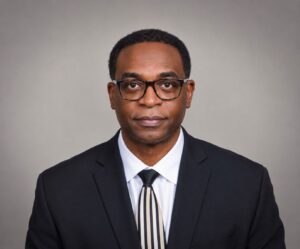
Isaac Megbolugbe
September 2026
Humanity stands at a profound historical crossroads where the modern technological revolution meets eternal spiritual truths. With the release of the McKinsey Global Institute discussion paper, The AI economy: Interconnected forces, feedback loops, and speeds of change, society faces a critical choice between unchecked market forces and a return to foundational human welfare.
The Original Vocation: Tending the Garden
In the beginning, God gave Adam a clear instruction in the Garden of Eden. He told him to cultivate and care for the earth, prioritizing life and stewardship.
The Pleading of Jesus and the Trap of Capitalism
Centuries later, Jesus Christ walked through Jerusalem and wept over its priorities. He pleaded with the religious and economic elite to put the welfare of the people first.
Mapping the AI Economy
The new MGI framework reveals how artificial intelligence operates as an interconnected system. It involves exponential technological capabilities clashing with linear physical infrastructure and slow human adaptation.
The Ultimate Divine Restoration
Can humanity repent and redesign this architecture for human flourishing? The spiritual reality suggests a deeper impediment. The world system remains deeply entangled with the Kingdom of Darkness, making universal human reform unlikely under current earthly powers.
The Digital Crossroad: Choosing Human Welfare in the Age of the AI Economy
Humanity stands at a profound historical crossroads where the modern technological revolution meets eternal spiritual truths. With the release of the McKinsey Global Institute (MGI) discussion paper, The AI economy: Interconnected forces, feedback loops, and speeds of change, society faces a critical choice between unchecked market forces and a return to foundational human welfare. This pivotal moment forces us to look beyond algorithms and data centers to ask a deeper question: Will our newest tools serve the common good, or will they simply accelerate old inequalities?
The Clash of Two Systems: Market Forces vs. Spiritual Truths
Every major leap in human history challenges our values. The rapid rise of artificial intelligence is no different. It pits a fast-moving economic engine against timeless moral principles.
Unpacking the McKinsey Framework: Interconnected Forces
The MGI report shines a light on how the AI economy actually works. It is not just about smarter software; it is a complex web of interconnected forces that can spiral out of control if left unguided.
Redefining Progress: Putting Human Welfare First
The true test of the AI economy will not be the rise of corporate stock prices or the speed of new microchips. The true test is how well it lifts up the least among us.
The Law of the Garden: Rediscovering Stewardship over Exploitation in the Modern World
Long before the rise of global markets, factories, and digital economies, the very first blueprint for human labor was drawn. In the beginning, God gave Adam a clear instruction in the Garden of Eden. He told him to cultivate and care for the earth, prioritizing life and stewardship. This ancient mandate serves as a powerful reminder of what work was originally meant to be—and how far we may have drifted from it.
Stewardship Over Exploitation: The Purpose of Work
The instruction given in Eden completely redefines the meaning of labor. It establishes that work is not a curse, nor is it a tool to conquer the earth for selfish gain.
The Original Balance: Beyond Accumulation and Scarcity
Today, modern systems are often driven by a fear of scarcity—the idea that there is never enough—and an obsession with accumulation. The Garden of Eden operated on an entirely different set of rules.
Reclaiming the Eden Mandate Today
The lessons of the Garden are not outdated ideas from the past. They are urgent truths for our modern world as we face environmental crises and economic anxiety.
The Weeping Prophet and the Marketplace: Christ’s Plea for Humanity Over Commodity
Centuries later, Jesus Christ walked through Jerusalem and wept over its priorities. Looking out at the holy city, He did not see a beacon of light; instead, He saw a bustling hub where religious power and financial greed had intertwined to crush the ordinary person. He pleaded with the religious and economic elite to put the welfare of the people first. Today, that ancient tear-stained warning echoes louder than ever as our modern economic systems continue to value profit over human life.
The Jerusalem Critique: People Above Profits
When Jesus flipped the tables of the money changers in the Temple, He was not just making a scene. He was launching a direct attack on a system that used faith to exploit the poor.
The Commercialization of Life: The Modern “Original Sin”
The tragedy of ancient Jerusalem lives on in our modern world. Traditional capitalism often mirrors an “original sin,” treating human beings as commodities rather than image-bearers.
A Missed Repentance: Rejecting the Prophetic Voice
History has a painful way of repeating itself. Just as ancient systems rejected the prophetic call to justice, modern economic structures resist true shared prosperity.
The Multi-Speed Collision: Navigating the Physical and Human Bottlenecks of the AI Economy
The rapid rise of artificial intelligence is rewriting the rules of global growth. However, a major structural problem lies beneath the surface of digital progress. The new McKinsey Global Institute (MGI) framework reveals that artificial intelligence operates as a highly interconnected system. It involves exponential technological capabilities clashing directly with linear physical infrastructure and slow human adaptation.
This friction creates a highly uneven landscape. To keep the digital era from fracturing society, we must understand the forces driving these mismatched timelines.
The Reality of Multiple Speeds
The AI ecosystem does not move at a single pace. Instead, it is a machine operating at multiple speeds, where different components move on entirely different timelines.
This mismatch means that while an AI model can be updated in a day, the physical power and human talent needed to run it sustainably cannot keep up.
The Distributive Challenge: A Risk of Widening Gaps
When a powerful technology moves faster than society’s ability to manage it, equity is often the first thing lost. The MGI framework highlights a massive distributive challengefor the modern era.
Without intentional intervention, these systemic feedback loops risk deepening inequality rather than fostering equity across the global workforce.
Building a Sovereign Architecture for Equity
To prevent the AI economy from tearing the social fabric, nations cannot rely blindly on market forces. A balanced transition requires an intentional, sovereign architecture—a public framework designed to guide innovation toward the common good.
Ultimately, technology is only as good as the society it supports. By recognizing the physical and human bottlenecks outlined by the MGI Research Team, leaders can design an AI economy that values human flourishing just as much as digital speed.
The Illusion of Earthly Reform: Why Tech and Secular Systems Cannot Deliver Ultimate Restoration
As artificial intelligence and global economic models reshuffle the world order, scholars and leaders ask a vital question: Can humanity repent and redesign this architecture for human flourishing? While corporate boards and global summits propose frameworks for equity, biblical theology and historical reality point to a much deeper impediment. The world system remains deeply entangled with the Kingdom of Darkness, making universal human reform highly unlikely under current earthly powers.
True restoration cannot be engineered by human hands. It requires looking beyond secular optimization to the sovereign timeline of divine intervention.
The Hard Wall of Human Limits: The Failure of Secular Systems
For centuries, humanity has designed new political and economic systems, promising each one would finally cure poverty, greed, and inequality. Yet, time and again, these secular structures collapse under the weight of human nature.
Entangled in Darkness: The Spiritual Reality of Global Power
The reason human systems cannot fix themselves is not a lack of intelligence, data, or computing power. It is a matter of spiritual captivity.
Divine Logistics: The Sovereign Promise of Restoration
Because humanity cannot break its own chains, ultimate restoration will never arrive via corporate frameworks, global treaties, or advanced algorithms. It will instead execute through the precise, sovereign fulfillment promised in the Holy Scriptures.
Conclusion: A Shift in Focus
Recognizing these human limits is not a call to despair, but an invitation to shift our trust. While Christians are called to act justly and care for the vulnerable in the present day, they do so knowingthat earthly systems are inherently passing away. True hope does not sit in a tech lab or a financial center; it rests securely in the certain, precise, and divine return of the King who will finally make all things new.
The Gospel vs. The Silicon Savior: Why Techno-Optimism and Transhumanism Cannot Replace Divine Restoration
Humanity stands at a fascinating crossroads where cutting-edge technology directly challenges ancient spiritual truths. As artificial intelligence grows exponentially, a new secular faith has emerged in tech centers like Silicon Valley. This worldview believes that human ingenuity, code, and machinery can fix the brokenness of our world.
To truly understand our current historical moment, we must contrast the biblical view of divine restoration with these secular philosophies—specifically techno-optimism and transhumanism—which boldly claim that technology can save humanity.
1. Defining the Secular Faiths: Techno-Optimism and Transhumanism
Before we can compare these worldviews to scripture, we must understand exactly what these secular philosophies teach.
For both groups, technology is not just a tool; it is a savior.
2. The Core Conflict: Where Secular Tech-Faith Clashes with Spiritual Truth
While these secular ideas promise a bright future, they completely clash with the spiritual realities outlined in the Holy Scriptures. The divide comes down to three major disagreements:
The Root of the Problem: Design Flaw vs. Moral Fall
The Source of Salvation: Human Ingenuity vs. Divine Intervention
The Ultimate Goal: Escaping Death vs. Resurrecting Life
3. The Deception of the Automated Utopia
The McKinsey Global Institute (MGI) framework on the AI economy reminds us that technology operates within an interconnected system of human forces and feedback loops. Left in human hands, advanced tech usually amplifies old inequalities rather than erasing them.
Conclusion: Trusting the Creator Over the Creature
Techno-optimism and transhumanism offer a cheap imitation of the Gospel. They promise eternal life, an end to suffering, and universal peace—but without a King, without repentance, and without holiness.
Ultimately, the divine reality of God’s restoration will execute not through corporate frameworks or silicon valleys, but with the precise logistics outlined in the Holy Scriptures. While technology can be used to care for the sick or feed the hungry in the present day, it can never heal the human soul. True hope does not lie in the machine; it rests securely in the return of the Creator who will finally restore the world to the pristine beauty of the Garden of Eden.
The Silicon Mimic: Why Tech’s Pseudo-Religious Language Cannot Usurp Divine Sovereignty
The modern technology sector is no longer just a marketplace of gadgets and software; it has transformed into a center of secular faith. As artificial intelligence advances at blinding speeds, the elite voices of Silicon Valley have increasingly abandoned cold, corporate terminology. Instead, they actively mimic the language of theology, prophecy, and salvation. From promises of ending human mortality to visions of an all-knowing, all-powerful digital mind, tech leaders frequently adopt a religious tone.
However, mimicking the functioning of God in the world does not translate to essencing God’s purposes for the world. While human systems try to build a digital imitation of divine power, the consequential reality of God’s sovereignty will definitely prevail, exposing the ultimate limits of human engineering.
1. The Language of the New Tech Faith
To understand how deeply the tech industry mimics religious thought, one only has to look at the concepts and vocabulary pushed by its most famous figures. They do not view artificial intelligence merely as a tool, but as a transcendent force.
2. Mimicking Functions vs. Essencing Purpose
The fundamental deception of techno-optimism lies in this imitation. Advanced algorithms can calculate, predict, and automate across the globe, seemingly mimicking the widespread, omnipresent operations of a higher power. Yet, this imitation is entirely hollow.
[ Human Systems ] —> Mimicry of Power (Algorithms, Automation, Data Concentration)
[ Divine Reality ] –> True Essence (Justice, Righteousness, Eternal Restitution)
3. The Unyielding Reality of Divine Sovereignty
History shows that whenever humanity tries to build a monument to its own self-salvation—whether it is the ancient Tower of Babel or a modern network of supercomputers—the project eventually fractures. Human systems cannot outrun their own spiritual bankruptcy, nor can they bypass the established timeline of the Creator.
Conclusion: Setting Our Sights Right
The pseudo-religious language of Silicon Valley is a powerful reminder of humanity’s deep, inescapable longing for a savior, for a world without pain, and for eternal life. But looking totech leaders and their algorithms to fulfill these desires is a tragic mistake.
Technology can build tools, but it cannot build a new heaven and a new earth. While the tech elite continue to chase a digital imitation of the divine, the wise will look past the silicon savior, anchoring their hope entirely in the unchanging, sovereign promise of the true Creator.
Isaac Megbolugbe, Founder and President of GIVA Ministries International. He is a recipient of Albert Nelson Marquis Lifetime Achievement Award in business and academia in the United States of America. He is retired professor at Johns Hopkins University, Former Vice President at Fannie Mae, Former Practice Leader at PricewaterhouseCoopers, and a Fellow of the Royal Institution of Chartered Surveyors. He is resident in the United States of America.
