
The 75-Year Echo: Smart Pursuit, Wise Pivot, and the Lifelong Resonance of a Career Between Worlds
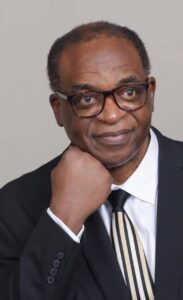
Isaac Megbolugbe
September 2026
Introduction
To look back at seventy-four is to see one’s career not as a straight line, but as a series of echoes. For those of us who have spent a lifetime navigating the distinct orbits of academia and corporate industry, the journey is defined by a rhythmic pulling and pushing. We are drawn toward one by intellectual curiosity, only to be pushed toward the other by a need for tangible impact—and occasionally, the unmistakable validation of the marketplace.
Now, on the event horizon of my seventy-fifth year, I find myself reflecting on this lifelong dance. This reflection is not merely a nostalgic exercise; it is the genesis of The 75-Year Echo Series, a collection of essays dedicated to turning decades of reflection into enduring insight. In mapping out this journey, I have come to understand the fundamental difference between the “smart” and the “wise” pathways, why I kept returning to the corporate world, and what it truly means when the music of industry finally stops playing.
The Academic Boundary: Where “Smart” and “Wise” Part Ways
In the university ecosystem, “smart” is the baseline currency. To be smart in academia is to possess a high-octane cognitive engine. It is the ability to process complex data, master hyper-specialized methodologies, and solve abstract theoretical questions.
Early in my career at Florida State University, I was operating firmly within this “smart” framework. I spent a year immersed in deep quantitative research, focusing on indexing and pricing housing as market assets using hedonic index technology. It was rigorous, intellectually stimulating work that caught the attention of the Office of the Chief Economist at the National Association of Home Builders (NAHB). Recognizing the market value of asset pricing innovations, they extended an offer that effectively doubled my academic salary, prompting my first migration to industry.
In the industry space, I found an environment where I could excel at solving problems and innovating solutions to immediate, real-world challenges. Yet, the echo of academia never entirely faded. Because I had established myself as a bridge between these two worlds, the industry selected me to represent its interests on a search committee at American University to fill their prestigious Chair of the Real Estate Center. In a twist of professional irony, the winning candidate made a non-negotiable requirement to accept the appointment offer: I had to join the faculty alongside them. The university concurred, and I returned to the lecture halls.
But the corporate gravitational pull remained powerful. Within a single year of returning to American University, Fannie Mae came calling. They doubled my salary once again, placing me at the head of a specialized Proprietary Research Unit. My mandate was to mobilize the broader research and academic communities to solve complex, systemic business problems. We did exactly that—achieving spectacular results and generating an impact that altered the landscape of housing finance.
However, being smart is not the same as being wise. Wisdom in academia is an entirely different architecture. Wisdom is the capacity for long-term judgment, systemic perspective, and the foresight to know when a brilliant theory needs a larger canvas to achieve true social utility—and when the corporate landscape has fundamentally lost its moral and intellectual alignment.
The Divergence of Theory and Greed: The Turning Point
At Fannie Mae, I was handed what should have been a profoundly meaningful mandate: to solve the problem of affordable housing and underserved markets for low- and moderate-income families and minorities.
I approached this immense challenge with a rigorous, structurally sound framework built around submarket inclusion. My goal was to create sustainable, long-term pathways to homeownership by deeply understanding and integrating underserved populations into the broader housing ecosystem. It was an intellectual framework rooted in equity, data, and risk-managed stability.
The corporate business leadership, however, chose a different path.
Rather than adopting a framework of systemic submarket inclusion, they preferred aggressive mortgage product deregulation. It was a monumental error of strategy and policy. In the pursuit of short-term volume and market expansion, the green light was given to subprime mortgage lending and other deeply predatory mortgage practices. The warnings were there, embedded in the very data my frameworks sought to address, but they were ignored in favor of the immediate gratification of market metrics.
The tragic vindication of that divergence came a few years later. The Global Financial Crisis of 2007–2008 shook the foundations of the world economy, precisely along the fault lines we had warned against. By the time the crash occurred, I was back in academia at Johns Hopkins University, standing before a lecture hall of students, explaining the anatomy of a completely preventable catastrophe. It was a deeply somber, hollow moment—a sad case of saying, “I told you so.”
Watching a systemic crisis unfold from the lecture halls of Johns Hopkins solidified a profound realization: industry’s appetite for short-term maximization will often discard the wisest structural truths in favor of the smartest short-term profit.
The Final Quiet: Losing Interest and Finding Peace
If the first half of a career is about acquisition—of titles, accolades, salary jumps, and achievements—the latter half is about internal alignment.
My final retirement did not come from a lack of capability, nor did it come from a sudden inability to innovate or lead teams. It came from a shift in internal resonance. Witnessing the catastrophic fallout of deregulation, andseeing how easily long-term structural wisdom could be overridden by corporate myopia, caused the sprint to lose its color.
One day, the problems that industry presented simply stopped sounding urgent or noble. The corporate race and the endless optimization of organizational goals began to fade into background noise.
Losing interest in industry was not a failure; it was a profound act of wisdom. It was my mind and spirit signaling that this particular chapterhad yielded all the insights it had to offer. When the intellectual curiosity and ethical alignment that fuel your work evaporate, staying in the room becomes a disservice to your legacy. Retiring was not a retreat, but a conscious graduation.
Looking Toward the 75-Year Echo
Next year, I turn seventy-five. In the grand timeline of a career, 75 is a magnificent vantage point. It is high enough to see the entire landscape clearly—the moments of academic discovery at Florida State, the fast-paced demands of the NAHB, the collaborative hiring at American University, the high-stakes innovation at Fannie Mae, and the reflective teaching at Johns Hopkins.
The 75-Year Echo Series is born from this exact vantage point. It is an invitation to look at the choices we make not as isolated events, but as waves that reverberate across a lifetime. As I step into this next year, I do so with the gratitude of someone who played the game intensely, navigated its dual systems with agility, and had the wisdom to walk away when the song was finished. The echo continues, but the music ahead is entirely my own.
Isaac Megbolugbe, Director of GIVA Ministries International. He is a recipient of Albert Nelson Marquis Lifetime Achievement Award in business and academia in the United States of America. He is retired professor at Johns Hopkins University, Former Vice President at Fannie Mae, Former Practice Leader at PricewaterhouseCoopers, and a Fellow of the Royal Institution of Chartered Surveyors. He is resident in the United States of America.
