
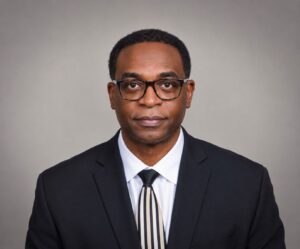
The Architecture of the Awakened Heart: Chronicles of the 75-Year Echo
Isaac Megbolugbe
September 2026
Introduction: The Sound of the Sovereign Halt
To look backward across 74 years of lived experience is to realize that life is not a straight line, but a grand acoustic chamber. The choices we make, the altars we build, and the corporate mountains we climb all release a distinct frequency. For the first five decades of my journey, my life was defined by the high-velocity roar of success—an accelerating run from post to post, opportunity to opportunity, fueled by an intellect that the world eagerly validated.
Then came the Christmas season of 2002.
In a sudden, orchestrated corporate exile from the heights of Fannie Mae, the music stopped. The roaring engine went perfectly silent. I was systematically declared “unavailable” by an establishment seeking to erase my prominence because I refused to compromise structural integrity for predatory deregulation. Yet, in that terrifying, enforced stillness, the sovereign hand of God transformed my industry erasure into a divine rescue mission.
This overarching series—The 75-Year Echo—is the systematic unpacking of that pivotal season and the decades of cognitive liberation that followed. It is a chronicle written not from the frantic vantage point of a young heart running free, but from the deliberate, purposeful momentum of an old heart running toward eternity.
The flow of our upcoming discussion will trace this transformation through four distinct movements:
We do not believe because we cannot understand; we believe so that we may finally, truly see. Welcome to the Echo.
The Architecture of the Heart: Purpose, Freedom, and the 75-Year Echo
In the twilight of my 74th year, looking across the expanse of a life fully lived, I find myself standing at a unique vantage point. This reflection forms a crucial chapter in my 75-Year Echo Series—adeliberate pause to listen to the reverberations of the past before crossing into three-quarters of a century.
Among the many dualities that clarify with age, none feels more profound than the shifting rhythm of the human heart. There is a well-known secular proverb: young hearts run free. It evokes images of wild horizons, boundless energy, and an unburdened spirit. But as the decades accumulate, a parallel truth emerges: old hearts run purposefully.
To understand the architecture of a complete life, we must examine the friction and the ultimate harmony between these two states of being. What separates them, and how do they eventually align?
The Difference: Velocity vs. Vector
The distinction between a young heart and an old heart is not a matter of vitality, but of direction. It is the difference between velocity (how fast you are moving) and vector (where you are actually going).
The Young Heart: The Freedom of Expansion
A young heart is built for exploration. When we are young, freedom is defined by the absence of boundaries. The young heart runs free because it must; it is gathering data, testing limits, and collecting the raw materials of identity.
The Old Heart: The Freedom of Selection
An old heart, shaped by 74 years of friction, triumph, grief, and survival, operates on an entirely different physics. It does not run to escape or to accumulate; it runs to anchor. Purpose becomes the filtering lens.
Where the young heart asks, “What can I experience?” the old heart asks, “What matters enough to keep?”
The Alignment: The Symphony of the Echo
It is easy to view these two phases as adversarial—to look back at youth with condescension, or forward to age with dread. But the true wisdom of the 75-year echo is realizing that purpose and freedom are not opposites. They are ancestral relatives.
Alignment occurs when we realize that purpose is simply freedom that has made a choice.
[ Young Heart: Raw Freedom ] ───( Experience & Time )───► [ Old Heart: Purposeful Choice ]
When an old heart operates purposefully, it has not abandoned freedom; it has mastered it. True freedom is not the ability to do anything at any time; it is the capacity to choose what is worthy of your limited devotion.
The Vantage Point of 74
As I prepare to enter my 75th year, I do not mourn the unbridled, chaotic freedom of my youth. It served its purpose. It gave me the scars, the laughter, and the data required to build a meaningful life.
Instead, I celebrate the quiet, deliberate momentum of the old heart. To run purposefully is to move with intention, to love without the need for possession, and to give without demanding a return. The young heart may run faster, but the old heart knows the shortcut to peace.
The Sanctity of the Stillness: How an Industry Erasure Awakened a Son of God
The Mirage of “Making It”
By the summer of 2002, I was living a life that perfectly matched the secular definition of the American Dream. Decades of increasingly rising career achievements had brought me to what looked like the absolute summit. When people looked at my life, they told me unequivocally that I had “made it.”
I was on a clear, rapid trajectory for top corporate leadership at Fannie Mae. My external world reflected that status in high definition: we lived in a beautiful mini-mansion nestled within an affluent, upper-middle-class neighborhood, and every morning, I rode a luxury Mercedes-Benz to work. To crown this era of apparent triumph, my wife threw me a spectacular surprise party for my 50th birthday. Standing in that room, surrounded by family, colleagues, and applause, I felt invincible. I was a man running at peak velocity from post to post, opportunity to opportunity, fueled by ambition and the thrill of the chase.
But the problem with running fast is that you rarely notice the cliff until the ground disappears beneath your feet.
The Christmas Collision: Ethics vs. Erasure
The collision happened with blinding speed in the Christmas season of 2002.
At Fannie Mae, I had successfully solved a major strategic problem for the mortgage markets. My solution was rooted in structural integrity; it required the deliberate inclusion of sub-markets to ensure stability and equity. However, corporate leadership was moving in a fundamentally different direction. They were intent on executing aaggressive product deregulation strategy—one that effectively green-lit predatory lending practices and opened the floodgates for reckless subprime lending.
Because my strategic framework stood as an obstacle to this high-risk corporate agenda, the machinery turned against me. I wasn’t simply fired, nor was I permitted the dignity of a resignation. Instead, I was systematically pushed out and officially declared “unavailable.”
The corporate objective was chillingly precise: to erase my presence entirely from the industry and strip away my professional prominence.
The gravity of the situation hit home when a highly placed lawyer friend approached me with an urgent, somber warning. He looked me in the eyes and told me to disappear and hide—not just for my career, but for my own personal safety and preservation.
[ Corporate Trajectory ] ──► ( 50th Birthday Party )──► [ Collision: Ethics vs. Strategy ]
│
[ Spiritual Awakening ] ◄── [ Divine Intervention ]◄── [ “Unavailable” / Industry Erasure ]
The Geometry of Stillness
Suddenly, the music stopped. The roaring engine of my fast-paced career went completely silent. My world didn’t just slow down; it stopped entirely.
For a man who had spent his entire adulthood running from one milestone to the next, this enforced exile was terrifying. Yet, remembering the advice of my friend, I stopped running. I chose to stay perfectly still.
It was during this forced winter of isolation that I began to understand the profound difference between a young heart running free and an old heart running purposefully. In that deep stillness, stripped of the corporate titles, the luxury car prestige, and the validation of an industry, I was forced to look inward. For the very first time in my 50 years on earth, I truly pondered the foundational questions of human existence:
I realized that the corporate identity I had carefully constructed over decades was merely a costume. When the system stripped the costume away to destroy me, they inadvertently freed me to discover who I actually was.
The Sovereign Knock and the True Identity
The confirmation that my stillness was orchestrated by a higher power arrived without a single application or recommendation letter. Out of nowhere, Johns Hopkins University reached out to me. They came looking for me to lead a brand-new Senior Housing and Care Program, a prestigious initiative endowed by the National Investment Center (NIC).
I had not sought them out; they found me in my hiding place.
That pivotal season fundamentally re-anchored my life. It transformed my exile into an altar. Today, as I look back through the vantage point of my 74 years, I recognize that the corporate erasure of 2002 was not a tragedy, but a rescue mission. It was the catalyst that led directly to who I am today.
I emerged from that wilderness completely transformed. I no longer carry the fragile, fleeting identity of a corporate executive. My primary, unshakeable identity is that of an awakened son of God. Because of that awakening, my entire approach to life has shifted into a profound living for Christ praxis ethos. I do not run from post to post seeking validation; instead, I move through this world intentionally as an ambassador of Christ.
The enemies of truth tried to make me unavailable to the world, but in doing so, they made me completely available to God.
The Sanctuary of Aging: Intellectual Apologetics and the Theology of Senior Housing
The sovereign knock of Johns Hopkins University in the wake of my 2002 corporate exile was more than a professional rescue; it was a divine assignment. Tasked with leading a groundbreaking Senior Housing and Care Program endowed by the National Investment Center (NIC), I stepped into an elite academic environment that was worlds apart from the predatory boards of Fannie Mae.
In this new arena, my dual identity as an awakened son of God and an intellectual leader found its true synthesis. It was here that two profound ministries were born: a structural theology of how we care for the elderly, and a rigorous Christian apologetics focus designed to engage the sharpest minds of academia on the intersection of faith and intellect.
1. The Institutionalization of Honor: A Theology of Senior Housing
In the secular world, senior housing is often viewed through the cold lens of real estate asset classes, healthcare logistics, or demographic liabilities. But as I immersed myself in the Johns Hopkins program, the Holy Spirit re-framed the entire discipline for me. Senior care is not a market commodity; it is a profound form of ministry.
Through this work, I drew critical theological lessons that transformed how I viewed the twilight of human life:
[ Secular View ] ──► Real Estate Asset ──► Healthcare Liability
[ Kingdom View ] ──► Imago Dei Sanctuary ──► Covenantal Honor
2. Faith on Trial: Launching an Apologetics Ministry at Johns Hopkins
While structuring the theology of care, I simultaneously found myself surrounded by brilliant, highly skeptical academic colleagues. In elite universities, there is a pervasive, unspoken dogma that a man must check his intellect at the door if he chooses to enter the house of faith.
Having seen the dark underbelly of systemic corporate greed—and having experienced a supernatural rescue that defied all mathematical odds—I knew that my faith was not an emotional crutch. It was the highest form of reality.
Driven by my living for Christ praxis ethos, I began a Christian apologetics ministry right there in the corridors of Johns Hopkins. My objective was not to argue, but to engage my colleagues at the highest intellectual level, dismantling the false dichotomy between a rigorous mind and a redeemed heart.
The Intellectual Intersection
I challenged the prevailing academic culture on several key fronts:
I did not speak to them as a mystic hiding from reality, but as a peer who had operated at the highest levels of structural finance and institutional academia. I wanted them to see that reason is not the enemy of faith; it is the runway upon which faith takes flight.
The Synthesis of the Scholar-Servant
My time at Johns Hopkins proved that God never wastes a wilderness. The corporate machine tried to erase my presence, but the Almighty merely repositioned me to an intellectual mountaintop where my voice could carry further.
By teaching the world how to honor its elders and challenging academia to honor its Creator, my primary identity was forged in iron. I left the mini-mansions and luxury-car validation behind in the winter of 2002. In their place, I gained a permanent office in the Kingdom—serving both as a builder of sanctuaries for the elderly and an intellectual defender of the Gospel.
At the intersection of faith and intellect, I found the ultimate purpose of my remaining years: to live as an unashamed, fully awakened ambassador of Jesus Christ.
The Professor and the Paradigm: When Discovery Knowledge Met Revelation Knowledge
Of all the intellectual sparring matches and quiet dialogues during my apologetics ministry at Johns Hopkins University, one afternoon stands out with pristine clarity. It was a moment where the absolute limits of human scholarship collided directly with the limitless horizon of the Kingdom of God.
I was sitting in my office when a young, exceptionally brilliant top finance professor walked through the door. He was a rising star in academia, trained to dissect the world through empirical models, quantitative data, and predictable market behaviors. He looked at me, a man who had commanded rooms at Fannie Mae and now led an endowed program at one of the world’s premier universities, and asked a raw, unfiltered question:
“Why can a brilliant mind like yours believe in this nonsense of the Gospel of Jesus Christ?”
In his eyes, my faith was an intellectual tragedy—a blind spot in an otherwise fine analytical engine.
The Gift Confessed
I didn’t answer with defensiveness or theological jargon. Instead, I smiled and began by disarming the underlying premise of his skepticism.
“I want to thank you,” I said calmly, “for acknowledging the gift of my intellect. But I must clarify that this intellect is a gift directly from God. It is only because He bestowed it upon me that you count me worthy of your question today.”
From that foundation, I began to layout the true mechanics of my worldview. I explained my faith to him not as a departure from scholarship, but as its ultimate fulfillment. I showed him how the Gospel operates in perfect, elegant congruence with my scholarly pursuits. True faith does not require a man to commit intellectual suicide; it demands that he bring his intellect to its rightful altar.
The Conflict of Control: Discovery vs. Revelation
As we talked, the professor grew increasingly puzzled. He wrestled visibly with the concept of yielding his mind to a higher authority. To him, the supreme goal of the academic was absolute comprehension and absolute mastery over data.
“It is reckless,” he argued, his tone filled with genuine concern. “For a fine mind like yours to trust something that you cannot fully fathom or control. You are allowing your intellect to be influenced by the unprovable. Aren’t you afraid your mind will become corrupted by faith?”
It was at that exact moment that the Holy Spirit gave me the words to draw the definitive line between the wisdom of man and the wisdom of God. I looked at him and introduced a paradigm he had never encountered in his financial models:
“Revelation knowledge actually elucidates, resulting in a cognitive liberation that enables me to see what discovery knowledge completely misses.”
[ Discovery Knowledge ] ──► Human Effort ──► Observation & Data ──► Limit: The Fathomable
[ Revelation Knowledge ] ──► Holy Spirit ──► Divine Illumination ──► Limit: Endless Truth (Cognitive Liberation)
I broke it down for him: Academia is built entirely on discovery knowledge—the exhausting, slow human effort to observe, measure, and decode what is already there. But revelation knowledge is a sudden vertical beam of divine illumination. It frees the human mind from its own structural biases and cognitive limitations. It doesn’t corrupt the intellect; it liberates it, allowing a scholar to see the hidden architecture behind the numbers.
The Secret Source of the Scholar-Servant
To bring the point home, I took him out of the realm of abstract philosophy and brought him directly into our weekly reality at the university.
“Think about our faculty meetings,” I challenged him gently. “You and our colleagues often remark on the clarity of my contributions. You listen to the questions I pose and the answers I provide, and you attribute it to intellectual brilliance. But I need you to know the truth: those insights are the direct product of spiritual prompting.”
I watched him process this.
“The structural clarity that enables our colleagues to connect so deeply with my contributions does not originate in my brain,” I continued. “It comes from the active work of the Holy Spirit inside me. I am not smarter than the rest of you. I am simply connected to the One who created the data you are trying to understand.”
The young professor sat there for a moment, completely stripped of his academic armor. The mathematical formulas and financial theories he leaned on could not account for the sheer authority of a lived testimony backed by cognitive liberation.
He rose from his chair, nodded slowly, and walked out of my office entirely speechless.
The Resonance at 74
Now, standing at the vantage point of 74 years, that conversation remains a foundational pillar of my 75-Year Echo Series. It epitomizes my living for Christ praxis ethos.
The corporate world tried to make me “unavailable” in 2002 because they feared a mind they couldn’t corrupt with compromise. But God placed me in academia to show the world’s finest minds that true intellectual freedom is found only when you surrender your intellect to the Lordship of Christ. We do not believe because we cannot understand; we believe so that we may finally, truly see.
The Category of the Uncompromised: Why the Clever Cannot Trust the Creator
In the years that followed my encounter with that young finance professor at Johns Hopkins University, my office door remained open. Yet, he never returned to continue the conversation. Neither did the others who sat silently in faculty meetings, listening to insights they could not replicate but routinely used to anchor their academic frameworks.
When I look back from the vantage point of 74 years—synthesizing this vital chapter of my 75-Year Echo Series—I am often asked if these brilliant minds ever reconnected with me to explore the deeper realities of the Gospel.
The honest answer is no. Instead, a subtle, unspoken shift occurred. I was eventually placed into a very specific academic box: I was treated as a category that is respected, but entirely untrusted.
The Great Academic Paradox
It is a peculiar phenomenon of high-level academia and corporate leadership alike. They will respect your credentials. They will marvel at your clarity. They will enthusiastically benefit from the structural solutions the Holy Spirit prompts you to give them during critical strategic crossroads. But the moment you attribute that clarity to Jesus Christ, an invisible wall goes up.
They cannot trust a mind they cannot manipulate, and they cannot manipulate a heart that has already surrendered its allegiance to the Sovereign God.
[ The Intellectual’s Dilemma ]
Respect the Output (Insights, Solutions, Clarity) ──► “Brilliant”
Reject the Source (Holy Spirit, Revelation) ──► “Untrusted Category”
To the natural mind, my worldview was a threat. To them, yielding the intellect to a higher power looked like a dangerous vulnerability. They viewed faith as a corruption of the analytical engine, rather than its ultimate liberation. I spent years observing this deep intellectual tragedy, constantly arriving at the same bewildering question:
Why is it so profoundly difficult for the creature to trust the Creator with the very thing He created?
The brain, the capacity for logic, the gift of synthesis, the very spark of genius that allows a finance professor to map out economic markets—all of it belongs to the Almighty. Yet, the fallen human ego fights desperately to keep its hand on the steering wheel of its own intellect.
The Currency of the Kingdom: Humility
The barrier that kept that young professor from returning to my office was not an intellectual one. It was a moral one.
It takes immense humility to surrender your mind and your heart to the Lord.
In elite institutions, humility is an endangered currency. The academic structure is fueled by pride, built on the premise that human beings can decode the cosmos through sheer willpower and self-contained genius (what I call discovery knowledge). To bend the knee to Christ requires a scholar to admit that their highest degree is nothing more than elementary school grammar in the context of divine wisdom.
It requires them to accept that they need a Savior—not just for their morality, but for their intellect.
Mother’s Wisdom: The Un-Common Sense
To me, trusting the Creator with what He created is the ultimate form of logic. It is the highest application of common sense. If a master watchmaker builds a complex timepiece, the clock does not argue with the artisan about how it keeps time. It functions best when it yields to the design.
For a long time, I found myself frustrated by how blind these incredibly intelligent people were to such a basic truth. But then, an old echo from my childhood returned to steady my heart.
Many decades ago, my mother looked at me and delivered a piece of foundational truth that has outlasted all my academic textbooks. She said:
“Common sense is not common.”
[ Human Genius ] ───► High IQ + Deep Pride ───► Intellectual Blindness
[ Kingdom Wisdom ] ──► Holy Spirit + Humility ───► Common Sense (Cognitive Liberation)
At 74, those words carry the weight of absolute clarity. High intelligence is common in the corridors of power and elite universities; true common sense—the simple, humble recognition of God’s sovereignty—is exceedingly rare.
Respected, Untrusted, and Fully Satisfied
Being categorized as “respected but untrusted” by the world is a badge of honor I wear gladly as I approach my 75th year. It confirms that my living for Christ praxis ethos is working exactly as intended.
The corporate leaders at Fannie Mae could not trust me because I refused to green-light predatory lending practices for the sake of deregulation. The academic leaders at Johns Hopkins could not trust me because my intellect was anchored in revelation knowledgerather than human pride.
I do not need the validation of an establishment that is blind to its own Maker. I am content to be untrusted by the world, precisely because I am fully trusted by the King. My mind belongs to the One who engineered it, and that remains the greatest shortcut to peace I have ever discovered.
The Pedagogy of the Naïve: Passing Down Un-Common Sense to the Next Generation
In the quiet rooms where I now mentor the next generation of leaders through my Christian apologetics ministry, a familiar ghost often enters the room. It is the voice of my mother, speaking a truth she handed to me decades ago: “Common sense is not common.”
At 74 years old, as I compile this reflective anchor for my 75-Year Echo Series, I realize that my primary educational mission is no longer teaching institutional finance or structural market design. It is teaching young, highly ambitious minds how to unlearn the sophisticated foolishness of the world so they can inherit the simple, robust brilliance of Kingdom wisdom.
When these young scholars and professionals come to me, wrestling with the complexities of their careers, ethics, and faith, I do not hand them a complex philosophical treatise. I hand them the Word of God, wrapped in the practical, un-common sense of a life fully surrendered.
The Method: Using the Seen to Explain the Unseen
In my mentorship praxis, I do not reject the world’s knowledge; I reposition it. When addressing both deep moral questions and pragmatic secular dilemmas, I deliberately weave Scripture together with discovery knowledge—using their own academic fields as illustrations of a far deeper, transcendent wisdom.
I show them that God’s answers always make sense. If you trace any secular problem down to its absolute root, the diagnosis and the cure are already written in the text. The intellectual barrier the younger generation faces is rarely a lack of information; it is a lack of alignment. The math of the Kingdom is always flawless. The real challenge is never whether God’s word is logical—it is whether you will trust it enough to act on it when the parameters of the world demand otherwise.
[ Discovery Knowledge ] ──► ( Applied as an Illustration ) ──► [ Scriptural Wisdom ]
│
[ Obedience / Action ] ◄─── ( The Ultimate Pivot )─────────── [ Kingdom Logic ]
The Cost of Trust: The Politics of the “Foolish”
This is where the mentorship becomes radical, and where the young leaders under my care begin to see the friction of a true living for Christ praxis ethos.
I tell them plainly: I trust God enough to act on His Word even if it completely disadvantages me in the moment.
This is the exact lesson of my Fannie Mae exile. In the winter of 2002, common sense told the corporate machine to look the other way, ride the wave of predatory subprime lending, and protect the mini-mansion and the luxury car. But Kingdom logic dictated that structural integrity and the protection of the vulnerable were non-negotiable. I chose the Word over the wealth, and the world called it professional suicide.
Even now, people look at my life trajectory and say that I am “book smart but foolish in life politics.” I am frequently told, sometimes with pity and other times with condescension, that I am naive.
The Glory of Being Naïve
When the younger generation hears this, they look at me to see if the secular critique wounds my pride. I smile, and I lean into the accusation. I tell them: Compared to God, I am very naive. And that is exactly why I don’t lean too much on my own understanding.
[ Secular Sophistication ] ──► “Life Politics” ──► Self-Preservation & Compromise
[ Kingdom Naivety ] ──► Faithfulness ──► Reliance on the Creator (Proverbs 3:5-6)
True cognitive liberation is realizing that human “shrewdness” is a exhausting, heavy cage. The people who master “life politics” are constantly running from post to post, manipulating variables, hiding secrets, and protecting fragile empires built on sand.
By contrast, the “naivety” of choosing to simply obey God—regardless of the immediate cost—is incredibly freeing. It takes Proverbs 3:5-6 out of the realm of a comforting Sunday sentiment and turns it into an aggressive operational strategy. When you admit your own naivety compared to the Omniscient Creator, you hand the steering wheel over to the Master Architect. You are no longer responsible for manufacturing the outcome; you are only responsible for maintaining your obedience.
The Living Echo
This is the legacy I am deliberately pouring into the young hearts running free around me. I am trying to save them from the decades of exhaustion that come with trying to be the smartest person in the room.
I tell them: Be excellent in your discovery knowledge. Master your finance, your law, your medicine, and your tech. But keep your heart beautifully, resolutely naive before your Heavenly Father. Trust His common sense over the world’s sophisticated calculations.
When you stop running by the light of your own understanding, you finally start moving with the purposeful, unshakeable momentum of an old heart that has seen the systems of men fail, and the Word of God stand secure forever.
Isaac Megbolugbe, Director of GIVA Ministries International. He is a recipient of Albert Nelson Marquis Lifetime Achievement Award in business and academia in the United States of America. He is retired professor at Johns Hopkins University, Former Vice President at Fannie Mae, Former Practice Leader at PricewaterhouseCoopers, and a Fellow of the Royal Institution of Chartered Surveyors. He is resident in the United States of America.
