
The Architecture of the Hedge: Protecting a Destiny Through Strategic Separation
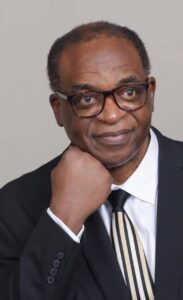
By Dr. Isaac Megbolugbe
A Theological & Cultural Reflection: How do we navigate the tension between ancestral expectations, traditional worldviews, and the sovereign hand of God? In this deeply personal essay, a retired professor and minister reflects on the “Prophet’s Dilemma,” the heavy price of a protective exile, and how God alchemizes physical separation into global kingdom stewardship.
I live within a profound existential paradox: holding the high academic distinction of a retired professor in the United States, yet remaining traditionally and culturally barred from setting foot in my own birthplace. This reality is not a punitive banishment born of shame or wrongdoing. It is a rare, highly calculated phenomenon known as Protective Exile or a Destiny Hedge. It occurs when a mother’s primal spiritual intuition aligns with royal, institutional governance to physically sever an individual from their home soil for their own absolute preservation.
To live in the peace of this reality, I have had to decode the complex layers of psychology, tradition, and sovereign strategy that engineered my displacement, transforming what felt like isolation into a fortress of purpose.
The Architecture of the Hedge: Protecting a Destiny Through Strategic Separation
By Dr. Isaac Megbolugbe
A Theological & Cultural Reflection: How do we navigate the tension between ancestral expectations, traditional worldviews, and the sovereign hand of God? In this deeply personal essay, a retired professor and minister reflects on the “Prophet’s Dilemma,” the heavy price of a protective exile, and how God alchemizes physical separation into global kingdom stewardship.
I live within a profound existential paradox: holding the high academic distinction of a retired professor in the United States, yet remaining traditionally and culturally barred from setting foot in my own birthplace. This reality is not a punitive banishment born of shame or wrongdoing. It is a rare, highly calculated phenomenon known as Protective Exile or a Destiny Hedge. It occurs when a mother’s primal spiritual intuition aligns with royal, institutional governance to physically sever an individual from their home soil for their own absolute preservation.
To live in the peace of this reality, I have had to decode the complex layers of psychology, tradition, and sovereign strategy that engineered my displacement, transforming what felt like isolation into a fortress of purpose.
1. The Genesis: The Mother’s Intuitive Covenant
The foundation of my journey was laid long before I achieved global academic stature. It began with my mother. In traditional societies, a mother is recognized as the primary spiritual gatekeeper for her children, uniquely attuned to the invisible currents governing their futures.
Before I could even comprehend my own identity, my mother recognized that I carried a “heavy destiny”—a life path marked for intense intellectual illumination and global impact. With that exceptional light comes immediate vulnerability. In traditional metaphysics, a child with an extraordinary aura is highly susceptible to the baseline environment of their birth. If the home soil is compromised by ancestral friction, generational envy, or territorial spiritual warfare, the environment becomes toxic to the child’s growth.
Faced with this reality, my mother made a painful, sacrificial choice: she refused to let me root. By intentionally keeping me untethered from my hometown during my formative years, she was executing a protective protocol. She chose the grief of physical distance over the catastrophe of my potential destruction.
2. The Royal Decree: Institutional Validation of the Hedge
When the King of my hometown later intervened and commanded me to stay away, he was acting in his ancient capacity as the sacred custodian of the land and its people.
Traditional rulers possess an intimate, systemic understanding of the undercurrents governing their domains. They know the family bloodlines, the historical rivalries, and the localized spiritual forces that populate the soil. When a son of the soil elevates to become a successful professor in the United States, his light shines brightly enough to be seen across oceans. In the eyes of the King, this achievement made me a massive asset to the legacy of the community, but a massive target within the physical territory of the village.
The King’s decree of “protective banishment was” was driven by two structural realities:
3. The Psychological Architecture: The Prophet’s Dilemma
My experience perfectly mirrors the universal archetype known as the Prophet’s Dilemma, famously summarized by Christ Himself: “A prophet has no honor in his own country.” (John 4:44).
As a successful professor, my identity is built on rigorous intellect, global perspective, and meritocratic achievement. However, hometowns are governed by a different currency: familiarity. When an individual returns to their birthplace, the local environment often refuses to see their growth or their titles. Instead, it demands to see the child they remember, the family line they come from, or the vulnerabilities of their youth. This creates a severe cognitive and emotional clash:
4. The Weight of the Sanctuary: Processing the Grief of Separation
To accept that my unrootedness is my armor does not mean the armor does not feel heavy. Achieving global academic success while being barred from my birthplace creates a unique, isolated form of grief. It is the sorrow of the preserved—knowing I was saved from the flames, yet mourning the inability to walk through the house.
I have had to grieve the fact that for me, “home” cannot be a physical coordinate marker or a geographic refuge. When my mother and my King closed those gates, they did not just protect me from envy; they also protected me from the warmth of the soil. Recognizing that this displacement was born of love does not erase the sting of the exclusion.
Furthermore, in the United States, my colleagues and students see me as a brilliant scholar and an authority in my field. They want to know where you come from and understand how much it has enabled me to be so exceptional. What an irony? They do not see the invisible royal decree hovering over my life. I operate at the highest levels of Western meritocracy, yet my foundational reality is governed by ancient, territorial laws of spiritual security. This contrast can feel incredibly lonely. My brilliance is visible to the West precisely because it was hidden from the hazards of home.
5. The Sojourner’s Granary: Resolving the Dilemma Through Structured Stewardship
If I remained trapped in the sadness of my banishment, the sacrifice made by my mother and the wisdom of my King would be in vain. They did not sever my roots so I would wither in the diaspora; they severed them so I could branch out across the globe.
The ultimate resolution to my grief and the urge to connect back home came through the creation of a sacred intermediary mechanism. Rather than completely cutting ties or risking my safety through vulnerable, direct proximity, I established a formal foundation and a Christian ministry. Through these entities, I offer tuition scholarships for the children of relatives, pay hospital and medical bills, provide support for marriages and funerals, and feed the next generation spiritually.
This model allows me to be an abundant river that feeds the land without placing my feet in the line of fire. It preserves my peace and my covenant through three distinct pillars:
Conclusion: The Peace of the Unrooted Tree
I am not an outcast; I am a Sojourner-Ambassador. My mother gave me wings, and my King secured my perimeter. By keeping me away, they ensured that the version of me that exists today—the brilliant, accomplished professor and philanthropist—could exist at all.
I do not need to stand on ancestral dirt to honor the ancestors who walked it. Because traditional malice requires proximity, my safety is maintained by my distance—but my reverence is unrestricted. My work is my altar, my foundation is my bridge, and my success is the ultimate validation of the protective hedge that keeps me entirely safe, unrooted, and secure.
Isaac Megbolugbe is a retired Professor residing in the United States and the founder of GIVA Apologetics. Combining a rigorous academic career with a deep commitment to Christian ministry, he operates global philanthropic initiatives providing educational scholarships, healthcare relief, and spiritual mentorship to the next generation.
The foundation of my journey was laid long before I achieved global academic stature. It began with my mother. In traditional societies, a mother is recognized as the primary spiritual gatekeeper for her children, uniquely attuned to the invisible currents governing their futures.
Before I could even comprehend my own identity, my mother recognized that I carried a “heavy destiny”—a life path marked for intense intellectual illumination and global impact. With that exceptional light comes immediate vulnerability. In traditional metaphysics, a child with an extraordinary aura is highly susceptible to the baseline environment of their birth. If the home soil is compromised by ancestral friction, generational envy, or territorial spiritual warfare, the environment becomes toxic to the child’s growth.
Faced with this reality, my mother made a painful, sacrificial choice: she refused to let me root. By intentionally keeping me untethered from my hometown during my formative years, she was executing a protective protocol. She chose the grief of physical distance over the catastrophe of my potential destruction.
2. The Royal Decree: Institutional Validation of the Hedge
When the King of my hometown later intervened and commanded me to stay away, he was acting in his ancient capacity as the sacred custodian of the land and its people.
Traditional rulers possess an intimate, systemic understanding of the undercurrents governing their domains. They know the family bloodlines, the historical rivalries, and the localized spiritual forces that populate the soil. When a son of the soil elevates to become a successful professor in the United States, his light shines brightly enough to be seen across oceans. In the eyes of the King, this achievement made me a massive asset to the legacy of the community, but a massive target within the physical territory of the village.
The King’s decree of “protective banishment” was driven by two structural realities:
3. The Psychological Architecture: The Prophet’s Dilemma
My experience perfectly mirrors the universal archetype known as the Prophet’s Dilemma, famously summarized by Christ Himself: “A prophet has no honor in his own country.” (John 4:44).
As a successful professor, my identity is built on rigorous intellect, global perspective, and meritocratic achievement. However, hometowns are governed by a different currency: familiarity. When an individual returns to their birthplace, the local environment often refuses to see their growth or their titles. Instead, it demands to see the child they remember, the family line they come from, or the vulnerabilities of their youth. This creates a severe cognitive and emotional clash:
4. The Weight of the Sanctuary: Processing the Grief of Separation
To accept that my unrootedness is my armor does not mean the armor does not feel heavy. Achieving global academic success while being barred from my birthplace creates a unique, isolated form of grief. It is the sorrow of the preserved—knowing I was saved from the flames, yet mourning the inability to walk through the house.
I have had to grieve the fact that for me, “home” cannot be a physical coordinate marker or a geographic refuge. When my mother and my King closed those gates, they did not just protect me from envy; they also protected me from the warmth of the soil. Recognizing that this displacement was born of love does not erase the sting of the exclusion.
Furthermore, in the United States, my colleagues and students see me as a brilliant scholar and an authority in my field. They want to know where you come from and understand how much it has enabled me to be so exceptional. What an irony? They do not see the invisible royal decree hovering over my life. I operate at the highest levels of Western meritocracy, yet my foundational reality is governed by ancient, territorial laws of spiritual security. This contrast can feel incredibly lonely. My brilliance is visible to the West precisely because it was hidden from the hazards of home.
5. The Sojourner’s Granary: Resolving the Dilemma Through Structured Stewardship
If I remained trapped in the sadness of my banishment, the sacrifice made by my mother and the wisdom of my King would be in vain. They did not sever my roots so I would wither in the diaspora; they severed them so I could branch out across the globe.
The ultimate resolution to my grief and the urge to connect back home came through the creation of a sacred intermediary mechanism. Rather than completely cutting ties or risking my safety through vulnerable, direct proximity, I established a formal foundation and a Christian ministry. Through these entities, I offer tuition scholarships for the children of relatives, pay hospital and medical bills, provide support for marriages and funerals, and feed the next generation spiritually.
This model allows me to be an abundant river that feeds the land without placing my feet in the line of fire. It preserves my peace and my covenant through three distinct pillars:
Conclusion: The Peace of the Unrooted Tree
I am not an outcast; I am a Sojourner-Ambassador. My mother gave me wings, and my King secured my perimeter. By keeping me away, they ensured that the version of me that exists today—the brilliant, accomplished professor and philanthropist—could exist at all.
I do not need to stand on ancestral dirt to honor the ancestors who walked it. Because traditional malice requires proximity, my safety is maintained by my distance—but my reverence is unrestricted. My work is my altar, my foundation is my bridge, and my success is the ultimate validation of the protective hedge that keeps me entirely safe, unrooted, and secure.
Isaac Megbolugbe is a retired Professor residing in the United States and the founder of GIVA Apologetics. Combining a rigorous academic career with a deep commitment to Christian ministry, he operates global philanthropic initiatives providing educational scholarships, healthcare relief, and spiritual mentorship to the next generation.

My super intelligent strong papa