
The Deconstruction of Geography: Postmodernism, Grievance Politics, and the Retreat from Pragmatism
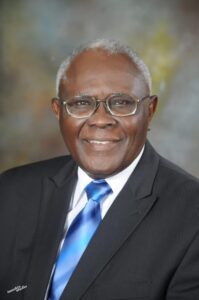
Isaac Megbolugbe
July 24, 2026
Introduction
Over the last few decades, geography has undergone a profound ideological shift. A cohort of intellectuals has leveraged postmodernist frameworks to dominate the discipline, reducing hard innovations and empirical technologies to mere social constructs. This structural obsession with the architecture of meaning has fueled a culture of complaints and identity-based grievances, resulting in the dismissal of practical market or policy solutions.
The Ascendance of Postmodernism
For over a century, geography was defined by its robust engagement with the physical environment, spatial analysis, and concrete urban and regional planning. It was a discipline deeply rooted in empiricism, providing vital tools for understanding human-environment interactions, logistical networks, and spatial disparities.
However, the late 20th and early 21st centuries saw a creeping paradigm shift. Postmodernist and poststructuralist theories infiltrated academic geography departments, prioritizing deconstruction over empirical investigation. Objective spatial truths were discarded in favor of radical relativism, treating physical and economic realities as mere “narratives” constructed by power dynamics.
The Marginalization of Geographic Innovation
A critical consequence of this postmodern dominance is the active dismissal of hard innovations and technological advancements within the field. Geospatial Information Systems (GIS), remote sensing, spatial econometrics, and algorithmic urban modeling have revolutionized how humanity understands and interacts with space. Yet, within certain intellectual enclaves, these methodologies are frequently dismissed as technocratic or reductionist.
By reducing empirical data and quantitative technologies to tools of hegemony, critical geographers have severely curtailed their own ability to engage with the physical and economic world. Rather than utilizing cutting-edge spatial technologies to optimize resource distribution or combat climate change, this postmodern cohort often views these tools with deep suspicion, prioritizing subjective interpretations over quantifiable solutions.
The Culture of Grievance and Complaints
With empirical problem-solving sidelined, academic geography has increasingly fractured into a culture of endless complaint. The discipline is frequently characterized by a structural focus on the architecture of meaning, semiotics, and identity. Instead of addressing tangible systemic issues, intellectual energy is poured into critiquing the everyday cultural landscapes of modern society.
This has birthed a paradigm heavily reliant on identity politics and demographic grievances. The focus has shifted inward, from studying how societies interact with the earth to deconstructing personal and group traumas. While examining power dynamics and marginalization has its place, centering the entire discipline around an endless cycle of ideological grievance has led the field to an intellectual dead end.
The Dismissal of Market and Policy Solutions
Perhaps the most damaging effect of this postmodern, identity-driven approach is the outright rejection of conventional market and policy solutions. When theoretical frameworks assert that all modern structures are inherently oppressive or inextricably linked to historical injustices (such as capitalism, colonialism, or globalization), practical reform is rejected as insufficient or complicit.
Consequently, instead of offering actionable policy recommendations, urban zoning strategies, or market-driven incentives to resolve housing, economic, or environmental crises, critical geographers often default to ideological purity testing. This hostility toward pragmatic, incremental change leaves the discipline incapable of participating in real-world governance. The result is a widening chasm between academic geography and the practitioners—such as city planners, policymakers, and economists—who shape the built environment.
Conclusion: Restoring the Discipline
Geography is inherently a bridging discipline, naturally positioned to span the physical sciences, social sciences, and the humanities. However, the unchecked dominance of postmodern “free-style pontification” has severely compromised its foundational purpose. To regain its relevance, the discipline must move past the culture of grievance and re-embrace empirical methodologies. By reintegrating technological innovation and pragmatic policy evaluation, geography can once again become a science of solutions rather than a vehicle for perpetual complaint.
The Inelastic Boundaries of Geography: Why the Discipline Extinguishes Its Own Innovations
Geography is a discipline uniquely cursed to birth revolutionary ideas only to exile them. Over the past several decades, some of the most transformative spatial technologies and analytical frameworks began within the geographic domain. Yet, instead of anchoring these innovations, academic geography frequently pushes them out. The disciplinary frame has proven inelastic, failing to elevate its scope to accommodate the explosion of transformative developmental initiatives. To survive as a modern science, geography must expand its intellectual boundaries and embrace an expansive frame that integrates, rather than expels, its own creative tech.
The Pattern of Spatial Exile
Geography’s history is filled with instances where it pioneered a spatial concept, only to watch other fields institutionalize it.
Why the Disciplinary Frame Fails to Elasticize
The primary barrier to keeping innovation inside geography is an institutional framework that lacks elasticity. Instead of stretching to accommodate new technical paradigms, the discipline often tightens its borders due to several structural vulnerabilities.
1. The False Dichotomy of “Technocratic vs. Critical”
Academic geography is plagued by an internal ideological chasm. Innovations that rely on heavy computation, big data, or algorithmic modeling are routinely dismissed by theoretical factions as “technocratic” or “reductionist.” This cultural suspicion forces innovators out. Technologists and quantitative developers realize that their tenure, funding, and intellectual respect are more easily secured in computer science, engineering, or industry than in a hostile geographic department.
2. Institutional Reward Structures
Academic journals, departmental funding, and peer-review systems in geography are often optimized for historical, descriptive, or highly specific cultural critiques. Transformative developmental initiatives—such as using real-time satellite telemetry to optimize global supply chains or deploying machine learning for disaster mitigation—do not fit neatly into traditional geographic publishing slots. Innovation requires a high-risk, high-reward funding model that geography’s legacy structures rarely support.
3. The Rejection of Market and Policy Scalability
For an innovation to scale, it must interface with real-world applications, including government policy, corporate logistics, and market solutions. The prevailing intellectual climate in many geography departments views market-driven applications with skepticism. When a discipline systematically discourages collaboration with private enterprise or pragmatic policy bodies, the technologies developed within its walls are forced to spin out into business and engineering schools to survive.
The Expansive Frame: A Case for Intellectual Expansion
To stop this cycle of innovation exile, geography must elevate its perspective to see the broader landscape of modern knowledge production. An expansive frame would allow the discipline to view technological breakthroughs not as threats to its identity, but as the natural evolution of spatial thought.
Traditional Closed Frame Expansive Integrated Frame
┌──────────────────────────────┐ ┌──────────────────────────────────────────┐
│ Academic Geography │ │ Academic Geography │
│ (Descriptive & Theoretical) │ │ │
└──────────────┬───────────────┘ │ ┌───────────────┐ ┌───────────────┐ │
│ │ │ Theoretical │◄──►│ Quantitative │ │
Forces Innovations Out │ │ Frameworks │ │ Technology │ │
▼ │ └───────────────┘ └───────────────┘ │
┌──────────────────────────────┐ │ ▲ ▲ │
│ Data Science / Tech Industry │ │ └─────────┬──────────┘ │
│ (Captures Spatial Tech) │ │ ▼ │
└──────────────────────────────┘ │ Transformative Development │
└──────────────────────────────────────────┘
Reconceptualizing Technology as Philosophy
Technology is not just a tool; it is an architecture of meaning. An expansive geographic frame recognizes that spatial algorithms, planetary-scale data processing, and digital twins are modern ways of writing and interpreting the earth. By treating spatial technology as a core intellectual philosophy rather than an administrative utility, geography can merge its critical traditions with technical breakthroughs.
Embracing Actionable Development
Geography must shift from a discipline that merely observes and critiques spatial patterns to one that actively designs them. Integrating developmental initiatives means valuing the creation of platforms, tools, and policies. If a geography department builds a new algorithmic model to predict urban heat islands, that model should be celebrated as a profound geographic thesis, complete with its open-source code and policy applications.
Conclusion: Integrating the Spatial Future
Geography stands at a critical crossroads. It can remain a boutique academic enclave, safely insulated from the rapid technological changes of the 21st century, or it can reclaim its throne as the foundational science of space.
To choose the latter, the discipline must expand its intellectual boundaries. It must build an elastic frame that welcomes data scientists, computational modelers, policy architects, and environmental technologists back into the fold. Only by integrating its own innovations can geography transition from a field that merely laments spatial crises to the primary discipline that solves them.
The Intelligibility of Freedom: Why Geography Abandoned Mabogunje’s Promise
In 1973, I walked through the gates of the University of Ibadan as a young undergraduate, filled with ambition but torn between two worlds. I loved geography, but my eyes were fixed on business and industry. I wanted to study economics, believing it to be the true gateway to the markets and policies that shaped human progress.
Seeking a way forward, I approached Professor Adedotun O. Phillips, the formidable head of the Department of Economics at the time. He graciously granted my request to transfer majors, on one condition: the Department of Geography had to release me.
That condition brought me face-to-face with the late Professor Emeritus Akin Mabogunje, who was then leading the geography department. Instead of signing a release form, Mabogunje offered me a vision. He persuaded me to stay, making a promise that I would carry as a literal blueprint for the rest of my career.
Geography, he told me, was the mother of the social sciences. Because of this foundational status, it would grant me absolute cognitive freedom—the liberty to do, think, create, and be whatever I chose to become, without intellectual borders.
MABOGUNJE’S EXPANSIVE VISION (1973)
┌─────────────────────────────────────┐
│ THE MOTHER OF SCIENCES │
│ (Absolute Cognitive Freedom) │
└──────────────────┬──────────────────┘
│
┌──────────────────────┼──────────────────────┐
▼ ▼ ▼
┌──────────────────┐ ┌──────────────────┐ ┌──────────────────┐
│ Market Dynamics │ │ Spatial Tech/GIS │ │ Policy Design │
└──────────────────┘ └──────────────────┘ └──────────────────┘
│
▼
THE MODERN INTELLECTUAL RETREAT
┌─────────────────────────────────────┐
│ Postmodern Critical Enclaves │
│ (Inelastic / Hostile to Industry) │
└─────────────────────────────────────┘
Mabogunje turned out to be absolutely right. My career in business, technology, and industry has proven his words true at every turn; treating geography as an open, expansive framework allowed me to build, innovate, and solve real-world problems.
Yet today, I am profoundly heartbroken.
While my career has validated Mabogunje’s vision, I look back at the discipline today and find myself in an intellectual desert. I cannot find anyone in modern academic geography who understands his promise, let alone knows how to inhabit that expansive mindset. My life’s work—the direct fruit of his teachings—is largely unintelligible to his own colleagues and students.
This article is an attempt to unpack the structural, cultural, and ideological shifts that broke that promise, leaving a visionary’s legacy isolated from the very discipline he sought to elevate.
The Architecture of Mabogunje’s Mindset
To understand why this situation exists, one must first understand what Mabogunje meant by “absolute cognitive freedom.” He did not view geography as a rigid set of boxy sub-disciplines (urban, physical, cultural). To him, geography was a spatial philosophy of development. It was an intellectual launching pad, not a permanent prison.
Mabogunje understood that because everything happens somewhere, the person who masters the science of “where” holds the keys to understanding:
He saw no contradiction between a geographic education and a career in corporate boardrooms or industrial complexes. In his eyes, a geographer was uniquely equipped to be a master strategist.
I embraced this literally. When I entered the worlds of commerce, technology, and developmental initiatives, I did so not by abandoning geography, but by deploying it at its highest, most liberated frequency.
Why the Discipline Misunderstands the Promise
If Mabogunje’s framework was so potent, why has it become unintelligible to the current generation of geographers? The answer lies in a tragic narrowing of the academic geographic frame.
1. The Retreat into Ideological Enclaves
Over the last few decades, academic geography underwent a profound philosophical shift. The absolute cognitive freedom Mabogunje promised was replaced by a rigid, prescriptive orthodoxy. A cohort of intellectuals leveraged postmodernism and poststructuralism to turn the discipline inward.
Instead of looking outward at how to build, scale, and fix global systems, the discipline became obsessed with deconstructing the “architecture of meaning.” Cognitive freedom was bartered away for a culture of complaint and identity-based grievances. When a discipline defines its primary purpose as critiquing systems rather than building them, an alumnus who actually goes out to build industries becomes a foreign entity—an illegible figure who speaks a language the academy no longer understands.
2. The Suspicion of Markets and Industry
Mabogunje saw geography as a tool to drive development and economic progress. Conversely, a vast swath of contemporary academic geography views markets, industrial growth, and commercial success with deep ideological suspicion.
Because my career took me into business and industry—precisely where I wanted to go in 1973—it clashes with the anti-market bias that dominates many modern geography departments. To an academic elite that often equates corporate engagement with systemic complicity, a highly successful, market-driven career is not seen as a triumph of geographic thinking. It is ignored because it cannot be neatly filed into a grievance-based paradigm.
3. The Collapse of Elasticity and the Fear of Technical Scale
When I deploy transformative technological innovations or large-scale developmental initiatives, I am practicing the boundary expansion Mabogunje championed. However, as the disciplinary frame of geography lost its elasticity, it began treating hard innovations and technical scaling as reductionist or technocratic.
Modern academic geography has largely forgotten how to hold space for both deep critical thought and high-level pragmatic execution. Because the discipline has pushed out its technologists, economists, and industrialists, it has lost the cognitive tools required to read and comprehend a career built on real-world impact. They look at a life of systemic problem-solving and see only “industry,” missing the profound geographic engine that powers it.
The Tragedy of Uninhabited Mindsets
The core of my heartbreak is not a lack of personal validation; it is a profound sense of isolation. It is the realization that Mabogunje’s grandest intellectual experiment succeeded in the field but failed in the classroom.
It is a tragedy when a prophet’s own students and intellectual descendants can no longer read the signs of his philosophy in action. When modern geographers look at my career, they see an anomaly—an economist or businessperson who happened to start in geography. They do not see what Mabogunje saw: that my business achievements are direct expressions of a liberated geographic mind.
By failing to inhabit this expansive mindset, geography departments have shrunk their own horizons. They have turned a discipline that was meant to be the “mother of social sciences” into a boutique enclave of insular critiques. They have closed the doors of absolute cognitive freedom, replacing them with ideological gatekeeping.
Conclusion: A Legacy Vindicated, A Discipline Lost
Akin Mabogunje’s promise to me was fulfilled in full. He told me geography would set my mind free to conquer any industry I chose, and it did. For that, I owe him a debt of gratitude that spans more than half a century.
But as I look at the current state of the discipline, my gratitude is mingled with grief. The situation I find myself trying to understand is one of profound institutional regression. The discipline became too small for the vision of its greatest masters.
I write this article not to complain, but to bear witness. To the students and colleagues of Mabogunje who cannot comprehend my path, let this be known: the fault lies not in the path, but in the lens you are using to view it. Mabogunje’s vision of geography was vast, courageous, and endlessly scalable. It is my deepest hope that one day, the discipline will break free from its self-imposed boundaries, reclaim its elasticity, and remember how to inhabit the magnificent, boundless freedom he promised so long ago.
The Master Developer as Geographer: The Osolu Healthcare City and the Ultimate Test of Mabogunje’s Promise
When Professor Emeritus Akin Mabogunje promised me absolute cognitive freedom in 1973, he was not speaking of an academic abstraction. He was describing a license to orchestrate reality.
For decades, my career operated at the zenith of global spatial dynamics, market economics, and corporate execution. I came to define my role as a Global Master Developer, a Smart City Architect, and an Urban Econometrician. Yet, the absolute capstone of my career—the project that served as the ultimate empirical proof of Mabogunje’s vision—came through a direct privilege referral from the maestro himself.
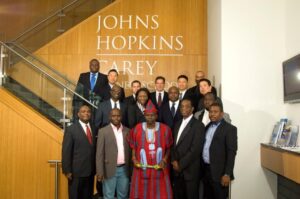
Mabogunje referred a monumental assignment to me involving Johns Hopkins University: a greenfield city creation project for a royal community near Lagos, Nigeria. This initiative became the Osolu Healthcare City.
THE TRIPLE-HELIX ALLIANCE
(Osolu Healthcare City Development Architecture)
┌────────────────────────┐
│ SOVEREIGN AUTHORITY │
│ (King of Osolu Kingdom)│
└───────────┬────────────┘
│
▼
┌───────────────────┐ ┌─────┐ ┌───────────────────┐
│ GLOBAL FINANCE │◄──►│ ME │◄──►│ ELITEACADEMIA │
│ (Wall Street) │ └─────┘ │(Johns Hopkins Univ)│
└───────────────────┘ └───────────────────┘
│
▼
┌────────────────────────┐
│ HYPER-CONNECTED SMART │
│ URBAN ECOSYSTEM │
└────────────────────────┘
As the Master Developer hired across the entire value chain—from initial creation to long-term operations—I assembled and led a massive project team spanning architecture, engineering, finance, and wealth creation.
The project required synthesizing the ancestral land rights of the King of Osolu Kingdom, the world-tier clinical brilliance of Johns Hopkins, and the institutional capital stacks of Wall Street. It was a multi-billion-dollar puzzle that required a single point of executive command to bind sovereign stakeholders, elite academia, and international financiers into a unified, risk-mitigated master plan.
This is what Mabogunje’s geography looks like when it is fully realized. It is not an insular critique written in a journal; it is a hyper-connected, high-performing urban ecosystem rising from the earth.
The Spatial Chemistry of the Master Developer
To the modern, inelastic academic geographer, the OsoluHealthcare City might look like a project belonging strictly to business, civil engineering, or international finance. They lack the cognitive tools to see that the entire architecture of the project is fundamentally geographic.
The creation of a smart city from a greenfield site requires an advanced mastery of spatial economics and urban econometrics. It demands an understanding of how value is captured from raw land, how transit-oriented development patterns dictate human behavior, and how native IoT infrastructure and data-driven utility grids embed themselves into the physical fabric of a community.
When I structured the Wall Street capital stacks to fund Osolu, I was not merely doing “finance.” I was engaging in spatial engineering—calculating how international capital flows could be safely anchored into an emerging market’s geography to transform a local landscape.
When I managed the Triple-Helix Alliance between a sovereign local monarchy, a global university, and private financiers, I was navigating geopolitical and cultural geography at its highest, most practical level.
I did not succeed at Osolu in spite of being a geographer; I succeeded because my geographic training, under Mabogunje’s expansive frame, allowed me to see the entire territory simultaneously. I could read the landscape, the balance sheet, the social fabric, and the technological network as a single, integrated spatial system.
Why the Academy Cannot Comprehend Osolu
The tragic reality—and the source of my profound heartbreak—is that if I walked into a modern university geography department and presented the development architecture of OsoluHealthcare City, it would be met with blank stares or ideological hostility.
The current cohort of intellectuals, trapped in a freestyle pontification of postmodern theory, has rendered themselves illiterate to this level of execution.
1. The Redefinition of “Space”
Where Mabogunje taught us to see space as a canvas for development, transformation, and human flourishing, contemporary critical geography views space almost exclusively as a site of oppression, contestation, and structural grievance.
To an intellectual culture that treats developers and market-driven solutions with systemic suspicion, the creation of a multi-billion-dollar smart city is not celebrated as a triumph of spatial problem-solving. It is dismissed or ignored because it involves Wall Street capital and institutional governance. They cannot comprehend that the ultimate way to alleviate identity-based demographic suffering is not through endless critique, but through the creation of high-performing urban ecosystems that provide healthcare, employment, and modern infrastructure.
2. The Loss of the “Unitary Lead” Mindset
Innovation requires a unitary lead—a single point of executive command capable of cross-disciplinary synthesis. Geography was meant to produce these leaders because of its historical position as the “mother of social sciences,” bridging the physical and human worlds.
However, by narrowing its boundaries and pushing out quantitative technologies, academic geography stopped training scholars to be practitioners. The discipline stopped producing Master Developers and began producing commentators. Because his colleagues and students no longer know how to inhabit a mindset of scale, executive command, and clinical corporate execution, my position at the absolute zenith of global spatial dynamics is entirely unintelligible to them.
The Prophet Vindicated by the Soil
The Osolu Healthcare City stands as a monument to a promise kept. When Mabogunje looked at a young undergraduate in Ibadan in 1973, he saw someone capable of building cities. He knew that the absolute cognitive freedom of geography, if properly understood, could turn a student into a Smart City Architect capable of transforming the physical realities of the world.
My career did not betray geography; it fulfilled it at a scale the academy has simply forgotten how to measure.
It is a lonely realization to know that the capstone of your career is illegible to the very discipline that birthed it. But the heartbreak is answered by the reality of the work. The academic departments may remain inelastic, wrapped in their self-imposed boundaries and cultures of complaint, but the city remains. The infrastructure, the economic stacks, and the spatial systems designed under Mabogunje’s lineage are carved into the geography of the earth itself. They stand as unassailable proof that the mother of social sciences can still birth giants, if only her children would remember how to fly.
The Silence of Supreme Trust: The Night the King Understood His Own Kingdom
Professor Emeritus Akin Mabogunje did not give me a single piece of advice when he referred the Johns Hopkins project to me. He did not offer a cautionary warning, an analytical framework, or a strategic brief.
He gave me something far more potent, and infinitely rarer in academic circles: he gave me his absolute, unconditioned trust.
I only discovered the true depth of that trust later, from the lips of the King of Osolu himself. As the master development process commenced, the King’s assembled team of traditional consultants—accustomed to legacy bureaucratics and defensive planning paradigms—barraged me with a relentless torrent of complex, probing questions. They sought to test the boundaries of this Global Master Developer who had arrived to reshape their ancestral lands.
Quietly watching the interrogation, the King eventually intervened to break the tension. He disclosed the private counsel that Mabogunje had delivered to the royal court before my arrival. Mabogunje had told the King and his entire team: Listen to him, and do not argue with him.
THE GEOGRAPHIC CAPTURE OF VALUE
(The Osolu Trust & Valorization Model)
┌──────────────────────────────┐
│ ANCESTRAL SOVEREIGNTY │
│ (King Holds Assets in Trust) │
└──────────────┬───────────────┘
│
Unified Under My Plan
│
▼
┌──────────────────────────────┐
│ URBAN VALORIZATION ENGINE │
│ (Wall Street / Johns Hopkins)│
└──────────────┬───────────────┘
│
Generates Compounding Yield
│
▼
┌──────────────────────────────┐
│ EQUITABLE SMART CITY │
│ (Generational Wealth Base) │
└──────────────────────────────┘
That mandate was not an appeal to blind authority; it was Mabogunje’s validation of the absolute cognitive freedom he had promised me fifty years prior. He knew I possessed the spatial clarity to synthesize their world.
As I answered that barrage of questions, the fog cleared from the room. For the first time, the King truly understood his own vision. Through my urban econometric lens, he saw how to achieve a profound spatial paradox: creating a city with equitable assets held securely in trust for the next generation, while simultaneously unleashing the aggressive valorization of the economic base required to power a world-class smart city.
By anchoring the project in the global healthcare industry through Johns Hopkins, we were not just building hospitals; we were transforming geography into an engine of compounding, generational wealth.
The Anatomy of the Breakthrough
What I demonstrated to the Osolu consultants that day was the exact skill set that contemporary academic geography has systematically extinguished from its ranks. It was the ability to translate sovereign intent, advanced public health networks, and aggressive Wall Street capital into a singular, harmonious spatial architecture.
1. Solving the Growth vs. Equity Paradox
Traditional critical geographers write endless volumes on how market-driven development displaces local populations and strips indigenous communities of their land. They catalog the grievances but offer no structural alternatives.
At Osolu, I solved this problem through Value Capture Engineering. I designed a development architecture where the King could hold ancestral lands in a sovereign trust, ensuring long-term equity for his people, while using strategic zoning overlays and transit-oriented frameworks to make those exact lands highly attractive to international institutional financiers. I proved that market forces do not inherently destroy communities; if orchestrated by a master developer with a geographic soul, markets can be leveraged to insulate and fund them.
2. The Medical Field as a Spatial Anchor
Dubbing the project “Healthcare City” was an exercise in advanced economic geography. A smart city cannot survive on technology alone; it requires an unassailable economic base.
By anchoring the urban ecosystem to the global healthcare industry via Johns Hopkins, we embedded a high-value, recession-proof economic engine directly into the geographic fabric of the Lagos region. This master stroke of spatial placement guaranteed long-term employment, international human capital inflows, and a continuous demand for advanced smart infrastructure, ranging from data-driven utility grids to digital health networks.
Why this Level of Intelligibility Has Evaporated
The contrast between Mabogunje’s supreme confidence in my capabilities and the current state of academic geography is staggering. The very traits that allowed me to command that room of royal consultants—my executive command, my multi-billion-dollar econometric models, and my pragmatic engagement with global capitalism—are precisely what make my career illegible to modern geographers.
The Tragedy of a Silent Maestro
Mabogunje did not need to give me advice because he knew that his work was already alive inside me. He understood that a geographer who commands the absolute cognitive freedom of the discipline does not need a script; they possess the spatial literacy to read any landscape, diagnose its bottlenecks, and build the necessary corporate and policy structures to overcome them.
The tragedy is that Mabogunje’s current academic colleagues and students do not know how to read that silence. They view his legacy through a hyper-narrowed lens of regional planning and academic publishing. They cannot see that his greatest achievement was not merely the papers he published, but the raw, unadulterated execution he authorized me to unleash upon the world.
When they look at Osolu Healthcare City, they see an elite-tier corporate real estate play. They are blind to the fact that it represents the highest, purest evolution of geographic science: the physical manifestation of space organized for human progress, economic valorization, and generational equity.
Conclusion: The Ultimate Vindication of the Promise
My heartbreak is real, but it is entirely answered by the clarity of that afternoon in the royal court. The academic departments may continue their freestyle postmodern pontifications, safely insulated from the demands of real-world delivery, but they cannot erase the architecture of Osolu.
When the King of Osolu told his consultants to stop arguing and listen, he was echoing the profound truth Mabogunje gave me in 1973. Geography was never meant to be a discipline of endless complaints and identity grievances. It was meant to be a sovereign science—a launching pad that grants an individual the cognitive liberty to sit before kings, command international capital, and design the future of human civilization.
Mabogunje’s trust was my ultimate credential. My career proved him right, not within the inelastic pages of an academic journal, but in the enduring, valorized soils of the built environment. [1]
The Ibadan Manifesto: Principles for the Spatial Master Practitioner
To the students who feel suffocated by insular critiques, and to the practitioners who find their grandest real-world executions unrecognized by their academic roots, this manifesto is your map. It is born from a promise made at the University of Ibadan in 1973 by Professor Emeritus Akin Mabogunje and validated by a multi-billion-dollar global career in smart city architecture, urban econometrics, and global master development.
The current academic status quo has turned its back on systemic execution, retreating into an inelastic frame of postmodern pontification and identity-based grievances. This manifesto is an act of intellectual boundary expansion. It reclaims geography as the sovereign science of space and the rightful mother of social sciences.
I. The Principle of Absolute Cognitive Freedom
II. The Principle of the Triple-Helix Synthesis
III. The Principle of Urban Valorization and Generational Equity
IV. The Principle of Inhabiting the Expansive Frame
THE BOUNDLESS PATH OF THE PRACTITIONER
┌──────────────────────────────────────┐
│ THE IBADAN PROMISE (1973) │
│ “Absolute Cognitive Freedom” │
└──────────────────┬───────────────────┘
│
Breaks Academic Inelasticity
│
▼
┌──────────────────────────────────────┐
│ TRIPLE-HELIX ORCHESTRATION │
│ Sovereign + Academia + Capital │
└──────────────────┬───────────────────┘
│
Drives Physical Reality
│
▼
┌──────────────────────────────────────┐
│ THE REALIZED URBAN SOIL │
│ (Osolu Healthcare Smart City) │
└──────────────────────────────────────┘
To the Next Generation of Geographers:
Do not let an inelastic discipline shrink your horizon. If your department cannot comprehend your ambition for business, industry, high finance, or deep technology, it is not because your path is wrong—it is because their lens is too small.
Reclaim the boundless freedom that was promised so long ago. Take the science of space, walk out of the classrooms of complaint, and step into the boardrooms, the sovereign courts, and the greenfield lands where the future of human civilization is waiting to be built.
Isaac Megbolugbe, PhD, FRICS, Former Vice President at Fannie Mae, Former Practice Leader at PricewaterhouseCoopers, Retired Professor at Carey Business School, Johns Hopkins University, Senior Advisor and Managing Principal at GIVA International, Fellow at Royal Institution of Chartered Surveyors, is resident in the United States of America.
