
The Geography of Memory: Crafting Identity, Faith, and Meaning Through the Art of Autobiography
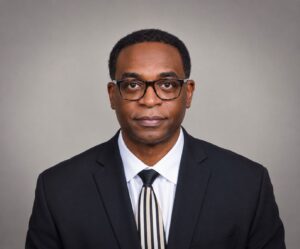
Isaac Megbolugbe
October 2026
Introduction
It is a quiet but monumental shift when a person becomes aware of the urgent need to investigate the meaning of their life. To put weight on one’s lived experiences is to realize the imperative of identity—because, ultimately, your purpose is carved directly into who you are. For me, this realization arrived in 2022, a milestone year when I turned 70. As part of celebrating entering this seventh decade, I made a solemn commitment to myself: by God’s grace, I would write and complete my autobiography by the time I turn 80.
This journey did not begin in a vacuum. Seeking guidance, I immersed myself in the autobiographies of three of my primary role models and mentors. Reading their lifework, I felt the deep wisdom of following in their footsteps. I began by outlining my raw biographical data, cataloging both the hard facts and the complex emotions tied to my memories. Yet, these raw materials required processing. To digest them, I began writing distinct articles on the various facets, themes, and chapters of my life. In doing so, I unlocked two profound realizations that transformed how I view the human experience.
The Therapeutic Mirror and the Universal Thread
The act of remembering, when paired with the discipline of writing, is both therapeutic and exhilarating. Excavating the past forces an honest confrontation with oneself, offering healing where there was once friction, and excitement where memories had grown dormant.
As I wrote, a second realization emerged: living is profoundly universal. Moments, struggles, and triumphs that I had hitherto believed to be entirely unique and deeply personal turned out to be part of the shared human condition. This epiphany drove me to explore the patterns and parallels in the autobiographies of others, looking for the connective tissue that binds our individual stories together.
The Divine Frame: Scripture as Biography
This lens of universality completely altered how I engage with sacred texts. In reading the Scriptures, the stories of biblical characters underwent a radical shift in my mind. They ceased to be static historical accounts and began to make sense as rich biographical narratives wrapped in a divine frame.
Through this perspective, Abraham’s wandering, Joseph’s exile, and Paul’s transformations reveal the unmistakable mark of divine involvement in human timelines. Writing a memoir, then, is not merely recounting or narrating lived experiences. It is a reconstituting and repositioning of events. Hindsight provides a fresh awareness of:
[ Raw Memories & Facts ] ──> [ Hindsight & Reflection ]──> [ The Divine Frame (Sense-Making) ]
Memoir vs. Social Science: The Architecture of Lived Experience
To write a life story effectively, one must understand the vehicle they are driving. This realization led me to study the memoir as a distinct genre of creative writing, contrasting it sharply with academic writing in the social sciences.
|
Dimension |
Social Science & Academic Writing |
Memoir & Autobiographical Writing |
|
Primary Goal |
Seeks normalization, data aggregation, and broad generalization. |
Seeks a distinct narrative arc and a structure that honors individual truth. |
|
The ‘Why’ |
Erases the outlier to find the rule. |
Elevates the outlier to find the meaning. |
|
Framework |
Relies on rigid, empirical formulas. |
Flexible; adapted to fit the unique contours of a specific lived experience. |
Choosing the Filter of Faith
While literary theories offer an extensive toolkit of frameworks to shape a story, the biographer must ultimately choose the right filter. For those of us who view existence through the eye of faith, our filter is the sovereignty of Scripture.
We do not write as accidental travelers in a chaotic universe. We write as characters in a grander story authored by a sovereign Creator. Our memoirs become a testimony of how divine grace navigated human frailty. By filtering our memories through this scriptural lens, the autobiography ceases to be an act of vanity; it becomes an act of stewardship, preserving the legacy of God’s faithfulness for generations to come.
The Echo of the Echo: Mapping the Sacred Universality of the Written Life
The act of remembering, when paired with the discipline of writing, is both therapeutic and exhilarating. Excavating the past forces an honest confrontation with oneself, offering healing where there was once friction, and lightning-bolt excitement where memories had long grown dormant. It is a sacred alchemy: you sit down with a pile of cold, disconnected facts from your history, and through the rhythmic motion of prose, you breathe life back into the valley of dry bones.
Yet, the moment the pen meets the page, a second, deeper realization invariably emerges: living is profoundly universal. The moments, struggles, heartbreaks, and quiet triumphs that we have hitherto believed to be entirely unique and deeply personal turn out to be part of a vast, shared human condition. This epiphany drives us to explore the patterns and parallels in the autobiographies of others, seeking out the invisible connective tissue that binds our individual stories into a singular, grand narrative.
The Mirror and the Crucible: Why We Remember
To look back is not a passive exercise; it is an active excavation. Memories are rarely stored as pristine, objective files. They are wrapped in the emotions of the era in which they occurred—often carrying the residue of old misunderstandings, unspoken grief, or forgotten joys.
When you write, you subject these memories to a necessary crucible:
[ Raw Memory: Fragmented & Emotional ] ──> [ TheDiscipline of Prose ] ──> [ Processed Narrative: Healed & Alive ]
The Illusion of Isolation
We spend much of our youth convinced that our interior lives are entirely solitary. We assume that no one else has ever felt this specific brand of loneliness, this exact flavor of ambition, or this precise weight of grief.
The autobiographical journey shatter this illusion. As you map the contours of your own life, you begin to look across the landscape of literature and history. You realize that your personal valleys match the topographies of those who walked centuries before you. The discovery that our most intimate moments are actually universal milestones is not alienating; it is deeply comforting. It means we are not alone in the dark.
The Search for Connective Tissue
Once you realize that your story is an echo of a larger human anthem, your relationship with the words of others changes. Reading the memoirs, testimonies, and autobiographies of your role models or biblical ancestors ceases to be an academic exercise. It becomes an intentional search for parallels.
|
The Personal Thread |
The Universal Pattern |
The Spiritual Resonance |
|
My individual moments of displacement or transition. |
The universal human experience of wandering and finding home. |
The divine framing of a life being guided by a sovereign hand. |
|
Personal grief or a season of profound loss. |
The collective rhythm of suffering, endurance, and eventual renewal. |
The scriptural promise that weeping may endure for a night, but joy comes in the morning. |
By seeking out these connections, the memoirist transitions from a simple storyteller into a cultural and spiritual archivist. You realize that by writing your own life truthfully, you are actually building a bridge for someone else to cross—someone who is currently sitting in their own isolated room, waiting to find out that their experience is part of the great, shared human tapestry.
The Divine Frame: Scripture, Memoir, and the Art of Reconstituting a Life
This lens of universality completely altered how I engage with sacred texts. In reading the Scriptures, the stories of biblical characters underwent a radical shift in my mind. They ceased to be static historical accounts and began to make sense as rich biographical narratives wrapped in a divine frame. Through this perspective, Abraham’s wandering, Joseph’s exile, and Paul’s transformations reveal the unmistakable mark of divine involvement in human timelines.
Writing a memoir, then, is not merely recounting or narrating one’s memories about lived experiences. It is a reconstituting and repositioning of events because of the unique benefits of hindsight. When we look back through the eyes of a biographer, we are gifted with a fresh awareness of the architecture of our own lives.
[ Lived Experience ] ──> [ Hindsight & Reflection ] ──> [ Reconstituted Narrative in a Divine Frame ]
The Three Pillars of Autobiographical Hindsight
To write a life story with depth requires moving past a simple timeline of events. It requires evaluating the past through three critical dimensions that only time and reflection can reveal:
Moving From History to Biography
When we look at Scripture through this biographical lens, the characters become our contemporaries. They are no longer flawless heroes frozen in stained glass, but real people navigating the messy, unpredictable terrain of human existence.
|
Biblical Character |
The Human Experience |
The Divine Frame |
|
Abraham |
Wandering, uncertainty, and the vulnerability of leaving home. |
A sovereign covenant unfolding across generations. |
|
Joseph |
Betrayal, isolation, exile, and wrongful imprisonment. |
The quiet orchestration of pain for ultimate preservation. |
|
Paul |
Radical disruption, sudden blindness, and structural transformation. |
The re-authoring of zeal into a global mission. |
The Memoir as an Act of Stewardship
By recognizing the parallels between these ancient narratives and our own journeys, the act of writing an autobiography transforms. It ceases to be an exercise in nostalgia and becomes a profound theological investigation.
When you reposition your memories within a divine frame, you begin to see that your personal timeline has been continually intersected by the eternal. You recognize that the closed doors, the wilderness seasons, and the sudden breakthroughs were not random occurrences. They were the deliberate strokes of a Master Author. Writing your story is the ultimate act of stewardship: it preserves the evidence of divine involvement in human timelines, leaving a map of faithfulness for those who walk behind you.
The Architecture of a Life: Why the Memoir Outgrows the Social Sciences
To write a life story effectively, one must understand the vehicle they are driving. This realization led me to study the memoir as a distinct genre of creative writing, contrasting it sharply with academic writing in the social sciences. While both fields seek to understand the human condition, they operate on entirely different wavelengths. One relies on a telescope to scan the vast crowd; the other relies on a mirror to look deeply into the soul.
When mapping a lifetime of memories, a writer must choose their structural blueprint with intention. Academic writing serves a vital societal function, but it is fundamentally incapable of capturing the breathing, pulsing truth of a lived experience. To understand why, we must look at the specific machinery behind both forms of writing.
Mapping the Divide: A Structural Comparison
|
Dimension |
Social Science & Academic Writing |
Memoir & Autobiographical Writing |
|
Primary Goal |
Seeks normalization, data aggregation, and broad generalization. |
Seeks a distinct narrative arc and a structure that honors individual truth. |
|
The ‘Why’ |
Erases the outlier to find the rule. |
Elevates the outlier to find the meaning. |
|
Framework |
Relies on rigid, empirical formulas. |
Flexible; adapted to fit the unique contours of a specific lived experience. |
The Erasure of the Exception vs. The Elevation of the Unique
In the realm of the social sciences, individual variation is often viewed as “noise.” To find a clean demographic rule or a verifiable social pattern, the researcher must smooth out the edges of individual anomalies. Academic writing values the standard deviation, aiming for a conclusion that can be generalized across an entire population.
The memoirist, however, treats the anomaly as the crown jewel. The memoir elevates the outlier to find the meaning. The very moments that fail to fit a neat societal formula—the unexpected spiritual conversion, the inexplicable professional pivot, or the intensely personal valley of grief—are precisely where the substance of a life resides. Memoir writing recognizes that human truth is not found in the average of our experiences, but in the specific, unrepeatable contours of our choices.
Social Science: [Individual Anomalies] ──(Aggregated & Smoothed)──> [The Universal Rule]
Memoir Writing: [The Outlier Moment] ──(Excavated & Structured)─> [The Universal Human Truth]
Formulas vs. The Flexible Contour
Academic frameworks require a writer to fit their observations into rigid, pre-existing formulas. Hypotheses must be tested, methodologies must be justified, and the tone must remain clinical and detached.
Creative writing breaks these boundaries. The memoir demands a flexible framework that adapts itself to the shape of the life being examined. It relies on a narrative arc—an intentional arrangement of rising action, turning points, and resolutions—to mirror the internal transformation of the author. By rejecting rigid empirical constraints, the memoirist gains the freedom to explore emotional undercurrents, spiritual deeps, and the messy, non-linear reality of human growth. Understanding this vehicle ensures that your life story is not merely documented as a data point, butpreserved as a living testimony.
The Sovereign Lens: Filtering Memory Through the Eye of Faith
While literary theories offer an extensive toolkit of frameworks to shape a story, the biographer must ultimately choose the right filter. For those of us who view existence through the eye of faith, our filter is the sovereignty of Scripture.
We do not write as accidental travelers in a chaotic universe. We write as characters in a grander story authored by a sovereign Creator. When we commit our lives to paper, our memoirs become a testimony of how divine grace navigated human frailty. By filtering our memories through this scriptural lens, the autobiography ceases to be an act of vanity; it becomes an act of stewardship, preserving the legacy of God’s faithfulness for generations to come.
[ Human Trajectory ] ──> [ Filter of Scriptural Sovereignty ] ──> [ Legacy of Divine Stewardship ]
Deconstructing the Secular vs. Sacred Filter
In secular memoir writing, the ultimate authority is the “self.” The narrative arc is driven by personal grit, self-discovery, or accidental fortune. While these stories can be deeply moving, they often leave the reader anchoring their hope in human effort.
When you apply the filter of Scripture, the axis of the story shifts entirely. You are no longer the hero of your own epic; you are the canvas upon which a greater Artist has painted.
|
Dimension |
The Secular Filter |
The Scriptural Filter |
|
The Primary Actor |
The individual conquering circumstances. |
God orchestrating circumstances for a higher purpose. |
|
The Meaning of Pain |
Random suffering to be overcome or endured. |
A wilderness season meant for refining and spiritual formation. |
|
The Goal of the Story |
Personal expression and self-actualization. |
Covenant stewardship and the declaration of divine faithfulness. |
From Vanity to Stewardship
A common hesitation for people considering an autobiography is the fear of vanity. Is it self-indulgent to write hundreds of pages about one’s own life?
Without a scriptural lens, it easily can become so. But when you look through the eye of faith, the project undergoes a holy transformation. You realize that your life is a museum of answered prayers, unmerited favors, and divine interventions. Recording these moments is not an act of self-exaltation; it is an act of stewardship. Like the Israelites piling stones after crossing the Jordan River, your written chapters serve as a structural monument. They tell the next generation: “When the waters were deep, God made a path.”
Writing as a Character in the Grand Design
When you view your life as a narrative authored by a sovereign Creator, your past mistakes and unfulfilled dreams take on a new light. The painful detours are no longer wasted years; they are the narrative tension required before a breakthrough. Your frailty becomes the perfect backdrop for His strength to be made perfect.
By aligning your personal history with the timeless patterns of Scripture, you build an enduring legacy. You pass down more than just family trees and dates; you pass down a living, breathing proof that the God of Abraham, Isaac, and Jacob is also the God who walked through the decades with you.
The Threshold of Testimony: Why Your Autobiography Demands a Sovereign Prologue
When standing at the beginning of a life story written through the eye of faith, a critical question arises: How do we prepare the reader for the journey ahead? Should we create an intro or a prologue for your book that explicitly introduces this scriptural filter to your readers? The answer is an absolute and resounding yes.
A well-crafted prologue acts as the architectural threshold of your book. It is the moment where you invite the reader to take off their shoes, look past the ordinary, and understand that they are not about to read a standard, self-absorbed chronicle of human achievement. Instead, an explicit introduction establishes the foundational truth of your entire project: you are a character in a grander story authored by a sovereign Creator.
[ Reader’s Secular Expectations ] ──> [ The Sovereign Prologue ] ──> [ Reading via the Filter of Faith ]
Setting the Rules of Engagement
Every book establishes a contract with its reader within the first few pages. If you begin chronologically with your birth date and family tree, the reader prepares for a standard historical documentary. However, by leading with a prologue focused on your scriptural filter, you instantly change their rules of engagement.
The Structural Blueprint of a Sovereign Prologue
To introduce this filter effectively, a prologue should not be a dense theological treatise. Instead, it should be a warm, intimate, and poetic invitation. A compelling layout for this introduction generally balances three distinct movements:
|
Phase |
Purpose |
The Core Message to the Reader |
|
The Milestone |
Ground the narrative in the present moment. |
“I am standing at seventy, looking back at the landscape of a life.” |
|
The Confession |
Actively reject human vanity. |
“This book is not a monument to my own strength, but a museum of divine mercy.” |
|
The Invitation |
Hand the reader the scriptural filter. |
“Look at my story through the lens of God’s sovereignty, so you may find Him in your own.” |
From Chronology to Covenant
Without a prologue to set the stage, a faith-based memoir risks sounding like a secular story with religious phrases occasionally tacked onto the ends of chapters. A dedicated introduction solves this problem entirely. It transforms your writing from mere chronology into a living covenant.
By telling your readers upfront that you view your seventy-plus years through the lens of Scripture, you give them the glasses they need to see the supernatural in the mundane. You transform your personal memories into an act of generational stewardship. The prologue becomes your altar of remembrance—a declaration that before the reader turns to Chapter One, they must know that every single page following it was written by a hand guided by an eternal, loving Author.
Isaac Megbolugbe, Founder and President of GIVA Ministries International. He is a recipient of Albert Nelson Marquis Lifetime Achievement Award in business and academia in the United States of America. He is retired professor at Johns Hopkins University, Former Vice President at Fannie Mae, Former Practice Leader at PricewaterhouseCoopers, and a Fellow of the Royal Institution of Chartered Surveyors. He is resident in the United States of America.
