
The Geometry of Character: How Fulfillment, Alignment, and Identity Map to Integrity
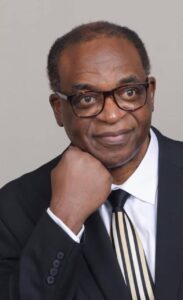
Isaac Megbolugbe
October 2026
Introduction
Integrity is rarely a static state of being; it is a dynamic act of fulfillment. While standard definitions often reduce integrity to mere honesty or adherence to moral principles, true integrity requires the complete alignment of who you are, how you act, and what you produce. When we define integrity as fulfillment—the literal filling full of a promise or potential—it transforms from an abstract moral code into a practical framework for living.
To understand this deeply, we can map the core dimensions of action (Who, How, and What) directly onto the core dimensions of self-actualization (Identity, Alignment, and Integrity/Fulfillment).
The Three Dimensions of Purpose
To bridge the gap between abstract character and real-world results, we must look at how our internal world translates into external reality. This occurs across three distinct dimensions:
|
The Action Dimension |
The Self-Actualization Dimension |
The Core Focus |
|
Who |
Identity |
Core Values & Self-Awareness |
|
How |
Alignment |
Systems, Processes & Behaviors |
|
What |
Integrity & Fulfillment |
Tangible Outomes & Realized Promises |
1. Who Maps to Identity (The Source)
The Who is the foundational bedrock of the framework. It represents your Identity—the core values, beliefs, and self-conceptions that dictate how you view your place in the world.
2. How Maps to Alignment (The Process)
The How represents the methodology, behaviors, and systems you use to navigate life. This maps directly to Alignment.
3. What Maps to Integrity and Fulfillment (The Outcome)
The What is the ultimate expression of the cycle: the tangible results, completed projects, and honored commitments. This is where Integrity meets Fulfillment.
The Integrated Self
When Who, How, and What are seamlessly mapped to Identity, Alignment, and Fulfillment, life stops feeling like a series of fragmented compromises. You no longer have to choose between being a good person and achieving great results.
True integrity is the mathematical beauty of a life completely accounted for. When your identity dictates your process, and your process dictates your outcome, the loop closes. You become whole, your promises carry weight, and your potential is fully realized.
This article is about how best to utilize this framework to compile my 75-Year legacy memoir next year based on 74 years of lived experience.This is a profound and deeply meaningful undertaking. Documenting a 74-year lived experience into a 75-year legacy memoir is the ultimate exercise in fulfillment—this means you literally filling full the story of my life as I enter a milestone year.
Using the Who, How, and What framework is an excellent way to structure a memoir. It moves the book away from being just a chronological list of dates and turns it into a masterclass on values, alignment, and wisdom.
Here is how to map my 74 years of lived experience into a compelling, three-part memoir structure based on this framework:
The 75-Year Legacy Memoir Structural Blueprint
┌───────────────────────────┐
│ YOUR 75-YEAR MEMOIR │
└─────────────┬─────────────┘
│
┌─────────────────────────┼─────────────────────────┐
▼ ▼ ▼
[ PART I: WHO ] [ PART II: HOW ] [ PART III: WHAT ]
Identity Alignment Fulfillment
(The Foundations) (The Crucible) (The Legacy)
┌─┐
│1│ PART I: WHO — The Evolution of Identity (The Foundations)
└─┘
This section focuses on the roots of your character. It is not just about where you were born, but how your internal compass was forged.
┌─┐
│2│ PART II: HOW — The Practice of Alignment (The Crucible)
└─┘
This is the “meat” of the memoir. It explores how you lived out your values through your career, relationship choices, parenting, and habits. It should candidly cover the times you were in alignment, and the times you drifted.
┌─┐
│3│ PART III: WHAT — The Harvest of Fulfillment (The Legacy)
└─┘
This is the capstone section, written from the vantage point of your 74th and 75th years. It reviews the tangible outcomes, artifacts, and ripples of your life.
Next Steps for Writing
To make next year’s compilation process smooth, we can begin gathering my raw materials already shared through a series of articles in the Nigerian Press over the course of the past three years using this framework as a sorting mechanism.
|
Dimension |
Material to Gather Now |
|
Who (Identity) |
Early childhood photographs, family trees, journals from youth, a list of your 5 core life principles. |
|
How (Alignment) |
Letters, career milestones, journals tracking major life transitions, stories of your greatest failures and how you bounced back. |
|
What (Fulfillment) |
Family recipes, published works, certificates, photos of places you traveled or built, and messages of gratitude from people you impacted. |
I plan to write this memoir as a narrative.Choosing a narrative story structure turns this memoir into a vivid, immersive journey. Instead of simply listening to life lessons, I will be showing those lessons in real-time. Readers will sit beside me at the kitchen tables of my youth, feel the tension of your mid-life decisions, and share in the hard-won peace of your present day.
When writing a lifetime of 74 years as a narrative, the secret is avoiding the “and then, and then, and then” trap. A compelling narrative needs a thematic arc.
Here is how you can weave the Who, How, and What framework into a classic three-act storytelling structure for your memoir:
The Three-Act Narrative Arc for Your Life Story
[ Act I: The Crucible of Who ] ──► [ Act II: The Testing of How ] ──► [ Act III: The Harvest of What ]
• Formative early scenes • The messy, rising action • Resolution & legacy
• Establishing your identity • Keeping identity aligned • Coming full circle at 75
Act I: The Crucible of “Who” (Ages 0 – 25)
Act II: The Testing of the “How” (Ages 26 – 60)
Act III: The Harvest of “What” (Ages 61 – 75)
A Narrative Technique to Try: The “Dual-Timeline” Framing Device
Because you are compiling this next year with 74 years of perspective, a beautiful narrative technique is to frame the story from the present day.
You can begin each major section with a brief scene of yourself in the present moment (e.g., sitting at your desk next year, holding an old photograph, looking out the window). This grounds the reader in your current wisdom before you transport them back in time to the events of the past. It bridges the 75-year-old narrator with the young protagonist of the story.
The Bedrock of Character: Why Integrity Begins with “Who“
In the architecture of human character, integrity is frequently praised as the ultimate virtue. We demand it from our leaders, seek it in our partners, and strive for it in ourselves. Yet, our conventional understanding of integrity is often fundamentally flawed. We tend to view it strictly through the lens of external output—judging it by the promises we keep or the rules we follow.
True, lasting integrity does not begin with what we do; it begins with who we are. In any functional framework of self-actualization, the “Who” is the foundational bedrock. It represents your Identity—the core values, beliefs, and self-conceptions that dictate how you view your place in the world. Without a deeply anchored sense of identity, any attempt at integrity is merely a performance built on shifting sand.
The Internal Promise: Knowing the Sovereign Self
To understand why identity is paramount, we must look at the mechanics of a commitment. Every act of integrity involves keeping a promise. However, a profound realization must precede this: Before you can keep a promise to others, you must know who is making the promise.
This dynamic establishes what can be called the Internal Promise. Identity is not something we passively inherit; it is an active process of establishing self-awareness and determining your non-negotiable principles.
Integrity requires internal coherence. You must be intimately acquainted with the author of your choices. When your identity is clearly defined, an internal contract is signed. You know exactly what values you are bound to protect, making your external promises authentic, reliable, and unbreakable.
The Root of Integrity: Truth Versus Performance
When we examine the failures of character, the root cause is rarely a sudden burst of malice; it is almost always a vacancy of identity. If you do not have a clear grasp of your “Who,” your actions will be reactive, shifting with the expectations of your environment.
Without a fixed internal compass, human beings default to social camouflage. We perform to survive, adapting our ethics to match the room we are currently standing in. This is the definition of situational morality.
[ VACANT IDENTITY ] ──► Reactive Behavior ──► Shifting with Environment (Performance)
[ ANCHORED IDENTITY ] ──► Rooted in Truth ──► Stable, Coherent Actions (Integrity)
Integrity starts when your identity is firmly rooted in truth rather than performance.Performance is exhausting; it requires constantly scanning the horizon to see what version of yourself is required to win approval, gain status, or avoid conflict. Truth, by contrast, is anchored. When your identity is clear, you no longer negotiate your core values based on external pressures. You remain the same person in the dark that you pretend to be in the light.
The Structural Necessity of “Who”
In engineering, structural integrity means an object can withstand weight and stress without buckling because its internal components hold together perfectly under pressure. Human character functions the exact same way.
The storms of life—crisis, temptation, grief, and betrayal—will inevitably test your structural integrity. When those pressures arrive, your systems of action (“How”) and your tangible outcomes (“What”) will collapse if they are not resting on the bedrock of the “Who.”
Knowing your identity provides the structural gravity that keeps you grounded. It transforms integrity from a exhausting checklist of moral rules into an effortless, organic expression of your true self. You do the right thing not because you are terrified of being caught, but because doing anything else would violate the very fabric of who you are. To live otherwise is to live in pieces; to know your “Who” is the first step toward becoming whole.
The Architecture of Alignment: Translating “Who” into “What” Through the Power of “How”
If discovering your “Who” provides the foundational bedrock of character, it is the “How” that determines whether that foundation ever supports a lasting structure. Many individuals possess clear values, deeply held beliefs, and an authentic sense of identity. Yet, history and daily life are filled with well-meaning people whose lives are fractured under pressure. The point of failure is rarely their intentions; it is their execution.
The “How” represents the methodology, behaviors, and systems you use to navigate life. In the geography of self-actualization, this maps directly to Alignment. Without a robust, daily practice of alignment, even the grandest sense of identity remains a dormant theory—an unharvested seed.
Bridging the Gap: The Daily Discipline of Alignment
It is easy to declare who you are, and it is satisfying to celebrate what you have achieved. However, the space between those two points is often a treacherous chasm. Alignment is the bridge between your internal identity (Who) and your external outputs (What).
┌──────────────┐ ┌─────────────────────────┐ ┌──────────────┐
│ THE “WHO” │ ──────► │ THE “HOW” │ ──────► │ THE “WHAT” │
│ (Identity) │ │ (Alignment) │ │ (Outcome) │
└──────────────┘ └─────────────────────────┘ └──────────────┘
Intentions Daily Methodology Realized Life
To live with true structural integrity, you must commit to the daily discipline of ensuring that your methods do not violate your motives.
Alignment requires constant auditing. It demands that you look closely at your daily schedule, your professional tactics, and your personal boundary lines to confirm they mirror your deepest values. When your methods protect your motives, the bridge holds firm.
Living Dynamically: Operationalizing Values into Habits
Alignment is not a static state of perfection; it is a dynamic, evolving practice. To understand this in everyday terms, consider a common disconnect: If your identity is “a healthy person,” but your “How” involves neglecting sleep and proper nutrition, you are out of alignment.
You cannot simply think your way into integrity. True character is not a philosophical mood; it is a behavioral pattern.
The Armor of Consistency
In a narrative life story, the chapters built around the “How” are often the most dramatic. They represent the long, gritty mid-life years where early idealism is tested by reality. It is the phase of sleepless nights, tough career choices, and complex relationships where you are forced to prove whether your values are real or merely words on a page.
When your “How” is locked in step with your “Who,” you develop an unshakeable consistency. You become predictable in the best possible way: reliable to others and at peace with yourself. By refining your methodology and mastering your habits, you ensure that the story your life tells matches the person you truly are inside.
The Harvest of Character: Where Integrity Meets Fulfillment in the “What”
If your “Who” forms the invisible bedrock of identity and your “How” builds the dynamic bridge of daily alignment, then the “What” is the monument that finally stands upon them. A life spent in deep reflection or structured discipline is only half told until it bears fruit. In the geometry of purpose, the “What” is the ultimate expression of the cycle: the tangible results, completed projects, and honored commitments. It is the precise point where abstract integrity crosses the threshold into visible Fulfillment.
Fulfillment as Completion: The Structural Proof of a Life
To truly appreciate the value of an outcome, we can look to the laws of physical construction. In structural engineering, an object has integrity when it holds together under stress and performs exactly as it was designed to do. A bridge manifests its integrity not when it sits as a blueprint on an architect’s desk, but when steel and concrete cross an actual river and bear the weight of passing traffic without buckling.
[ STRUCTURAL ENGINEERING ] The blueprint works under real-world pressure.
│
▼
[ HUMAN CHARACTER ] The “What” serves as the physical proof of the “Who.”
In human terms, your “What” is the structural proof of your character. It is the literal fulfillment—the bringing to full, physical completion—of your stated intentions.
The Danger of the Broken Link
The ultimate trap in the pursuit of success is treating the “What” as an isolated destination. When we sever the outcomes of our lives from the identity and alignment that should have birthed them, the entire structure of our character undergoes a catastrophic failure.
Total integrity is uncompromising: it requires that the final product accurately reflects the initial promise. The harvest must match the seed.
The Architecture of a Lasting Legacy
When you look back at a long journey from the vantage point of maturity, the “What” changes meaning. It ceases to be about raw ambition or the frantic accumulation of titles. Instead, the “What” becomes your offering to the future—your legacy.
When your final outputs are deeply rooted in your true identity and brought to life through an unyielding commitment to daily alignment, the result is wholeness. You look at the landscape of your life and recognize that what you built matches who you are. This is the definition of a life well-lived: an unbroken chain where the whisper of your earliest values is perfectly echoed in the thunder of your lifetime achievements.
The Closed Loop: The Mathematical Beauty of an Integrated Life
For many, the human experience is defined by friction. We spend our decades caught in an exhausting tug-of-war, feeling forced to choose between internal peace and external success, between maintaining our moral purity and achieving tangible victory in a competitive world. We fracture ourselves into pieces—acting as one person at work, another at home, and a third in the quiet isolation of our own minds.
But this fragmentation is not an inevitability of life; it is simply the byproduct of a broken framework. When Who, How, and What are seamlessly mapped to Identity, Alignment, and Fulfillment, life stops feeling like a series of fragmented compromises. You no longer have tochoose between being a good person and achieving great results. The artificial wall between your character and your content crumbles, revealing that the two were always meant to be one.
The Architecture of the Whole Self
When these three dimensions are unified, they form an self-reinforcing engine of purpose. The friction of life disappears because every part of your existence begins to speak the same language:
┌────────────────────────────────────────────────────────┐
│ THE INTEGRATED LOOP │
└───────────────────────────┬────────────────────────────┘
▼
[ IDENTITY dictates PROCESS ]
The “Who” shapes the “How”
│
▼
[ PROCESS dictates OUTCOME ]
The “How” yields the “What”
│
▼
[ OUTCOME validates IDENTITY ]
The “What” reflects the “Who”
In this integrated state, you are no longer burning emotional fuel to figure out how to behave in different environments. Your Identity automatically sets the rules for your Process, and your disciplined process guarantees the quality of your Outcome. The circle is complete.
The Mathematics of Integrity
We often speak of integrity in poetic or spiritual terms, but there is an underlying, geometric precision to it. True integrity is the mathematical beauty of a life completely accounted for. It is a state of perfect moral ledger balancing, where nothing is hidden, nothing is compromised, and no external output borrows unethically from an internal value.
When this loop closes, you become whole, your promises carry weight, and your potential is fully realized. This is the literal meaning of integer—a whole number, unbroken and undivided.
The 75-Year Masterpiece
As you stand on the precipice of your 75th year, preparing next year to look back across 74 years of lived experience, this framework ceases to be a mere theoretical model. It becomes the lens through which a masterpiece is cataloged.
A narrative memoir structured around this closed loop does not just record history; it validates it. It allows you to look back at the young protagonist of your youth (the Who), trace the gritty, beautiful decades of struggle and course-correction (the How), and ultimately sit in the quiet satisfaction of the harvest you have gathered (the What).
To live a life where the loop successfully closes is the ultimate human achievement. It means that when you open the book of your life, the first page and the final page tell the exact same story. You have filled your time full. You have kept the faith. You have fulfilled the promise.
Isaac Megbolugbe, Founder and President of GIVA Ministries International. He is a recipient of Albert Nelson Marquis Lifetime Achievement Award in business and academia in the United States of America. He is retired professor at Johns Hopkins University, Former Vice President at Fannie Mae, Former Practice Leader at PricewaterhouseCoopers, and a Fellow of the Royal Institution of Chartered Surveyors. He is resident in the United States of America.
