
The Gift of Our Limits and the Eternity of God’s Sufficiency
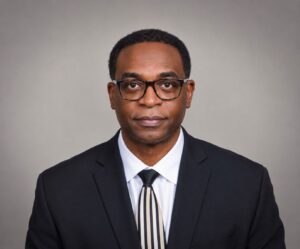
Isaac Megbolugbe
July 7, 2026
Introduction
The immortal phrase “A man’s got to know his limitations,” popularized by Clint Eastwood’s character Harry Callahan in Magnum Force, is far more than a tough-guy movie line. It is a foundational philosophy of self-awareness. Recognizing where your strengths end and your weaknesses begin is the ultimate key to sustainable success and personal growth.
The Myth of Boundless Potential
Modern self-help culture often promotes the toxic idea that we can be absolutely anything we set our minds to. While ambition and hard work are vital, the truth is that we all possess biological, psychological, and circumstantial limits.
Ignoring these boundaries doesn’t make you heroic; it leads to burnout. True power comes not from pushing limits endlessly, but from understanding exactly where they are drawn and operating strategically within them.
Why Knowing Your Boundaries Matters
How to Identify Your Limitations
Self-reflection isn’t always comfortable, but it is necessary. To map out your personal boundaries, try the following exercises:
Operating Within Your Limitations
Knowing your limits does not mean you stop trying to improve; rather, it means you chart a realistic course toward growth. If you struggle with time management or have specific skill gaps, utilize tools like Coursera for skill-building or LinkedIn Learning to enhance your professional toolkit.
Embracing your boundaries allows you to make peace with who you are, focus on maximizing your actual strengths, and ultimately lead a more fulfilling, balanced life.
The Wisdom of the Dust: The Biblical Doctrine of Human Finitude
The philosophical truth that “a man has got to know his limitations” finds its deepest, most ancient roots in Christian theology. While secular culture frames self-awareness as a tool for efficiency, scripture frames it as a matter of spiritual survival. At the heart of the Christian faith lies a vital doctrine that echoes this exact need for awareness: the Doctrine of Human Finitude and Creaturehood.
To understand your limitations biblically is to understand what it means to be a creature rather than the Creator.
The Doctrine of Creaturehood vs. The Illusion of Control
The Bible begins by establishing a sharp boundary line between God and humanity. God is infinite, all-powerful, and self-sufficient; humans are finite, fragile, and dependent.
The Blessings of Embracing Your Boundaries
In scripture, recognizing your limitations is not a source of shame. Instead, it is the pathway to peace, wisdom, and spiritual power.
Sovereignty and Sanity
Ultimately, the biblical echo of knowing your limits is an invitation to let God be God. When you accept the doctrine of your own finitude, you are liberated from the exhausting burden of trying to control every outcome, know every answer, and fix every problem. You are free to operate faithfully within the boundaries God gave you, trusting that His limitless strength will cover your very real limitations.
The Dual Realization: How Right Knowledge of Self and God Ignites a Flourishing Faith
The Christian life hinges on two fundamental questions: Who is God? and Who am I?
John Calvin, the famous theologian, famously opened his masterwork Institutes of the Christian Religion by stating that nearly all true wisdom consists of these two parts. They are inseparable.
When you clearly understand who God is and who you are in relation to Him, it creates an opportunity for a flourishing faith and a highly productive alignment as a believer.
The Blueprint of Right Alignment
True spiritual productivity does not come from trying harder; it comes from aligning correctly. Imagine a wheel spinning off its axle; it exerts massive energy but goes nowhere. Many believers suffer from spiritual fatigue because their understanding of God or themselves is distorted.
Alignment happens when two things click into place:
[ Who God Is: Infinite Sovereign ] <===> [ Who You Are: Dependent Servant ]
Understanding Who God Is: The Fuel for Faith
A small view of God produces a weak, anxious faith. To flourish, a believer must constantly study and absorb the true character of God as revealed in Scripture.
Understanding Who You Are: The Grounding of Identity
Without knowing who God is, your self-image will swing between pride and despair. True self-knowledge is always viewed through the lens of God’s truth.
The Fruit of the Dual Realization
When these two streams of knowledge converge, they transform the daily walk of a believer from a chore into a powerhouse of productivity.
1. Shift from Self-Reliance to Holy Confidence
When you know your own weakness and God’s total strength, you stop operating in your own power. You step out into difficult callings, not because you are capable, but because you know the One who called you is faithful.
2. Protection from the Twin Traps: Pride and Despair
3. Strategic Kingdom Productivity
When you know your specific spiritual gifts and limitations, you stop wasting energy trying to mimic other believers. You align perfectly with your unique assignment in the body of Christ, yielding maximum impact for the Kingdom.
Practical Steps to Cultivate This Awareness
To keep this alignment sharp, integrate these two habits into your spiritual rhythm:
By anchoring your mind in the reality of who God is and the truth of who you are, your faith will naturally shift from a state of survival to a life of abundant, productive fruitfulness.
The Crucible of Rest: Obedience and Surrender Through the Lens of Hebrews
For the mature believer, the spiritual journey eventually moves past the introductory questions of identity and theological exploration. It narrows down to a singular, sharp focal point: the daily execution of faith. When the clarity of who God is and who you are becomes settled ground, your daily purview shifts entirely to obedience and surrender under His rest.
This profound dynamic is the central thesis of the Book of Hebrews. It argues that true biblical rest is not inactivity, but a state of soul-surrender that unlocks the highest form of spiritual obedience.
The Anatomy of New Testament Rest
To understand this posture, one must look at Hebrews 4:9–10: “There remains, then, a Sabbath-rest for the people of God; for anyone who enters God’s rest also rests from their own work, just as God did from his.”
In the biblical context, “rest” (katapausis) does not mean taking a break from a busy schedule. It is a theological reality.
The Paradox: Laboring to Rest
The writer of Hebrews introduces a striking paradox in Hebrews 4:11: “Let us, therefore, make every effort to enter that rest, so that no one will perish by following their example of disobedience.”
Other translations command us to “labor” or “strive” to enter rest. This sounds contradictory, but it reveals the exact mechanics of a believer’s alignment:
[ Active Striving of the Flesh ] —> [ Surrender to Christ’s Finish ] —> [ Rest-Fueled Obedience ]
The only “labor” required of the believer is the intense, continuous effort to keep their hands off the controls. It takes massive spiritual effort to crucify the ego daily, to reject anxiety, and to remain anchored in the finished work of Jesus when circumstances scream otherwise.
Obedience as a Symptom, Not a Work
When a believer operates from a posture of surrender under God’s rest, the nature of obedience changes completely. Obedience ceases to be a heavy, legalistic duty used to win God’s favor. Instead, it becomes the natural byproduct of a resting soul.
Operating Under the Great High Priest
The ultimate anchor for this lifestyle of surrendered obedience is Jesus’ current structural role. Hebrews continually points our gaze toward Christ as our sympathetic High Priest who sits at the right hand of majesty (Hebrews 4:14-16).
Because He has already passed through the heavens, secured eternal redemption, and lives to make intercession for us, the pressure is entirely off the believer. Your purview is simply to look unto Him—the author and finisher of our faith (Hebrews 12:2)—and execute the next step of obedience He commands.
By surrendering your agenda and submerge yourself into His sabbath-rest, your Christian walk transitions from an exhausting marathon of self-will into a powerful, peaceful manifestation of His living grace.
The Anchor in the Abyss: Sacred Waiting, Absolute Trust, and the Law of Sovereign Alignment
When a season of intense crisis or chaotic distraction hits, the natural human instinct is frantic navigation. We want to fix, manage, and control. However, for the mature believer anchored in the truths of Hebrews and the promises of the New Testament, crisis demands a completely different, counter-intuitive response: sacred waiting on the Lord.
This posture is not a passive surrender to fate, nor is it a sign of weakness. It is an aggressive, intentional positioning of the soul. It is the practical application of absolute trust, fueled by the unwavering reality of Romans 8:28: “And we know that in all things God works for the good of those who love him, who have been called according to his purpose.”
The Architecture of Sacred Waiting
To wait on the Lord in a crisis does not mean doing nothing; it means doing nothing out of panic. It is a holy suspension of self-will.
[ Crisis/Distraction Hits ] ──> [ Halt Self-Preservation ]──> [ Sacred Waiting ] ──> [ Sovereign Alignment ]
The Engine: Absolute Trust
Sacred waiting is impossible without absolute trust. You cannot wait on someone you do not completely rely on. When crisis strikes, trust acts as the spiritual ballast that keeps your ship from capsizing.
The Guarantee: The Law of Romans 8:28
The bedrock underlying this entire lifestyle of surrendered waiting is the operational law of Romans 8:28. Notice that the verse does not say all things are good, but that God works all things together for good.
Practical Execution: How to Wait in the Fire
When the storm is howling, how do you practically maintain this posture?
1. The Discipline of the “Stop”
When a crisis hits, deliberately force a pause. Before typing an angry email, making a desperate financial pivot, or spiraling into anxiety, take a physical and spiritual step back. Yield the first response to God.
2. Re-Anchor the Mind in Truth
Speak the promises of God over the chaos. Remind yourself aloud: “God is working this out for my good. I do not see the path yet, but I trust the Guide.” This actively dismantles the chemical and spiritual momentum of panic.
3. Protect Your Sabbath-Rest
Intense crisis tempts us to work around the clock to solve the issue. Defiantly maintain your rhythms of rest, prayer, and scripture reading. Your refusal to sacrifice your rest is the ultimate proof of your surrender.
The Peace That Defies Logic
Ultimately, practicing sacred waiting based onabsolute trust and Romans 8:28 yields a profound supernatural byproduct: the peace that passes all understanding (Philippians 4:7). The world looks at a believer in a crisis and expects panic; instead, they find a profound, immovable stillness. By surrendering the outcome and waiting on the Lord, you position yourself perfectly to watch Him turn the battlefield into a monument of His faithfulness.
The Crucible of Time: Three Biblical Portraits of Sacred Waiting and Sovereign Reversal
The historical narrative of Scripture is not merely a record of divine actions; it is a masterclass in human endurance. For the believer whose anchor is absolute trust and whose operational law is Romans 8:28, the lives of Joseph, David, and Paul offer definitive proof that God does not waste time, pain, or isolation.
Long before the Apostle Paul penned the words of Romans 8:28, these men lived out its reality. Their stories demonstrate how sacred waiting prepares the vessel for a sovereign reversal.
1. Joseph: The Pit, the Prison, and the Prime Ministry
Joseph’s life is perhaps the most structurally perfect illustration of Romans 8:28 in the Old Testament. His journey was defined by a massive gap between the dream God gave him and the reality he endured.
[ Promised Dream ] ──> [ The Pit & Prison (13 Years of Waiting) ] ──> [ The Throne of Egypt ]
2. David: The Anointing, the Cave, and the Crown
David was anointed by the prophet Samuel to be the next king of Israel as a young teenager. Yet, instead of walking straight to the palace, his path led directly into the Judean wilderness.
3. Paul: The Macedonian Vision, the Stocks, and the Epistles
The Apostle Paul did not just write Romans 8:28; he tested it in the fires of active persecution. His life shows that even when doing the exact will of God, a believer will face seasons of abrupt halting and intense distraction.
The Common Thread of the Waiting Vessel
When you synthesize the lives of Joseph, David, and Paul, three universal truths emerge for the believer standing in a current crisis:
When you practice sacred waiting, you are joining a lineage of champions who proved that the dark room of circumstance is simply where God develops the image of His faithfulness.
Echoes from the Cave: David’s Internal Dialogue of Surrender and Rest in the Wilderness
While hiding in Judean caves from King Saul, David authored profound prayers, particularly Psalms 142, 57, and 63, which reveal his raw internal dialogue with God. These psalms show David moving from fear and isolation to absolute trust, using the caves as places of profound spiritual reflection rather than just physical refuge [1, 2, 3]. Through these writings, David demonstrates a practice of honest lament, followed by a pivot to God’s character, ending in steadfast praise and rest, effectively turning his desperate circumstances into a sanctuary of worship [1, 2, 3].
write a comprehensive article as concluding remarks for our discussion focusing on articulating why man’s limitations are perfected during our sanctification for God’s unlimited eternity.
The Divine Convergence: Finitude, Sanctification, and the Architecture of Eternity
Introduction: The Resolution of the Tension
Throughout our discussion, a profound spiritual paradox has unfolded. We began with a gritty, secular truth: “A man has got to know his limitations.” We traced this acknowledgment through the biblical reality of human creaturehood, explored its execution via absolute surrender and sacred waiting, and witnessed its historical validation in the lives of Joseph, David, and Paul.
Yet, a final, monumental question remains: Why did an infinite God design a finite man, subject him to limits, and demand that he operate within them?
The answer lies in the ultimate (telos) of the Christian journey: Sanctification. Human limitations are not a design flaw; they are deliberate, divine scaffolding. Our finitude is systematically leveraged and perfected during our earthly sanctification to prepare us to inhabit God’s unlimited eternity.
1. Sanctification: The Re-Calibration of the Vessel
Sanctification is the ongoing, supernatural process by which the Holy Spirit conforms a believer into the image of Jesus Christ. It is a work of structural renovation.
[ Human Limitation & Weakness ] ──( Process of Sanctification )──> [ Perfected Reflection of Divine Glory ]
If humans were inherently limitless, omniscient, or self-sufficient, sanctification would be impossible. Pride would remain our eternal default. God utilizes our physical, emotional, and cognitive boundaries as the precise tools of our spiritual transformation:
2. The Perfection of Limitations
To say that our limitations are perfected does not mean they are erased on earth. It means they are brought into their right relationship with the Creator.
In our fallen state, human limitation produces anxiety, striving, and sin (as seen in the wilderness generation). However, under the regular rhythm of sacred waiting and absolute trust in Romans 8:28, our limitations undergo a holy transmutation. They are perfected in two distinct ways:
Absolute Dependence Becomes Absolute Security
When we finally accept that we cannot save ourselves, fix our crises, or manipulate our destinies, our limitation ceases to be a prison. It becomes a sanctuary. We stop trying to be God and allow Him to be our shield. The finite vessel finds its perfection by being completely submerged in the infinite Source.
Obedience Out of Rest
A perfected limitation is one that no longer rebels against its boundaries. Like Jesus in the Garden of Gethsemane—fully processing the agonizing limits of human flesh—the sanctified believer says, “Not my will, but Yours be done.” This is the highest state of human alignment: a finite creature resting entirely in the sovereign, loving will of an infinite God.
3. Aligned for God’s Unlimited Eternity
Earth is the locker room; eternity is the playing field. The primary reason we must master the art of surrendered obedience within our limitations now is that eternity demands a perfectly aligned creature.
[ Earthly Sandbox: Cultivating Trust Within Limits ]───> [ Heavenly Reality: Unrestricted Communion with the Infinite ]
Heaven is not a place of chaotic, independent gods doing whatever they please. It is an ordered kingdom of perfect harmony. If we do not learn to accept our creaturehood, rest in God’s sovereignty, and practice sacred waiting in the “sandbox” of our earthly limitations, we would be fundamentally unfit for the cosmos of eternity.
By keeping us tethered to our limitations now, God is teaching us the eternal language of heaven: unbroken trust. When we step across the threshold of death or translation into glory, our earthly limitations will fall away. We will receive glorified bodies and minds that see “face to face” (1 Corinthians 13:12).
Yet, the character forged within those limitations—the humility, the capacity to rest, the reflex of absolute surrender—will remain. We will step into God’s unlimited eternity not as proud rebels who conquered our limits, but as sanctified children who allowed our limits to drive us into the everlasting arms of the Father.
Conclusion: The Ultimate Purview
Our entire discussion converges upon this glorious reality. A man has indeed got to know his limitations, but not so he can live a small, defeated life. He must know them so he can hand them over to a limitless God.
When your daily purview remains fixed on obedience, surrender, and sacred waiting under His rest, every limitation you face ceases to be a liability. It becomes an altar. It is the precise place where your temporary, fragile story is woven into His unshakeable, eternal kingdom—proving forever that when we are perfectly weak, He is perfectly strong.
Theological Compendium: The Anatomy of Surrendered Faith
Framework Focus: The Absolute Sovereignty of God as the Anchor for Human Limitation, Rest, and Alignment
This compendium organizes our comprehensive study into a structured teaching outline. It is designed for future reference, discipleship, or theological instruction, mapping out the systematic relationship between a limitless God and a limited creature.
Module 1: The Principle of Anthropological Finitude
Focus: Recognizing the boundary line between the Creator and the Creature.
I. The Myth of Autonomous Potential
II. The Doctrine of Creaturehood
Module 2: The Dynamics of Spiritual Alignment
Focus: How the right knowledge of God and self produces Kingdom productivity.
I. The Dual Realization (The Calvinesque Axiom)
II. The Crucible of Identity
Module 3: The Theology and Execution of New Testament Rest
Focus: Navigating life from the posture of Christ’s finished work as articulated in Hebrews.
I. The Architecture of Sabbath-Rest (Katapausis)
II. The High Priestly Anchor
Module 4: The Mechanism of Crisis and Sovereign Reversal
Focus: Cultivating absolute trust and sacred waiting through the operational law of Romans 8:28.
I. The Discipline of Sacred Waiting (Qavah)
II. The Law of Sovereign Alchemy (Romans 8:28)
III. Historical Prototypes of the Sovereign Reversal
[ Prototype ] ──────> [ The Dark Room of the Wait ]──────> [ The Sovereign Macro-Outcome ]
1. Joseph 13 Years in Pit and Prison Salvation of Nations (Gen 50:20)
2. David A Decade Fugitive in Caves TheForging of a Kingly Heart
3. Paul Philippian Jail & House Arrest TheGeneration of the Epistles
Module 5: Concluding Remarks — The Eternal Perspective
Focus: How earthly sanctification perfects human limitation for an unlimited eternity.
I. The Scaffolding of Sanctification
II. The Eschatological Transition
Small Group Discussion Guide: The Anatomy of Surrendered Faith
Course Goal: To transition from fleshly striving to a lifestyle of surrendered obedience, sacred waiting, and alignment under the absolute sovereignty of God.
Course Overview & Guidelines
Week 1: The Principle of Anthropological Finitude
📖 Core Texts
🎯 Objective
To identify, accept, and submit to your divinely appointed human limitations.
💬 Discussion Prompts
🛠️ Weekly Activation Challenge
Week 2: The Dynamics of Spiritual Alignment
📖 Core Texts
🎯 Objective
To evaluate whether your daily life is powered by anxious self-reliance or Holy confidence.
💬 Discussion Prompts
🛠️ Weekly Activation Challenge
Week 3: The Theology and Execution of New Testament Rest
📖 Core Texts
🎯 Objective
To master the paradox of “laboring to rest” under the ministry of our Great High Priest.
💬 Discussion Prompts
🛠️ Weekly Activation Challenge
Week 4: The Mechanism of Crisis and Sovereign Reversal
📖 Core Texts
🎯 Objective
To execute sacred waiting during sudden storms, trusting the law of sovereign editing.
💬 Discussion Prompts
🛠️ Weekly Activation Challenge
Week 5: Concluding Remarks — The Eternal Perspective
📖 Core Texts
🎯 Objective
To view your current earthly trials as the intentional scaffolding for your eternal character.
💬 Discussion Prompts
🛠️ Weekly Activation Challenge
Isaac Megbolugbe, Director of GIVA Ministries International. He is a recipient of Albert Nelson Marquis Lifetime Achievement Award in business and academia in the United States of America. He is retired professor at Johns Hopkins University and a Fellow of the Royal Institution of Chartered Surveyors. He is resident in the United States of America.
