
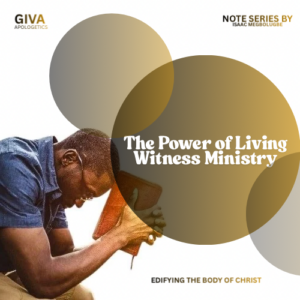
The Power of Living Witness Ministry: Edifying the Body of Christ
Isaac Megbolugbe
January 29, 2026
The Harmony of Spirit, Soul, and Body: Surrendering to the Holy Spirit by Isaac Megbolugbe
As believers, we are called to edify one another, to build each other up in faith and motivation (1 Thessalonians 5:11). Edification is about speaking life, encouragement, and blessing into someone’s life. It’s about recognizing the potential in others and empowering them to fulfill their God-given purpose.
At the heart of living witness ministry is the intersection of sharing our testimonies and edifying others. When we share our stories of faith, struggles, and triumphs, we create opportunities for others to be encouraged, motivated, and strengthened. This is where the beauty of living witness ministry meets edification ministry – both individually and institutionally.
The word “edify” means to build up, strengthen, encourage, and motivate. It’s about planting seeds of faith, hope, and confidence in others. Think about the people in your life – your family, friends, and colleagues. Are you speaking blessing over them? Are you letting them know you believe in them?
Henry Ford’s story is a powerful example of the impact of edification. When Thomas Edison affirmed Ford’s idea of building a car that runs on gasoline, it was a turning point in his life. Edison’s approval gave Ford the confidence to pursue his vision, despite his doubts.
You have this same power to edify others. By sharing your testimony and speaking life into someone’s life, you can:
– Encourage them to pursue their dreams
– Strengthen their faith in God
– Motivate them to fulfill their purpose
– Build them up in times of doubt and uncertainty
So, what kind of seeds are you planting in the lives of those around you? Are you taking an interest in their dreams and passions? Are you listening to their stories and offering words of encouragement?
As a living witness, you have the opportunity to edify others through your words, actions, and testimony. Let’s commit to being agents of edification, speaking life and blessing into the Body of Christ and beyond.
Let’s ask ourselves:
– Who can I encourage today?
– Who needs to hear my testimony?
– How can I edify the people in my life?
By doing so, we’ll experience the beauty of living witness ministry and edification ministry coming together to build a stronger, more encouraged Body of Christ.
The Ways of the World and the Ways of the Spirit by Isaac Megbolugbe
The Power of Autobiography: A Tool for Living Witness and Edification Ministries
Autobiography writing can be a transformative experience, offering a unique opportunity to share your story, inspire others, and leave a lasting legacy. As a living witness, your autobiography can serve as a powerful instrument for edification ministries, spreading hope, encouragement, and faith to those who read it.
Sharing Your Story, Inspiring Others
When you write your autobiography, you’re not just recounting events from your life – you’re sharing your testimony. You’re revealing how God has worked in your life, how you’ve overcome challenges, and how you’ve grown in faith. This can be a powerful way to edify others, offering them encouragement and motivation as they navigate their own journeys.
The Intersection of Living Witness and Edification
Your autobiography can be a living witness to your faith, demonstrating how God has been at work in your life. As others read your story, they can be inspired to reflect on their own experiences, deepening their faith and understanding of God’s presence in their lives. This intersection of living witness and edification is where the true power of autobiography writing lies.
Benefits of Writing an Autobiography for Edification
1. Sharing your testimony: Your story can be a beacon of hope for others, showcasing God’s goodness and faithfulness.
2. Encouraging others: By sharing your struggles and triumphs, you can motivate others to persevere in their own journeys.
3. Building faith: Your autobiography can help others see God’s hand at work in their own lives, strengthening their faith.
4. Leaving a legacy: Your story can outlast you, continuing to inspire and edify future generations.
Tips for Writing an Edifying Autobiography
1. Be honest and authentic: Share your struggles and doubts, as well as your triumphs and victories.
2. Focus on God’s work: Highlight how God has been present and active in your life.
3. Use storytelling techniques: Make your story engaging and relatable, using vivid descriptions and dialogue.
4. Identify themes and lessons: Reflect on what you’ve learned and how you can apply those lessons to your life and others.
Examples of Edifying Autobiographies
– Autobiographies of faith leaders, sharing their journeys and spiritual growth
– Memoirs of overcoming adversity, showcasing God’s faithfulness and strength
– Personal stories of redemption, highlighting God’s love and forgiveness
Conclusion
Writing an autobiography can be a powerful way to share your story, inspire others, and leave a lasting legacy. As a living witness, your story can edify others, encouraging them to deepen their faith and trust in God. So, take the step to write your story, and let it be a tool for living witness and edification ministries.
Isaac Megbolugbe, Director of GIVA Ministries International, retired professor at Johns Hopkins University, 2024 Marquis Organization’s Class of Top Executives in the United States of America and a Fellow of the Royal Institution of Chartered Surveyors. He is resident in the United States of America.
Drawing Near to God: Experiencing the Reality of Christian Living by Isaac Megbolugbe
