
The Prophetic Foyer: Confluencing Mabogunje’s Postscript Lament with Nigeria’s Strategic Economic Foresight
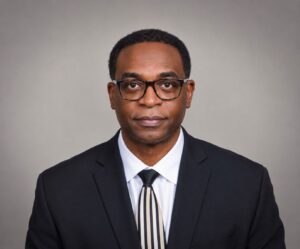
Isaac Megbolugbe
July 24, 2026
Introduction
The intellectual journey of any society is often anchored by a few titanic figures whose insights outlive their physical context. Professor Akinlawon Ladipo Mabogunje, widely revered as the father of African geography, remains one such anchor. In the poignant postscript of his scholarly reflections, he asked a question that reverberates through the corridors of Nigeria’s policy ecosystem: “What singular haven of experience has the intellectual voyage of my life led me to?”
This lamentation is not merely an academic afterthought. It is a prophetic and prescient warning regarding the foundational mechanics of national development. When analyzed closely, Mabogunje’s lifelong intellectual voyage lands precisely at the same ideological foyer as modern strategic foresight: Nigeria’s structural economic bottlenecks are not failures of resource endowment, but failures of spatial organization, institutional framework, and capital mobilization.
The Core of the Mabogunje Lament: The Long-Term Capital Deficit
In his final reflections, Mabogunje explicitly identified the structural quicksand holding African economies back. He noted that no meaningful development can proceed without mobilizing a large pool of long-term domestic savings to fund national infrastructure.
[Mabogunje’s Core Warning]
│
├─► Dependency on Foreign Aid/Grants (Stunted Growth)
│
└─► Failure to Mobilize Domestic Long-Term Savings
│
└─► Result: Infrastructural & Institutional Friction
He lamented that relying on seasonal budgetary allocations, foreign grants, or volatile multilateral loans guarantees stunted growth. The “singular haven” he arrived at was a clear realization that true national sovereignty and economic expansion require turning latent domestic assets into active, self-sustaining financial engines.
From “Dead Assets” to Active Capital
A recurring friction point in Nigeria’s macroeconomic landscape is the presence of vast, untapped value—what spatial economists refer to as dead assets. Mabogunje’s strategic foresight consistently argued for:
The Confluence: Aligning Spatial Geography with Macroeconomic Strategy
To resolve Mabogunje’s lament, Nigeria’s economic managers must merge spatial geography with macroeconomic foresight. Strategic economic planning cannot happen in a spatial vacuum. The convergence of these two disciplines yields a highly actionable path forward:
|
Mabogunje’s Spatial Diagnosis |
Strategic Economic Foresight Application |
|
Lack of long-term domestic savings mobilization. |
Strengthening contributory pensions, sovereign wealth funds, and domestic bond markets to aggressively anchor critical national infrastructure projects. |
|
Prevalence of “dead assets” due to weak title systems. |
Universal digital land registries coupled with legislative updates to the Land Use Act to unlock trillions in dead capital. |
|
Urban-rural disconnect and parasitic urban centers. |
Implementing regional economic corridors that tie agricultural hubs directly to high-capacity processing zones, reversing urban dependency. |
An Unfinished Assignment for the Nation
The intellectual foyer we occupy today demands that we move beyond paying reverent tributes to past geniuses. Mabogunje’s postscript was an invitation to a continuous reflection on the challenges of African urbanization and economic independence.
By synthesizing his structural diagnoses with a forward-looking, aggressive macroeconomic policy, Nigeria can finally break the cycle of developmental inertia. The confluence of his historic warnings and our modern economic foresight provides the precise roadmap needed to transition the nation from a state of potential energy to an unstoppable economic force.
Isaac Megbolugbe, Senior Advisor and Managing Principal of GIVA International. He is a recipient of Albert Nelson Marquis Lifetime Achievement Award in business and academia in the United States of America. He is retired professor at Johns Hopkins University and a Fellow of the Royal Institution of Chartered Surveyors. He is resident in the United States of America.
