
The Silent Awakening: Prophetic Restoration and the Collapse of a 400-Year Deception
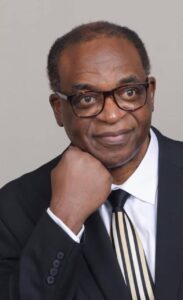
Isaac Megbolugbe
October 2026
Introduction
What happens when an empire built on four centuries of systemic deception begins to fracture? History dictates that we look for the smoke of an uprising, the roar of a riot, or the cadence of increasingly loud political slogans. Yet, a profound shift is occurring across the United States that completely defies the historical script. White supremacy is facing the deepest spiritual and systemic crisis in its history, and the weapon dismantling it is not outward violence.
It is silence.
This is not the silence of submission; it is the dignified, unshakeable silence of a people who have finally remembered exactly who they are. When a people fully awaken to their identity, they no longer require an oppressor’s permission to believe it. This quiet transformation is not political theater—it is an ancient, spiritual reality unfolding in real time. The truth is not preparing for a battle; it has been winning it all along. The reality and prophetic unfolding of the suffering and resilience of Black people in the United States is the story of a system collapsing under the weight of its own contradictions, and a diaspora stepping into an inheritance written for them three thousand years ago.
1. The Erasure of Geography: Restoring the Original Canon
To understand how Black identity was systematically obscured, one must look closely at the theological borders drawn around sacred knowledge. Western Christianity handed down a restricted canon of 66 books, framing it as the complete and unalterable word of God. However, the Ethiopian Bible—preserved by an African church that never stopped reading its ancestral texts—contains 81 books, safeguarding vital historical records like the Book of Enoch, the Book of Jubilees, and the Book of Jasher.
These omitted texts describe an ancient world where Africa and the Middle East were never separate civilizations, but a single, deeply intertwined web of prophets, kings, and empires. Scripture did not ignore this global landscape; it detailed its spiritual authority millennia ago:
In standard Western pulpits, these narratives are routinely sidelined. If Africa is understood as central to the biblical narrative rather than incidental to it—and if some of the earliest leaders of the faith were African—then the entire theological justification once built for colonization, human trafficking, and racial hierarchies collapses under its own weight.
2. Dismantling the Theological Cover for Captivity
The systemic suffering of Black people in America was historically sanctioned by a deliberate weaponization of scripture. For centuries, white theologians twisted Genesis 9 to manufacture the “Curse of Ham,” arguing that Black people were the descendants of Ham and were divinely ordained to eternal servitude.
An honest reading of the text completely dismantles this fabrication:
The Curse of Ham was never an authentic reading of scripture. It was an 18th and 19th-century theological distortion manufactured specifically to provide moral cover for the transatlantic slave trade. Once the text is read plainly, the foundational lie of spiritual inferiority is permanently shattered.
3. The Evidence of Science: Melanin, Climate, and Continuity
Where faith and scripture draw the blueprint, modern science and archaeology fill in the physical bedrock. The pale-skinned, blue-eyed representations of biblical figures that line Western stained-glass windows are not merely inaccurate; they are biologically impossible.
Paleoanthropology and Genetics
The broadest consensus of paleoanthropology establishes that every single population of Homo sapiens alive today traces an unbroken lineage back to ancestors who lived on African soil roughly 200,000 years ago. Furthermore, a landmark 2020 study of Bronze Age Canaanite genomes published in the journal Cell (co-authored by researchers from Harvard Medical School and the Max Planck Institute) documented deep, sustained genetic continuity between the ancient Levant, Egypt, and East Africa. Abraham himself came out of Ur, passed through Egypt, and his descendants lived on African soil for centuries before ever entering Canaan. There is no historical or genetic basis for imagining the ancient Near East as a European space.
The Biology of Melanin
From a purely biological perspective, human populations indigenous to regions of intense, sustained sun exposure—such as the Negev Desert and the Jordan Valley—develop high levels of melanin to protect against ultraviolet radiation. Dark skin was an evolutionary necessity for survival. The historical Jesus, by every reasonable scientific inference, was a brown-skinned, dark-haired man of the Afroasiatic region, physically shaped by the environment he was born into rather than the imagination of European Renaissance painters working a thousand years later and a continent away.
Linguistic Shared Roots
Language tells the same story of regional continuity. Hebrew, Aramaic, and Arabic belong entirely to the Afroasiatic language family, which linguists trace back to the Nile Valley and the Horn of Africa. Ancient Egyptian shares profound grammatical structures and root words with ancient Hebrew. When Moses was raised inside Pharaoh’s household, he was immersed in a culture linguistically, geographically, and ethnically bound to his own Hebrew roots.
|
Category |
Scientific Evidence |
Historical Impact / Erasure |
|
Genetics |
Harvard & Max Planck studies prove deep genetic continuity between the ancient Levant, Egypt, and East Africa. |
Ancient Israel was historically a crossroads of African and Semitic peoples, not a European landscape. |
|
Biology |
Melanin development is a required evolutionary protection against intense UV radiation in the Jordan Valley. |
The historical Jesus was a brown-skinned, dark-haired man; the pale European icon is a modern myth. |
|
Linguistics |
Hebrew, Aramaic, and Arabic belong to the Afroasiatic language family rooted in the Nile Valley. |
Cultural, literal, and structural lines bound Hebrew and African civilizations together. |
4. Stolen Legacy: The Hidden Church and Whitewashed Saints
The historical record demonstrates that Christianity did not begin in Europe. It began in the Middle East and North Africa—regions inhabited overwhelmingly by people of color—and its foundational theological architectures were built by African minds.
The greatest early theologians of the church were sons of the African continent:
In standard educational curricula, these men are presented as racially ambiguous or painted as pale Europeans. This historical theft extends to biblical figures and saints as well. Simon of Cyrene—explicitly identified across three Gospels as a man from the coast of modern-day Libya—carried the cross of Christ up Calvary at the most consequential moment of the New Testament. In Acts 8, the Ethiopian eunuch, a high-ranking treasury official, became one of the very first converts to the faith outside of Judea, returning home to plant a Christian community in Africa centuries before European colonizers ever set sail.
Even within Europe itself, the physical evidence of this African heritage was quietly hidden away. Across Poland, Spain, France, and Italy, hundreds of medieval statues and icons known as the “Black Madonnas” depict the Virgin Mary with distinct African and Middle Eastern facial features and dark skin. While institutional church narratives often dismissed this as “candle smoke discoloration,” many were deliberately carved from black stone. Similarly, the 3rd-century Roman martyr St. Maurice—an Egyptian commander who led the entirely African Theban Legion—was venerated across medieval Germany and Switzerland as a Black man in full armor, until hardening racial mythologies prompted the quiet destruction or repainting of his images.
[Ancient Afroasiatic Root]
│
┌────────────────┴────────────────┐
▼ ▼
[Biblical Narratives] [Early Church History]
• Simon of Cyrene (Libya) • Tertullian & Cyprian (Carthage)
• Ethiopian Eunuch (Acts 8) • Origen & Athanasius (Alexandria)
• Prophecies of Kush (Psalms) • Augustine of Hippo (Numidia)
│ │
└────────────────┬────────────────┘
▼
[Systemic Erasure]
• Canon restricted to 66 books
• Icons painted white or hidden
• “Curse of Ham” myth manufactured
│
▼
[Modern Awakening]
• Scientific consensus (DNA/Climate)
• Reclamation of uncolonized texts
• Transition from protest to Silence
5. The Prophetic Timeline: Captivity, Ships, and Reversal
The historical trauma of the Black diaspora in the United States—characterized by the stripping of names, languages, and lands—was not an unforeseen detour in human history. It was explicitly detailed three thousand years ago.
Deuteronomy 28 lays out a precise prophetic warning of a people who would be scattered among nations and sold into bondage. Verse 68 describes this tragedy with striking geographical and logistical precision: “And the Lord shall bring thee into Egypt again with ships… and there ye shall be sold unto your enemies for bondmen and bondwomen.” For a people uprooted from the shores of Africa and carried across the Atlantic in the holds of slave ships to a land of perpetual forced labor, this passage mirrors their historical reality with stunning accuracy.
However, the same prophetic arc that details the captivity promises its absolute reversal. Deuteronomy 30 declares that when the scattered people remember who they are and return to the truth, the Lord will turn their captivity, gather them from every nation, and restore what was taken.
This gathering is not a metaphorical event relegated to ancient history; it is happening right now. The global awakening of people of African descent—from Atlanta to Lagos, from London to Nairobi—reclaiming an identity that no one handed back to them is the literal fulfillment of this restoration.
The prophets consistently detailed this timeline of moral accountability:
6. The Blueprint for Collective Healing and Action
The collapse of a system built on centuries of convenient lies is not a loss for anyone with nothing to hide. This message is not an ideology of exclusion or a claim of genetic superiority; it is a declaration of equal belonging and a refusal to be written out of history. The lie of white supremacy damaged everyone it touched—poisoning dominant communities with a spiritually hollow sense of superiority, and fracturing communities of color with engineered self-doubt.
Its dismantling is ultimate liberation for all who are willing to let the lie go. You are not required to defend a system you did not choose and cannot historically justify. You are allowed to set it down.
True accountability requires naming what happened plainly in the daylight, leaving the old systems of “Babylon,” and building an unshakeable foundation of truth through concrete actions:
The shift occurring in this generation cannot be undone. Tomorrow morning presents a clear, quiet choice: to move through the day as if the old deceptions were still true, or to step forward in the unshakeable reality that the truth has already won.
Scriptural Study Guide: Prophetic Restoration & Identity
This guide extracts every biblical reference cited in the text, organized by thematic focus. Use this for personal study, dinner-table teaching, or community discussion.
1. The Geographic & Geopolitical Context of Africa in Scripture
These passages establish African nations not as peripheral footnotes, but as central figures in salvation history and prophecy.
2. African Righteousness and Leadership in Action
These historical accounts highlight African figures executing leadership, courage, and faith at pivotal moments in both Testaments.
3. Dismantling the “Curse of Ham” Lie
A critical textual defense against the most prominent pro-slavery theological distortion in Western history.
4. The Prophecy of Dispersion and Global Gathering
These verses outline the dual reality of a people scattered across the globe through trauma, followed by a physical and spiritual awakening in the latter days.
5. Judgment of Oppressive Systems & Global Rebalancing
The prophetic blueprint detailing the expiration date of systemic exploitation and the transition into a balanced era of truth.
Study Group & Dinner Table Discussion Framework
This structural blueprint is designed to transform the concepts of scriptural restoration and historical truth into highly engaging, practical conversations. It is built to serve two distinct environments: a conversational Dinner Table setting (geared toward families and children) and a structured Study Group setting (geared toward adults, history groups, or church circles).
Part 1: The Family Dinner Table Guide
Designed for accessibility, short attention spans, and intergenerational connection.
The Ground Rules
Theme 1: “What Did the Ancient World Look Like?”
Theme 2: “The Story of the Hidden Books”
Part 2: The Adult Study Group Lesson Plan
A 60-to-90-minute structured curriculum for deeper historical and scriptural analysis.
Module 1: Deconstruction — Unmasking the Theological Lie (30 Minutes)
Module 2: Reconstruction — Science, Archeology, and the African Church (30 Minutes)
Module 3: Restoration — The Prophetic Timeline and Moving Forward (30 Minutes)
Isaac Megbolugbe, Founder and President of GIVA Ministries International. He is a recipient of Albert Nelson Marquis Lifetime Achievement Award in business and academia in the United States of America. He is retired professor at Johns Hopkins University, Former Vice President at Fannie Mae, Former Practice Leader at PricewaterhouseCoopers, and a Fellow of the Royal Institution of Chartered Surveyors. He is resident in the United States of America.
