
The Tapestry of Self: Navigating the Intersection of Divine Design and Human History
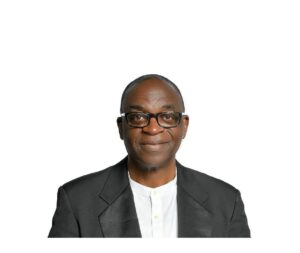
Isaac Megbolugbe
June 2, 2026
Introduction
Every lived life is a profound intersection of God’s story and human history. We often navigate this intersection without full presence of mind or adequate self-awareness. Caught between our lived context, the juxtaposition of our experiences, and multiperspective realities, life can often feel tremendously ambiguous or chaotic across the disparate dimensions of the body, the soul, and the spirit.
However, amidst this chaos, a precipitating incident frequently occurs—a moment that compels us to seek clarity. This turning point demands an understanding of all that has transpired and inspires us to cultivate foresight for the future, anchored in hope and the possibility of a reset.
The Catalyst for Clarity
It is often following a major life transition, crisis, or awakening that a few make the bold choice of documenting their lives through a memoir or autobiography. This endeavor is rarely just a historical recounting of events; rather, it marks the beginning of a profound journey of self-discovery.
When we sit down to untangle the threads of our existence, we do so to reconcile the ambiguity we have experienced. We begin to look at our personal timeline not as a random series of occurrences, but as a narrative that requires deciphering. This realization drives us to seek out the deeper meaning behind our circumstances.
The Search for the Unified Self
In my own experience, this journey of self-discovery was fundamentally a quest for clarity and authenticity. Life’s disparate experiences often pull us in multiple directions, fracturing our focus and sense of purpose. Through reflection, I realized my underlying need to discover a governing identity—one that could operate either implicitly or explicitly in my daily choices.
Ultimately, this quest was aimed at shaping the character of a congruent and unified self. Achieving congruence means bringing the body, soul, and spirit into alignment, ensuring that our internal values match our external actions.
Cultivating Foresight and Hope
Embarking on the journey of self-discovery empowers us to cultivate foresight. By actively understanding the intersection of the divine and the human in our lives, we can step out of the chaos of ambiguity and into a state of intentional living.
When we dedicate time to uncovering our core identity, we equip ourselves to face the future with renewed hope. We are no longer merely reacting to human history as it happens to us; we are actively participating in the unfolding narrative, equipped with the clarity and authenticity needed to reset, grow, and move forward.
The Sovereignty of God in the Crucible of Grief: A Journey from Shattered Identity to Unified Self
Every life is written at the intersection of divine design and human history, but few of us truly understand that script until we are forced to read it through tears. We often live with an assumed sense of security, operating within our professional triumphs and familial rhythms without the presence of mind or deep self-awareness to appreciate the fragile context of our existence. It is only when a precipitating crisis deconstructs our world that we are compelled to search for clarity, authenticity, and a governing identity that can unify a shattered self.
For many, this journey of self-discovery begins when the illusions of control are completely stripped away.
The Descent into the Crucible
My own journey into this dark, chaotic ambiguity was triggered in 2016 by a succession of profound, unimaginable losses. The initial catalyst was the passing of my wife—the anchor of my world and the silent partner to my life’s purpose. Before the dust of that grief could even begin to settle, a second wave of tragedy struck: my second daughter was ripped away from us in a ghastly motor accident.
The compounding weight of these events sent catastrophic shockwaves through the disparate dimensions of my body, soul, and spirit. It did not merely break my heart; it fractured my remaining family. My only son, deeply troubled and utterly inconsolable, bore the heavy psychological toll of this sequential trauma. For years, his grief was an agonizing, visible weight, culminating in the moment he abandoned his undergraduate educational career, unable to reconcile the pursuit of a future with the devastating losses of our past.
The Long Road of Reintegration and Reset
Faced with a life outcome that felt entirely chaotic, we were forced to embark on an intentional quest for healing. Recognizing that our internal worlds had been completely upended, my son and I committed to extensive therapy sessions that spanned a grueling yet necessary period of three years. Therapy became the space where we could process the raw, volatile materials of our experiences without drowning in the ambiguity of “why.”
Simultaneously, I recognized a desperate need to reset and anchoring my mind. Despite having achieved an exceptional academic and professional career as a university professor and corporate business executive, I chose a path of radical humility and cognitive redirection: I went back to school to study advanced accounting. Immersing myself in the cold, unyielding precision of numbers and structured principles provided a temporary cognitive scaffolding, balancing the deep emotional turbulence raging in my soul.
Turning 70: Processing Memories under Divine Sovereignty
The definitive turning point of my self-discovery arrived in 2022 when I reached my 70th year. Entering this new decade brought an acute desire for real presence of mind and systemic self-awareness. I realized that to step fully into a congruent, unified self, I had to stop running from my history and instead confront it as raw material waiting to be processed and synthesized.
I made the bold choice to begin writing a series of memoirs. This deliberate act of narrative creation has allowed me to sort through the complex layers of memory, juxtaposition, and multi-perspective rendering that grief imposes on a person. The ultimate goal of these smaller memoirs is to lay the groundwork for my complete autobiography.
This final literary testament will not be a monument to suffering, nor will it be a boastful retrospective of an executive career. Instead, it is themed entirely around the sovereignty of God. Looking back at the wreckage of 2016 and the hard-fought restoration that followed, I can finally see that even when human history feels chaotic, it is held firmly within a divine story. Through writing, I am discovering that a congruent identity is found not in avoiding the storm, but in acknowledging the Sovereign hand that guides us through it toward hope and a permanent spiritual reset.
The Illusion of the Boardroom: Dismantling the Compartmentalized Life for True Spiritual Congruence
For decades, I navigated a highly successful, multi-faceted life with what I believed was a strong sense of purpose. Yet, it took the crucible of unimaginable personal tragedy to reveal a profound structural flaw in my foundation. When the storms of loss upended my world, they exposed a deep-seated fragmentation across the dimensions of my body, soul, and spirit. It was in the wreckage of that shattered reality that I experienced my first true moment of clarity: the governing identity of my life is my faith—my absolute belief in and trust in Jesus Christ as both Savior and Lord.
However, acknowledging an identity is vastly different from living in its power. The painful truth I had to confront was that for most of my life, I had not lived from the source of that governing identity. Instead, I had fallen into a subtle, dangerous trap that dilutes the potency of faith for countless believers: the partitioning of reality into secular and sacred spaces.
The Corporate Deception: Managing the Almighty
As an academic professor and corporate business executive, I inadvertently carried the models of the marketplace into my relationship with the Divine. I lived as if I were the Chairman and Chief Executive Officer of my own life. In this flawed paradigm, God the Father, Jesus Christ, and the Holy Spirit were merely treated as esteemed members of my Board of Directors.
I gave them a seat at the table. I listened to their advisory opinions. I respected their “input” during my morning devotionals or when facing a major crisis. But when the meeting adjourned, I stepped back into the executive suite, reclaimed the gavel, and ran the enterprise of my life according to my own wisdom, ambitions, and intellect. I was a sovereign ruler outsourcing occasional counsel to the Sovereign of the universe.
This corporate approach to spirituality created a deep hypocrisy of the soul. By maintaining ultimate executive veto power over my choices, career, and family dynamics, I kept God at a functional distance. I trusted Him to save my soul for eternity, but I did not truly trust Him to manage my reality in the present.
The Sacred Compartment: Active but Powerless
This partitioning allowed me to maintain a flawless, highly active presence within my designated sacred spaces. To anyone watching, my faith appeared robust and fully integrated. Within the walls of the church, I was deeply invested:
Intellectual Engagement: I poured myself into an Apologetic Ministry, defending the intellectual validity of the faith and serving as a teacher for Sunday School classes.
Discipleship & Leadership: I led a small group of men within my church’s Men’s Ministry, guiding others through their spiritual walks.
Service & Worship: I lifted my voice in the Choir, stood at the doors serving in the Usher and Greetings Ministry, and lent my time wherever needed.
Yet, this exhausting level of religious activity was confined to a silo. Outside that sacred boundary lay the vast, untouched territory of my secular career, my personal ambitions, and my intellectual pride. Because I had boxed God into specific days of the week and specific ministries, the power of my faith was profoundly diluted.
The Friction of Disparate Frequencies
This compartmentalization denied me true congruence. A life divided into independent sectors cannot achieve a unified self. My academic achievements, corporate executive identity, personal grief, and religious duties were all operating as fragmented pieces of a broken mirror. Each fragment vibrated at its own disparate frequency, creating internal static rather than spiritual harmony.
The chaos and ambiguity I experienced following the loss of my wife and daughter were compounded by this lack of alignment. When the secular structures of my life collapsed, the sacred silo wasn’t wide enough to hold the weight of my grief. I realized that an apologetics ministry cannot heal a broken spirit if Christ is kept out of the executive suite of the heart.
True congruence requires the total eradication of the sacred-secular divide. It demands stepping down from the position of Chairman and CEO, resigning my self-appointed sovereignty, and allowing Jesus Christ to be absolute Lord over every square inch of my existence. Only when the Board of Directors becomes the sole Proprietor can the many fragments of life stop clashing, align to the same divine frequency, and begin to reflect the true power of a unified, authentic identity.
The Harmonic Resonance of Being: Heritage, Mentorship, and the Divine Derivative of Congruence
In 2023, the Marquis Who’s Who organization honored me with a merit award celebrating my Dedication to the Field of Economics. To an external observer, this accolade was a validation of an exceptional career spent in the highest echelons of academia and corporate leadership. Yet, during the deep, reflective interviews conducted to document the sources of these achievements, I found myself struggling to validate their assessment. The professional metrics of success felt hollow when placed alongside the raw, unhealed fragments of my personal history. I knew that the roots of my journey lay far deeper than economic theories or corporate milestones; I needed to look to my heritage to understand the true architecture of my life.
This search for ancestral context, combined with a providential literary mentorship, became the catalyst that transformed my scattered memoirs into a profound theological and philosophical realization: the absolute congruency of existence.
Unearthing the Roots: The Catalyst of Heritage
To understand the trajectory of my own narrative, I turned my attention to the man whose legacy shaped my foundational worldview. I commissioned Professor Olu Obafemi—a world-class Professor Emeritus of English and dramatic literature, a Nigerian National Order of Merit recipient, and a masterful playwright—to write the biography of my father, Majji Samuel Megbolugbe.
Diving into my father’s history under the guidance of such a literary luminary was an awakening. As Professor Obafemi unpacked my father’s life, he saw the raw material of my own unfolding story. He recognized that my survival through the crucibles of grief, my academic pivots, and my search for meaning were part of a larger, intergenerational tapestry.
Professor Obafemi fiercely encouraged me to continue writing about my own life. This professional relationship quickly blossomed into deep, structural mentorship. He did not merely review my pages; he provided a rigorous, disciplined framework for my chaotic memories. Furthermore, he facilitated the publication of many of these reflective articles in the Nigerian Press. These writings—both published and unpublished—now serve as the permanent, tangible fruits of my journey toward self-discovery.
The Confluence of Discovery and Ministry
As I systematically processed my memories under this mentorship, my journey of self-discovery reached a profound confluence with my ministry work. The intellectual tools of an academic, the analytical precision of an economist, and the spiritual alignment of a surrendered heart merged. I arrived at a singular, governing understanding: existence is entirely congruent.
For years, I had diluted the power of my faith by partitioning reality into secular and sacred compartments. But through the narrative processing of my life, that artificial divide vanished. I realized three immutable truths:
God is Congruent: In Him, there is no variance, no fragmentation, and no shadow of turning. He is completely aligned with His character, His word, and His sovereign will.
His Creation is Congruent: The universe, despite its fallen state, operates under a unified, divine laws where the physical and the metaphysical are intimately linked.
Humanity is Designed for Congruence: We are created in the Imago Dei (the image of God). Therefore, our body, soul, and spirit are meant to vibrate at a single, harmonious frequency, fully aligned under the Lordship of Christ.
Narrative Integrity as a Divine Derivative
This discovery of congruency in our individual lives—when extracted from the chaos of human history and articulated in memoirs or autobiographies—is a divine derivative. It is not a human invention or a clever literary device. It is a consequential, generalizable truth that applies to every human soul seeking order.
When we set out to write our lives, we naturally seek narrative integrity—a truthful, authentic accounting of who we are. True narrative integrity is a direct consequence of this divine derivation. It is the beautiful harmonization of narrative abstraction (our theological beliefs, our guiding principles, and our understanding of God’s sovereignty) and narrative reality (the brutal, raw facts of human history, tragedy, and professional triumphs).
By layout out my experiences on the page, the boardroom model of my faith finally died. I stopped trying to balance the ledger of my life on my own terms. Through the lens of divine sovereignty, the horrific losses of 2016 and the academic honors of 2023 are no longer disparate, conflicting realities. They are integrated truths. In the economy of God, nothing is wasted, every fragment is gathered, and the final narrative is one of absolute, unified congruence.
Narrative Integrity as a Divine Derivative
To look back upon a life of seventy years is to stand before a vast, sprawling landscape littered with the raw materials of human history. It is a terrain marked by the lofty peaks of professional validation—such as academic chairs, corporate executive leadership, and international merit awards in economics—but equally scarred by the abyssal valleys of unimaginable personal tragedy. For many years, I viewed these contrasting realities through a fractured lens. I lived within a self-imposed partitioning of reality, managing my secular achievements as the self-appointed Chairman and CEO of my destiny, while confining my sacred obligations to the neat, orderly silo of church ministry.
It was only when the cataclysmic losses of my wife and daughter shattered this corporate deception that the illusion of control evaporated. In the grueling years of grief, therapy, and cognitive reset that followed, I was forced to embark on a rigorous journey of self-discovery. Guided by the providential literary mentorship of Professor Olu Obafemi, I began the disciplined work of mining my memories, translating raw experiences into written memoirs.
Through this process of narrative extraction, I arrived at a singular, governing realization that forms the philosophical and theological bedrock of this book about the autobiography of my self discovery: true narrative integrity is a divine derivative.
The Anatomy of the Fragmented Life
Humanity possesses an innate, deep-seated longing for coherence. We desire our lives to make sense, yet our lived experience is often characterized by a chaotic ambiguity. We feel the internal friction of our existence because we operate the disparate dimensions of our being—the body, the soul, and the spirit—at entirely different frequencies.
When we attempt to write an autobiography from this fragmented state, we merely produce a chronological ledger of events. We catalog our historical realities on one page and our abstract beliefs on another, unable to bridge the chasm between them. This approach fails because it treats life as a series of accidents overseen by a detached, advisory deity.
The turning point in my own consciousness occurred when I realized that the lack of alignment in my life was a direct result of boxing God out of the executive suite of my soul. True alignment cannot be engineered by human intellect. It requires the total surrender of our self-appointed sovereignty to the absolute Lordship of Jesus Christ. Only when the Creator is reinstated as the sole Proprietor of our existence can the chaotic fragments of human history begin to resonate with the harmony of a divine story.
Defining the Divine Derivative
To understand narrative integrity as a divine derivative is to recognize that order, truth, and alignment are not literary devices we invent; they are immutable realities we inherit from the Creator.
The Congruence of God: God is inherently congruent. In Him, character, word, intent, and action exist in absolute, flawless unity. There is no variance, no fragmentation, and no shadow of turning.
The Blueprint of Creation: Because God is congruent, His creation is designed for congruence. The physical and the metaphysical worlds are deeply intertwined, operating under a unified divine law.
The Human Standard: Created in the Imago Dei—the image of God—humanity is structurally wired for this same total alignment. We are never more authentic, never more fully human, than when our internal spiritual identity dictates our external reality.
Therefore, when an individual undertakes the bold task of writing a memoir or an autobiography, the search for truth is actually a quest to uncover this inherent divine structure. Narrative integrity is not achieved by cleverly airbrushing our failures or romanticizing our grief. Rather, it is a consequence of this divine derivation—a holy mathematics wherein the chaotic variables of human history are solved by the constant of God’s unchanging nature.
The Divine Derivation: Holy Mathematics and Narrative Integrity in the Life of Faith
When an individual undertakes the bold task of writing a memoir or an autobiography, the search for truth is actually a quest to uncover the inherent divine structure of their life, especially for a person of faith. Narrative integrity is not achieved by cleverly airbrushing failures or romanticizing grief. Rather, it is a consequence of this divine derivation—a holy mathematics wherein the chaotic variables of human history are solved by the constant of God’s unchanging nature, rather than treating life as a complex equation of real and imaginary numbers.
The Illusion of the Imaginary
In mathematics, an imaginary number (often denoted by \(i = \sqrt{-1}\)) represents an impossible concept that is practically applied to calculate complex realities. When we sit down to write the stories of our lives, it is tempting to introduce these imaginary elements. We construct idealized versions of ourselves, airbrushing out our deepest moral failures, or we exaggerate our grief to craft a more dramatic and romanticized narrative arc.
We might frame our shortcomings as mere missteps and our triumphs as entirely self-made, inserting “imaginary” perfection where there is only human fragility. Yet, narrative integrity demands that we abandon this fiction. The quest for truth requires us to strip away the imaginary numbers of our past and view our experiences with unflinching, objective honesty.
Chaotic Variables in Human History
A human life is a collection of seemingly chaotic variables. Our timelines are marked by sudden loss, unexpected triumphs, relational ruptures, and seasons of profound ambiguity. To the naked eye, these events often resemble a scatterplot of disconnected points without a discernible pattern.
When we try to solve the equation of our lives using only our own finite wisdom, the chaos only compounds. The variables of fear, ambition, doubt, and circumstance pull us in competing directions. We can easily become overwhelmed by the sheer complexity of trying to make sense of suffering or the sudden, jarring shifts in our life’s direction.
The Constant of a Divine Structure
The fundamental premise of a faith-based memoir is the realization that human life is not a complex mathematical equation left to be solved by the author alone. Instead, it is a narrative defined by a singular, unyielding constant: God’s unchanging nature.
In mathematics, a constant is a value that does not change, providing a stable foundation upon which the rest of an equation can be evaluated. In the context of personal history, God is that constant. When we apply this divine derivation, the chaotic and seemingly random variables of our history—both the beautiful and the devastating—find their resolution.
By grounding our life stories in the constant of a sovereign, loving, and unchanging God, we do not need to hide the dark spots or force artificial happy endings. The narrative finds its integrity precisely because it reveals how the chaos of human history is ultimately held, guided, and solved by the divine structure.
Crafting a Story of Holy Mathematics
Writing a memoir through the lens of this “holy mathematics” requires a deliberate shift in perspective. It demands that we:
Embrace the unknown: Instead of fighting the chaotic variables in our lives, we trace how God’s grace met us in the middle of the mess.
Reject the impulse to rewrite: We must stop airbrushing our failures. Our flaws serve to highlight the magnitude of redemption.
Anchor our grief: Our sorrows are not romanticized for effect, but are instead contextualized within a larger narrative of ultimate hope and divine purpose.
Ultimately, the goal of writing a life story from a place of faith is not to elevate the self, but to bear witness to the divine. When we are willing to look at our history with complete honesty, we reveal how the constant of God’s grace reconciles the complex, chaotic variables of the human experience.
The Sacred Mirror: Aligning Personal Narrative with the Metanarrative of Scripture
To compress the vast, chaotic expanse of a human life into a written narrative is an act of profound vulnerability. For the writer of faith, this task carries an even weightier dimension. It is impossible to write a meaningful life story that is both authentic and edifying without filtering it through God’s story as articulated in the Bible.
To isolate one’s biography from the overarching scriptural narrative is to misread the plot entirely. The goal of writing a life story from a place of faith is not to elevate the self, but to bear witness to the divine. Ignoring these divine borders on foolishness, reducing a grand, providential masterpiece into a series of disjointed, accidental events.
The Master Script: Scripture as the Essential Filter
Every human life is lived within a larger context. For the believer, that context is the biblical metanarrative of creation, fall, redemption, and restoration. Trying to write an authentic autobiography without this framework is like analyzing a single puzzle piece while refusing to look at the picture on the box.
Scripture provides the vocabulary for our victories and the syntax for our suffering. When we view our personal history through the filter of God’s Word, we find that our individual struggles are not isolated incidents. Instead, they echo the ancient rhythms of the saints, the prophets, and the psalmists. The Bible becomes the lens that brings the blurred images of our past into sharp, meaningful focus, ensuring the story we tell is edifying to those who read it.
Shifting the Spotlight: Bearing Witness to the Divine
The modern secular memoir is often an exercise in self-congratulation or self-justification. It seeks to establish the author as the hero of their own cosmic drama. However, a faith-filled narrative turns this paradigm upside down.
When the primary objective shifts from self-elevation to bearing witness to the divine, the pressure of perfection evaporates. The author no longer needs to appear flawless, omniscient, or unbroken. By stepping out of the spotlight, the writer allows the character of God to take center stage. The memoir ceases to be a monument to human achievement and becomes a cathedral dedicated to divine faithfulness.
The Foolishness of the Borderless Life
To write a life story while ignoring divine borders—the moral, spiritual, and sovereign boundaries established by God—is a fool’s errand. It forces the writer to attribute profound moments of grace to “luck” and devastating trials to “blind cosmic chance.”
Stepping outside these divine borders leaves the narrative unanchored, drifting on the shifting tides of human emotion and cultural trends. True narrative honesty requires acknowledging that our lives are lived under a sovereign canopy. Recognizing God’s boundaries does not restrict our story; rather, it protects it from losing its ultimate meaning.
The Mathematical Certainty of Romans 8:28
When we look at our history with complete honesty, we reveal how the constant of God’s grace reconciles the complex, chaotic variables of the human experience. The anchoring truth of these reconciling accounts has everything to do with the apostolic promise found in Romans 8:28: “And we know that in all things God works for the good of those who love him, who have been called according to his purpose.”
This verse acts as the ultimate equation solver for human history. Notice that Paul does not say all things are good, but that God works all things together for good.
The Chaotic Input: Pain, betrayal, illness, and failure.
The Divine Process: God’s sovereign orchestration and relentless grace.
The Redemptive Output: Spiritual maturity, Christlikeness, and a powerful testimony.
When your memoir is anchored in Romans 8:28, your narrative integrity is preserved. You do not have to write a dishonest story where bad things never happened. Instead, you write a triumphant story showing how God took the fragments of those broken experiences and wove them into a beautiful, redemptive tapestry. Your life story becomes living proof that God’s purpose is the final, unchanging word over your past.
The Convergence of Abstraction and Reality
This book is an exercise in the harmonization of two seemingly opposing forces: narrative abstraction and narrative reality.
Narrative Abstraction represents our theological frameworks, our intellectual convictions, our apologetics, and our foundational belief in the absolute sovereignty of God.
Narrative Reality is the unyielding, often brutal data of the human experience—the sudden finality of a motor accident, the agonizing years of an inconsolable son, the humility of returning to school at an advanced age, and the external praise of professional peers.
Without the cross of Christ and the recognition of His sovereignty, these two realms remain permanently estranged. Abstraction becomes a hollow philosophy, and reality becomes an unbearable tragedy.
However, when we view our personal timeline through the lens of a governing spiritual identity, a beautiful confluence occurs. The abstract truth of God’s sovereignty descends into the raw materials of our pain and triumph, anchoring them in eternal meaning. The secular and the sacred compartments melt away. The economics professor, the grieving father, the advanced accounting student, and the Sunday School teacher are finally integrated into a single, congruent, and unified self.
A Generalizable Hope
The pages that follow represent the written records of my journey of self-discovery, but they are not intended to be a monument to my individual survival. The discovery of congruency through narrative processing is a generalizable truth. It is an invitation extended to every reader who feels the exhausting friction of a compartmentalized life.
As you read through the legacy of my heritage, the crucibles of my grief, and the ultimate restoration of my family, my hope is that you will look past the specificity of my human history and see the overarching majesty of God’s story. May this text serve as a testament that no matter how shattered, fragmented, or ambiguous your life outcomes may appear today, they are entirely capable of being harmonized under the sovereign hand of the One who binds up the brokenhearted and reconciles all things to Himself.
Isaac Megbolugbe, Director of GIVA Ministries International. He is a recipient of Albert Nelson Marquis Lifetime Achievement Award in business and academia in the United States of America. He is retired professor at Johns Hopkins University and a Fellow of the Royal Institution of Chartered Surveyors. He is resident in the United States of America.
