
The Unshakeable Rampart: Finding Refuge and Identity in the Divine Bulwark
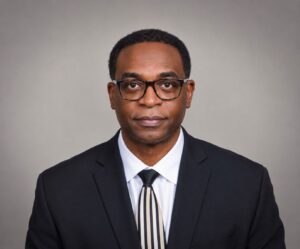
Isaac Megbolugbe
July 11, 2026
Preamble
bulwark is a defensive wall, rampart, or any strong protection against external danger, injury, or annoyance. It acts as a steadfast safeguard, support, or shield during times of need. Figuratively, it describes anything that secures safety—such as savings protecting against unemployment.
Core Meanings
Synonyms
Example Sentences
The Divine Bulwark: Finding Shelter and Strength in Life’s Storms
Life inevitably brings storms. Whether these challenges manifest as sudden financial crises, the grief of losing a loved one, or the quiet, agonizing erosion of mental health, trial is a universal human experience. In the ancient world, a bulwark was a massive stone wall or earthwork built to withstand the heaviest battering rams and the fiercest enemy onslaughts. For the believer, God does not just provide a bulwark; He is the bulwark.
Scripture repeatedly frames the presence and strength of the Lord as our ultimate fortification. When the winds of adversity howl, we do not have to rely on our own fragile coping mechanisms. Instead, we can retreat into the unchanging, unshakeable nature of God.
The Anatomy of the Divine Bulwark: Isaiah 41:10
The core mechanics of how this spiritual fortress operates are beautifully articulated in Isaiah 41:10. This single verse serves as a blueprint for divine protection, offering five distinct pillars of reassurance during a crisis.
“So do not fear, for I am with you; do not be dismayed, for I am your God. I will strengthen you and help you; I will uphold you with my righteous right hand.”
1. The Commandment: “Do not fear… do not be dismayed”
God begins not with a negotiation, but with a command. Fear paralyzes us, while dismay distorts our perspective. The Hebrew word for “dismayed” here implies looking around anxiously in a state of panic. God calls us to look up at the height of our fortress rather than out at the size of the storm.
2. The Anchor: “For I am with you”
A fortress is useless if it is empty or far away. The supreme comfort of the Christian faith is the presence of God. He does not shout instructions from a safe distance; He steps directly into the storm with us. His presence changes the climate of our crisis.
3. The Relationship: “For I am your God”
This is a declaration of covenant ownership. The Creator of the universe claims a personal relationship with His people. Because He is our God, His limitless resources, absolute sovereignty, and perfect wisdom are actively deployed on our behalf.
4. The Supply: “I will strengthen you and help you”
Storms deplete our natural reserves. We run out of patience, energy, and hope. When our personal bulwarks crumble, God injects His own supernatural power into our weakness. His help is timely, practical, and perfectly measured for the weight of the trial.
5. The Security: “I will uphold you with my righteous right hand”
In biblical imagery, the “right hand” symbolizes ultimate power, authority, and victory. To be upheld by God’s hand means that even if we slip, we will not fall through. The ground beneath us is secure because the grip holding us is unbreakable.
Standing Firm When the Storm Hits
Understanding the concept of the divine bulwark changes how we navigate daily anxieties. It transforms us from victims of our circumstances into overcomers.
The storms of life will certainly blow, but they do not have the final say. Hidden safely within the presence of the Lord, your foundation cannot be shaken, and your future cannot be destroyed.
The Unshakeable Rampart: Poetic Imagery of the Divine Bulwark in Psalms and Proverbs
The skies of human experience are rarely clear for long. Winds of adversity gather, the ground of earthly security trembles, and the fierce storms of grief, anxiety, and trial inevitably break upon the soul. In these hours of vulnerability, humanity instinctively searches for a hiding place—a shelter to absorb the blows of a chaotic world.
The ancient poets and sages of Scripture did not look to their own fragile hands to build this defense. Instead, across the poetic expanses of the Psalms and the sharp, rhythmic wisdom of Proverbs, they painted a breathtaking portrait of God as our ultimate bulwark. He is not a distant bystander watching the tempest rage; He is the living fortress, the soaring tower, and the unyielding shield within which the weary find eternal rest.
The Architecture of Refuge in the Psalms
Nowhere is the imagery of the divine bulwark more vivid than in the Psalms. Here, the writers use the rugged, rocky topography of ancient Israel to illustrate the absolute dependability of God’s presence. When the floods of distress rise, the Psalmists do not see a helpless shoreline; they see an immovable cliffside.
The Rock and the Fortress
In the opening verses of Psalm 18:2, David sings a masterclass in defensive metaphors, weaving a tapestry of protection that wraps tightly around the believer:
“The Lord is my rock, my fortress and my deliverer; my God is my stony rock where I take refuge, my shield and the horn of my salvation, my stronghold.”
David does not rely on a single image. He stacks them like massive blocks of hewn stone. God is the bedrock beneath the feet, the high fortress out of the enemy’s reach, and the personal shield that catches the flying arrows of life.
The Present Help in Trouble
When the very earth seems to give way beneath us, Psalm 46:1-3 steps in with majestic defiance. It reminds us that our Bulwark does not fracture under cosmic weight:
“God is our refuge and strength, an ever-present help in trouble. Therefore we will not fear, though the earth give way and the mountains fall into the heart of the sea, though its waters roar and foam and the mountains quake with their surging.”
Even if creation itself unmakes itself, the presence of the Lord remains a quiet, stable sanctuary. He is “ever-present”—a fortress that moves into the eye of the storm alongside us.
The Shield of Salvation
In Psalm 3:3, amid betrayal and heartbreak, the imagery shifts from a grand structure to an intimate, personal barrier:
“But you, Lord, are a shield around me, my glory, the One who lifts my head high.”
When life attacks from every side, the divine bulwark wraps completely around the soul. It is a spherical defense, protecting the back, the front, and the mind, gently lifting the heavy head of the discouraged believer to look upon the face of God.
The Tower of Wisdom in the Proverbs
While the Psalms sing of the fortress in the midst of emotional and spiritual battles, the Book of Proverbs applies this same imagery to the practical realities of daily life. The wisdom of the sages anchors our safety not in wealth or human strategy, but in the very character and name of God.
The High Tower of Safety
In Proverbs 18:10, we find one of the most enduring architectural metaphors in wisdom literature:
“The name of the Lord is a fortified tower; the righteous run to it and are safe.”
In ancient warfare, the tower was the strongest, highest point of a city’s defenses—the place of last resort when the outer walls were breached. The Proverb declares that God’s “name”—His character, His reputation, and His covenant promises—is that final, unbreakable tower. Security is found not by standing still and panicking, but through the active, faithful step of running into His character.
The Shield of Integrity
Proverbs also reminds us that walking in alignment with God’s truth activates His protective nature. Proverbs 30:5 declares:
“Every word of God is flawless; he is a shield to those who take refuge in him.”
His words form an impenetrable armor. When deception, injustice, or the biting winds of human opinion swirl around us, the flawless truth of God stands as a bulwark that intercepts the lies before they can pierce the heart.
Standing Within the Shadow of the Almighty
To view God as a bulwark is to change how we look at the storms of life. We no longer look at the trials through the lens of our weakness; we look at the trials through the absolute magnitude of our Fortress.
When the winds howl and the rains fall, the invitation of the scriptures remains open. We are called to cease our striving, to leave behind the sandy foundations of human effort, and to run into the ancient, unshakeable rampart of the living God. Hidden within His strength, upheld by His hand, and shielded by His love, the storm may rage—but we shall not be moved.
Inhabiting the Architecture of Peace: Reclaiming the Fortress of Faith from the Shadow of Fear
Fear is a master architect, but a cruel landlord. Left unchecked, it quietly draws blueprints over our lives, constructing invisible walls of hyper-vigilance, corridors of anxiety, and small, suffocating rooms of self-protection. When we live under the tenancy of fear, our world shrinks. We mistake isolation for safety, and we treat our anxieties as structural pillars.
Yet, the scriptures offer an entirely different blueprint for the human soul. We are not called to inhabit a fortress built by fear, but rather to dwell within the architecture of peace—a majestic, unshakeable stronghold built upon the character, promises, and absolute sovereignty of God. Transitioning from the cramped quarters of panic into this divine expanse is not a singular event. It is a lifetime practice of embodied courage, anchored in the radical realization that the universe is held firmly in providential hands.
Dismantling the Blueprint of Fear
To inhabit the fortress of God, we must first recognize the structural flaws of the fortress of fear. Fear builds on a foundation of scarcity and control. It whispers that we are entirely on our own, that resources will run dry, and that we must manipulate our circumstances to survive.
When we live this way, our bodies and minds become tightly wound coils, constantly braced for the next crisis. We build walls against vulnerability, bridges away from community, and ceilings that block out the sky of hope. But this architecture is an illusion; it cannot withstand the actual storms of life. It only succeeds in trapping us inside our own despair.
True courage does not mean the absence of these fearful impulses. Rather, biblical courage is the deliberate decision to refuse fear tenancy in our minds. It is looking at the imposing walls that anxiety has built and choosing to walk out of the front door, stepping instead into the vast, open space of God’s reality.
The True Fortress: Sovereignty as a Structural Pillar
At the center of the architecture of peace stands the unyielding pillar of God’s absolute sovereignty. In a chaotic world, the word “sovereignty” can sound cold or clinical, but in the grammar of faith, it is the ultimate comfort. It means that there is no square inch of creation, no sudden tragedy, and no dark valley that falls outside the governance of the Almighty.
When the ancient poets sang of God as a “fortified tower” (Proverbs 18:10) or a “stony rock” (Psalm 18:2), they were meditating on His unshakeable rule. A fortress is only as reliable as its foundation. If God were only occasionally powerful, or if His rule were contested by the chaos of the world, our faith would have a sandy foundation.
Because He is sovereign, His fortress cannot be breached. The shifting tides of politics, the volatility of economies, and the fragile nature of human health cannot crack the walls of His purposes. Inhabiting this architecture means resting in the profound relief that you do not have to carry the weight of the world on your shoulders. The universe already has a Ruler, and He is perfectly capable of maintaining order.
The Tapestry of Providence: Trusting the Daily Supply
If sovereignty is the pillar that holds up the roof, providence is the warmth that fills the rooms. Providence is God’s active, loving, and continuous care for His creation. It is the assurance that He does not merely rule from a distance, but intimately weaves all things together for the good of those who love Him.
Trusting in divine providence requires a daily, embodied practice. It is found in the quiet rhythm of waking up and surrendering the day’s unknowns to the One who clothes the lilies of the field and feeds the birds of the air (Matthew 6:26-28).
This is where faith becomes muscles and sinews. A lifetime of trusting God’s promises changes our spiritual posture:
A Lifetime of Dwelling
Inhabiting the architecture of God is a habit of a lifetime. Every time we choose a promise of Scripture over a worst-case scenario spun by our imagination, we lay down a stone in this spiritual fortress. Every time we pray instead of panic, we walk deeper into its secure interior.
The storms outside will still howl, and the old, ruined structures of fear may still call out to us, tempting us to run back to our familiar anxieties. But the true shelter has already been built, and its doors are permanently open. Step past the threshold of your fears. Lean your weight against the unshakeable sovereignty of your Maker. Breathe deeply of His providential care, and find, at long last, your permanent home.
The Great Migration of the Soul: Historical Exemplars of the Transition from Fear to Courage
The human heart is an intricate landscape where two opposing forces constantly vie for territory: the instinct to retreat into the cramped fortress of fear, and the calling to step out into the expansive architecture of faith. Fear tells us that we are isolated, fragile, and entirely responsible for our own survival. Faith declares that we are housed within the unshakeable sovereignty of a God whose providential care is the ultimate bulwark against the storms of existence.
This transition from panic to peace is rarely a sudden, effortless leap. It is a grueling, sacred migration—a disciplined, lifetime practice of dismantling the walls that anxiety builds and learning to lean our full weight against the promises of God. Throughout history, this spiritual exodus has been vividly modeled by the saints. By looking at the concrete, historical struggles of those who walked before us, we discover that the path to courage is not paved with a lack of fear, but with an abundance of surrender to the Sovereign of the universe.
Athanasius: Standing Firm Against an Empire of Isolation
In the fourth century, the Christian world was fractured by theological turmoil. Athanasius, a young bishop from Alexandria, stood almost entirely alone in defending the true divinity of Jesus Christ against the wildly popular Arian heresy, which threatened to hollow out the core of the Gospel.
For his unwavering stance, Athanasius was systematically targeted by successive Roman emperors. He was driven from his home and his church, spending over seventeen years of his life in exile. Five times he was hunted down, forced to flee into the harsh Egyptian deserts, hiding in the dark cells of supportive monks or the desolate tombs of the ancient pharaohs.
The phrase Athanasius contra mundum—”Athanasius against the world”—was not a poetic exaggeration; it was his literal, terrifying reality. Every earthly structure of safety had collapsed around him. Fear dictated that he capitulate, blend into the crowd, and compromise for the sake of survival.
Yet, inside the lonely caverns of his exile, Athanasius inhabited a different architecture. He rested in the absolute sovereignty of God, knowing that the truth did not depend on the approval of an emperor. His courage was embodied in the daily discipline of writing, praying, and trusting that the providence of God would preserve His Church. Athanasius proved that when God is your bulwark, a desolate desert cave can become an impregnable fortress that an entire empire cannot break.
Julian of Norwich: Finding Cozy Sanctum in the Shadow of Plague
A thousand years later, a different kind of storm blanketed Western Europe. The Black Death was violently tearing through England, decimating entire towns and filling the streets with sudden, agonizing death. In the midst ofthis historical apocalypse lived Julian of Norwich, a fourteenth-century mystic who chose a radical form of isolation—but not one built by fear.
Julian became an anchorite, voluntarily sealing herself into a small stone cell attached to the side of St. Julian’s Church in Norwich. Her cell had only two small windows: one looking inward toward the church altar, and one looking outward to the suffering world.
From human standards, Julian’s life looked like the ultimate retreat of a terrified soul escaping a plague-ridden world. But inside that stone room, Julian did not cultivate panic; she cultivated an immense, radiant courage. Surrounded by the literal stench of mortality, she experienced profound visions of God’s love and providence.
While the world outside screamed that God had abandoned humanity to chaos, Julian leaned against the pillar of divine sovereignty. She famously penned the comforting words that have echoed down through centuries of human grief: “All shall be well, and all shall be well, and all manner of thing shall be well.”
Julian’s courage was an embodied practice of daily prayer and counseling. Through her exterior window, she spoke words of unshakeable peace to the terrified, grieving citizens of Norwich who came to her for hope. She transformed her tiny cell from a bunker of self-preservation into a lighthouse of divine assurance, proving that absolute trust in God’s care can turn a small room into a vast palace of peace.
Dietrich Bonhoeffer: Moving from Anxious Security to the Scaffold
In the twentieth century, the architecture of fear took the form of totalitarian terror. Dietrich Bonhoeffer, a brilliant young German theologian, watched as the Nazi regime hijacked his nation and sought to dismantle the conscience of the Church.
Initially, Bonhoeffer found a place of safety. In 1939, as war loomed, his friends secured him a prestigious teaching position in New York City. He had successfully escaped the storm. He was safe, comfortable, and far out of reach of the Gestapo.
Yet, inside the quiet security of Manhattan, Bonhoeffer found himself suffocating in a room built by fear. He realized that to stay in America was to choose self-preservation over the imperative of God’s call. In an act of radical, embodied courage, he deliberately chose to leave his sanctuary. Writing to his mentor, Reinhold Niebuhr, he stated: “I shall have no right to participate in the reconstruction of Christian life in Germany after the war if I do not share the trials of this time with my people.”
Bonhoeffer boarded one of the last passenger ships returning to Germany, fully aware that he was sailing directly into the mouth of the beast. He joined the underground resistance, was eventually arrested, and spent his final years in the bleak confines of Tegel Prison and Buchenwald concentration camp.
Witnesses from those dark prisons noted that Bonhoeffer did not behave like a condemned man. He spent his days comforting fellow prisoners, writing profound theology, and radiating a calm composure that baffled his captors. On the morning of April 9, 1945, just days before the camp was liberated, he was led to the scaffold to be executed. A camp doctor who witnessed his final moments wrote that he saw Bonhoeffer kneel in deep prayer before mounting the steps, completely at peace.
Bonhoeffer’s migration from the safe harbor of New York to a prison gallows demonstrates the ultimate destination of a soul anchored in the divine bulwark. He knew his life was not at the mercy of Adolf Hitler, but firmly held in the hands of his Sovereign Creator.
Laying the Stones of Your Own Fortress
The stories of Athanasius, Julian, and Bonhoeffer remind us that the saints were not superhuman; they were flesh-and-blood individuals who felt the icy wind of panic just as we do. Their courage was not a personality trait, but a muscle developed over a lifetime of choosing the promises of Scripture over the tyranny of their circumstances.
When the anxieties of our own era threaten to lock us away in rooms of despair, we are invited to look to these historical trail markers. We are called to leave the fragile, sandy foundations of our own control, and to step into the ancient, blood-bought rampart of the living God.
Every time we choose truth over convenience, peace over panic, and trust over hyper-vigilance, we walk deeper into that secure interior. The storms of this life will inevitably continue to rage, but hidden within the sovereign care of the Almighty, like the saints of old, we shall not be moved.
The Eternal Anchor: Remembering Our Identity in the Lord as the Ultimate Antidote to an Uncertain World
We live in a world defined by its volatility. As our previous discussions have unfolded, we have traced the anatomy of the storms that fracture human existence—from the sudden, violent tempests of personal crisis to the systemic, historical terrors faced by the saints of old. We have looked at the divine bulwark, explored the poetic fortresses of the Psalms, and witnessed how flesh-and-blood human beings walked out of the claustrophobic architecture of fear into the expansive terrain of holy courage.
Yet, as we bring our reflections to a close, a vital question remains: How do we sustain this posture when the immediate inspiration fades? What keeps a soul tethered when the weather changes without warning, and the foundation beneath us begins to shift?
The ultimate antidote to panic, anxiety, and the existential dread of the unknown is not merely a change in our strategy, but a reclamation of our memory. It is the unshakeable, disciplined practice of remembering who we are—and more importantly, Whose we are—no matter what happens.
The Amnesia of Adversity
When a crisis strikes, the greatest danger we face is rarely the external circumstance itself; it is the spiritual amnesia that the circumstance induces. Pain, shock, and prolonged exhaustion act as heavy fog, obscuring our spiritual vision. Under the pressure of a trial, we quickly forget the historical faithfulness of God, we forget His explicit promises, and we forget our true identity.
Left in this state of forgetfulness, we begin to derive our identity from our circumstances. We begin to label ourselves as “the abandoned one,” “the failure,” “the victim,” or “the broken.” We start to view our lives through the narrow lens of our current struggle rather than the eternal horizon of God’s redemptive story.
This is the exact vulnerability that the divine bulwark is designed to protect. But a fortress cannot shield a soldier who has wandered outside its gates because he forgot he belonged to the King. Remembering our identity in Christ is the act of stepping back inside the walls. It is the conscious decision to anchor our self-worth, our security, and our destiny not in what is happening to us, but in what has already been done for us.
The Threefold Cord of Our True Identity
To construct a durable antidote against the unpredictable currents of life, we must look to the definitive markers of our identity in the Lord. Scripture binds our identity with a threefold cord that no earthly trial can snap:
1. We Are the Covenanted Ones: “For I am your God”
As we meditated upon in Isaiah 41:10, God does not offer vague, generic assistance to the universe at large; He offers covenant devotion to His people. Your identity is rooted in the reality that the Creator of the cosmos has bound Himself to you by an oath sealed in blood. No matter what changes in your bank account, your health, or your relationships, this status remains unaltered. You are personally claimed by the Almighty.
2. We Are the Upheld Ones: “I will uphold you”
In the architecture of faith, your identity is not defined by your ability to hold onto God, but by His commitment to hold onto you. When anxiety whispers that you are too weak to survive the night, your identity responds: My safety does not depend on my fragile grip, but on His unbreakable grasp. You are a person who is actively, sovereignly upheld by the righteous right hand of God.
3. We Are the Housed Ones: “The Lord is my rock”
You do not live exposed to the raw elements of a broken world. By virtue of your faith, your permanent address has changed. You are a resident of the Most High, dwelling safely within the shadow of the Almighty. When chaos knocks on your door, it must first get past the Bulwark.
The Imperative Antidote: “No Matter What”
This identity is not a fair-weather luxury; it is a battle-tested imperative. It is designed precisely for the moments when life does not make sense, when the medical report is bleak, when the grief is suffocating, or when society seems to be unraveling at the seams.
Operating in your true identity changes the vocabulary of your soul. It shifts your posture from defensive panic to offensive peace.
Final Benediction: Standing in the Unshaken Kingdom
As we conclude this discussion, let this truth settle deeply into your spirit: the world will continue to shake, the winds will continue to blow, and the human heart will still feel the occasional tremor of fear. But you do not belong to a kingdom that can be shaken.
You are a child of the Living God. You are a citizen of the fortress. You are the recipient of an ancient, unshakeable covenant of peace.
Therefore, do not fear, and do not be dismayed. Carry this identity with you as an impenetrable armor into every unknown room of your future. No matter what happens, no matter how fierce the tempest, and no matter how dark the night—remember who you are in Him, stand firm behind your Divine Bulwark, and watch the storm pass by.
Isaac Megbolugbe, Director of GIVA Ministries International. He is a recipient of Albert Nelson Marquis Lifetime Achievement Award in business and academia in the United States of America. He is retired professor at Johns Hopkins University and a Fellow of the Royal Institution of Chartered Surveyors. He is resident in the United States of America.
