
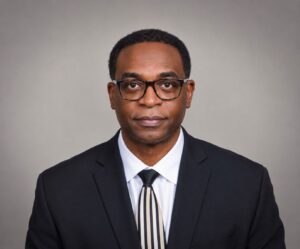
Cognitive Liberation Through the Crucible: The 74-Year Journey of Professor Isaac Megbolugbe
Isaac Megbolugbe
August 2026
Introduction
The contemporary Christian literary landscape is flooded with guides on emotional trauma management and elementary marketplace ministry. While these works serve an initial pastoral purpose, they fail to reach the deep existential needs of high-capacity marketplace titans and ivory tower academics. When an elite intellectual faces a catastrophic professional collapse, they do not require superficial validation or basic coping mechanisms. They demand a profound, rigorous architecture capable of achieving what Professor Isaac Megbolugbe terms cognitive liberation—the total restructuring of the mind to recognize that a severe institutional fall is actually the mandatory baseline for divine reconfiguration.
This profound reality is enfleshed in the striking intersection between two seminal volumes of his life’s work: Book 6: Rinsed, Prototyped, Benchmarked and Book 9: A Life of Righteousness is Characterized by Many Failures: A Memoir of Faithful Perseverance. Together, these books frame Professor Megbolugbe’s74-year journey of triumph, tribulation, and intellectual surrender, proving that the pathway to ultimate Kingdom deployment is built on the very wreckage of worldly success.
The Intersection of Book 6 and Book 9: The Anatomy of a Fallen Leader
To understand the full depth of divine preparation, one must examine where the structural engineering of Book 6 meets the deeply personal retrospective of Book 9.
+-————————————————————+
| THE STRATEGIC INTERSECTION OF WORK |
+-————————————————————+
| BOOK 6: The Structural Framework |
| Rinsed –> Prototyped —> Benchmarked |
| (The Cleansing) (The Rebuild) (The Alignment) |
+-————————————————————+
v
+-————————————————————+
| BOOK 9: The Lived Experience |
| 74-Year Memoir |
| Triumph –> Tribulation –> Cognitive |
| Liberation |
+-————————————————————+
v
+-————————————————————+
| KINGDOM DEPLOYMENT |
| Sovereign Execution of High-Level Duties |
+-————————————————————+
While Book 6 operates as a macro-level diagnostic tool for the broken executive, Book 9serves as its lived, biographical validation. They do not merely complement each other; they collide to form a unified spiritual law.
1. The Rinsing of an Intellectual Anchor
Book 6 introduces the concept of being Rinsed—the aggressive stripping away of human ego, titles, and academic platforms. In Book 9, this concept transitions from a theory to a harrowing reality. Across 74 years of navigating elite spaces, Professor Megbolugbe documents how the Lord systematically targeted his areas of worldly reliance. For a high-capacity leader, a collapse is an intellectual and professional death. Book 9 frames these moments not as accidental tragedies, but as sovereignly engineered cleansings designed to isolate a leader’s raw, uncorrupted intellectual assets from their pride.
2. Prototyping Through 74 Years of Failure
Once a leader is rinsed, Book 6 dictates they must be Prototyped—subjected to a quiet phase of divine engineering where old experiences are reconfigured into resilient new models of leadership. Book 9 illustrates this exact phenomenon through its central, paradigm-shifting premise: A Life of Righteousness is Characterized by Many Failures. The memoir reframes a lifetime of tribulations not as setbacks, but as iterative data points. Every failure in the professor’s 74-year narrative was a prototyping lab, a season of testing where God reshaped a world-class academic mind to carry immense spiritual and kingdom weight.
3. Benchmarking for Ultimate Cognitive Liberation
The final phase of Book 6 is Benchmarking, where a leader’s strategies and character are strictly measured against the immutable grid of Scripture. In Book 9, this process culminates in cognitive liberation. Liberation occurs when the leader stops evaluating their life through the volatile metrics of marketplace profitability or academic prestige, and instead adopts the eternal vantage point of God’s sovereignty. The professor’s memoir showcases a mind fully liberated from the trauma of professional devastation, anchoring its identity solely in the character of Christ.
The Spiritual Law of the Righteous Fall
The intersection of these two books crystallizes a profound, universal truth that governs every believer, yet applies with terrifying precision to those called to macro-level governance. When we filter a lifetime of lived professional experiences through the timeless matrix of Scripture, we uncover the unyielding spiritual law found in Proverbs 24:16:
“For a righteous man falls seven times and rises again.”
Professor Megbolugbe’s memoir stands as a modern, living monument to this verse. The text does not say the wicked man falls; it specifies that the righteous man—the one walking in active obedience—will experience repeated, cyclical adversity.
Book 9 completely dismantles the modern, superficial prosperity gospel that equates faith with unbroken upward mobility. Instead, it asserts that a life of true righteousness is explicitly characterized by its capacity to endure structural collapse and rise again through supernatural resilience. It is this exact cyclical endurance, forged in the fires of professional and personal winters, that sustains an unshakeable hope and primes the leader for ultimate victory.
Qualified by the Desert: The Standard of Sovereign Selection
A sobering truth echoes across both Book 6 and Book 9: not everyone is chosen, anointed, called, and qualified by God for macro-level Kingdom responsibilities. Goddistributes assignments according to His sovereign will. However, those who aremarked out for exceptional destiny are never exempt from the preparation of suffering.
Through the lens of Professor Megbolugbe’s74-year chronicle, we see historical biblical archetypes mirrored in modern marketplace leadership:
The Manifestation of Kingdom Deployment
Ultimate Kingdom deployment requires more than a pristine resume; it requires a tested, structurally sound soul. When a high-capacity leader is finally deployed after a major professional collapse, they do not return to the marketplace merely to resume secular accumulation. They return as weapons of refined spiritual precision.
By synthesized reading of Book 6 and Book 9, the fallen leader discovers that their career collapse was not an execution of their destiny, but the launchpad for their true optimization. The hard-won intellectual assets, the macro-level strategic insights, and the academic acumen are no longer tools for personal kingdom-building. They are fully surrendered, heavily fortified instruments, deployed to execute high-level Kingdom duties with unshakeable stability. Professor Isaac Megbolugbe’s life stands as the ultimate thesis statement for this truth: you must be thoroughly broken by the Lord before you can be safely trusted to build for His Kingdom.
The Architecture of Intellectual Metanoia: Re-Engineering Corporate Collapse into Kingdom Deployment
The transition from the heights of marketplace dominance and academic prestige to the profound stillness of an institutional collapse is the ultimate test of a leader’s soul. For the elite intellectual and macro-level strategist, this crisis cannot be resolved by the standard, horizontal methods of damage control or superficial emotional healing. It demands a rigorous framework capable of converting raw professional failure into a refined, sovereign asset base.
This discussion charts that exact metamorphosis. Tracing the 74-year biographical journey of Professor Isaac Megbolugbe, we unpack a revolutionary paradigm of spiritual engineering. By examining the deep intersection between Book 6: Rinsed, Prototyped, Benchmarked and Book 9: A Life of Righteousness is Characterized by Many Failures, we establish a counter-cultural spiritual law: that a life of true righteousness is explicitly characterized by its capacity to fall, rise, and find total cognitive liberation within the divine waiting room known as the prophetic foyer.
Our dialogue unfolds across four distinct structural phases, anticipating a journey from panic to ultimate authority:
Welcome to an architectural exploration of destiny reconfigured, where the broken resume of a marketplace master becomes a precision weapon of divine governance.
Beyond Recovery: Repurposing Professional Collapse for Kingdom Deployment
The contemporary Christian publishing market is saturated with literature dedicated to personal trauma recovery and basic marketplace ministry. While these resources offer vital emotional management and foundational guidance for integrating faith with work, they often leave a specific demographic underserved. High-capacity marketplace leaders, executives, and ivory tower intellectuals frequently find these standard spiritual offerings lacking. When these individuals experience a catastrophic professional collapse, they are not merely looking for psychological coping mechanisms or superficial encouragement. They demand something more rigorous: a framework to strategically repurpose their hard-won intellectual assets, macro-level experiences, and strategic acumen for a higher calling.
Book 6: Rinsed, Prototyped, Benchmarked speaks directly to this distinct demographic. It addresses the unique crisis of the elite leader who has fallen from a professional zenith, offering a blueprint for transforming raw, painful data into refined spiritual currency. Yet, while tailored to high-capacity leaders, the book illuminates a macro-truth that governs the reality of all believers. The pathway to Christlikeness is not a linear trajectory of unbroken success, but a lifelong cycle of falling and rising through the crucible of suffering.
The Crucible of High-Capacity Leadership
For the macro-level strategist or intellectual, professional collapse is more than a financial or reputational hit; it is an existential disruption. These individuals are accustomed to managing complex systems, predicting market trends, and leveraging intellectual capital. When a collapse occurs, the standard advice to “simply pray and heal” feels detached from their reality.
High-capacity leaders do not want to waste their experiences. They recognize that their sophisticated understanding of economics, organizational governance, or deep academic research possesses intrinsic value. The critical question after a collapse is not just “How do I feel?” but “How do I strategically redeploy these assets in a way that aligns with a grander, sovereign design?”
True preparation for Kingdom-level responsibilities requires an agonizing process of refinement. God rarely uses a leader at a macro level without first testing their foundations. The very skills that brought secular success must be stripped of self-reliance, filtered through a divine lens, and reconstructed.
The Universal Spiritual Law of Resurrection
While the stakes and scale may differ, the underlying process of leadership preparation mirrors the universal experience of the Christian faith. It is a fundamental truth that suffering is the primary mechanism through which God produces Christlikeness. Suffering is not a sign of divine abandonment, but the precise environment where spiritual authority is forged.
When we filter the raw materials of our lived experiences through the timeless grid of Scripture, we discover an unyielding spiritual law. Proverbs 24:16 states:
“For a righteous man falls seven times and rises again.”
This verse does not describe a sinner failing due to wickedness, but a righteous person experiencing repeated adversity. The defining characteristic of the righteous is not immunity to falling, but an institutionalized resilience—a supernatural capacity to rise every single time.
This mindset of cyclical endurance is what sustains hope in the darkest seasons of a professional or personal winter. It shifts the believer’s perspective from passive endurance to active anticipation. A fall is no longer viewed as a terminal conclusion, but as the mandatory prerequisite for the next resurrection.
The Divine Process: Rinsed, Prototyped, Benchmarked
The journey from collapse to Kingdom deployment follows a precise, divine methodology that refines the leader’s asset base:
Chosen for Specific Purposes
Scripture is clear that not everyone is chosen, anointed, called, and qualified by God for macro-level Kingdom leadership responsibilities. God distributes assignments according to His sovereign will. However, history reveals that those chosen for specific, high-impact purposes invariably pass through a severe process of preparation heavily defined by suffering.
In each case, their macro-level background was not discarded; it was repurposed. Joseph’s administrative brilliance, Moses’ royal education, and Paul’s elite intellectual training were all vital. But these assets had to be broken and reassembled through suffering before they could be safely deployed for Kingdom duties.
Ultimate Deployment
A major professional collapse is not the end of a high-capacity leader’s story; it is the opening chapter of their true optimization. Rinsed, Prototyped, Benchmarked serves as a vital reminder that our most painful seasons are information-rich environments designed to prepare us for victory.
By viewing our collapses through the grid of Scripture, we recognize that the falling and rising is the very rhythm that qualifies us for Kingdom deployment. When a leader finally emerges from this process, they are no longer just a marketplace success story. They are a weapon of refined spiritual authority, uniquely equipped to execute the duties of the Kingdom with strategic precision and unshakeable hope.
Prophetic Foyer
In Christian theology, leadership strategy, and the specific intellectual framework of Professor Isaac Megbolugbe, a prophetic foyer is a metaphorical and spiritual “waiting room” or “entryway”. It represents a liminal, highly strategic space where a leader’s lived experiences, intellectual assets, and macro-level trials are collected and synthesized before being officially launched into a grander, divine assignment.
An analysis of this concept reveals how it functions as both an intellectual and spiritual construct:
1. The Architectural Metaphor (The Entryway)
A foyer is the transitional area between the outside world and the interior of a house. In a spiritual or prophetic context, the prophetic foyer is the space between a major collapse (the outside) and ultimate Kingdom deployment (the destination). It is an information-rich environment where a leader does not yet have a public platform but is being intensely prepared by God. [1]
2. Intellectual Architecture and “Cognitive Liberation”
For high-capacity marketplace leaders and scholars, the prophetic foyer is where cognitive liberation takes place. In this space:
3. A Confluence of Grief and Foresight
In works like The Prophetic Foyer: ConfluencingMabogunje’s Postscript Lament with Nigeria’s Strategic Economic Foresight, Professor Megbolugbe utilizes the term to describe a specific intersection:
4. The Waiting Room of Prototyping
Following the spiritual methodology outlined in Megbolugbe’s Book 6 (Rinsed, Prototyped, Benchmarked), the foyer is where the prototyping stage occurs. It is a hidden, experimental room. Here, the “righteous man who falls seven times” uses his time in the hallway to build spiritual stamina, ensure structural integrity, and await the divine command to step out into his ultimate calling.
The Architecture of the Hallway: Navigating the Prophetic Foyer in the Memoirs of Professor Isaac Megbolugbe
For high-capacity marketplace titans and ivory tower academics, a catastrophic professional collapse is rarely just a career setback; it is an existential and intellectual emergency. In his highly anticipated 74-year autobiographical retrospective, A Life of Righteousness is Characterized by Many Failures: A Memoir of Faithful Perseverance, Professor Isaac Megbolugbe unpacks the harrowing reality of these transitions. His narrative moves far beyond elementary trauma management to explore a profound, liminal space: the prophetic foyer.
This foyer is the divine “waiting room” where a leader’s hard-won intellectual assets, macro-level failures, and deep professional grief are systematically reconfigured before ultimate Kingdom deployment. By analyzing the critical intersection between Book 6: Rinsed, Prototyped, Benchmarked and Book 9 (The Memoir), we uncover the exact blueprint God uses to transform an elite academic mind into an instrument of unshakeable spiritual authority.
The Strategic Intersection: Where Theory Meets Biography
The convergence of Book 6 and Book 9 provides a comprehensive blueprint for the fallen leader. While Book 6 outlines the technical, structural mechanics of divine reclamation, Book 9 supplies the raw, unfiltered biographical proof across 74 years of triumph, tribulation, and cognitive liberation.
+——————————————————-+
| THE PROPHETIC FOYER (BOOK 9) |
| A 74-Year Journey of Academic & Corporate Enterprise |
+——————————————————-+
|
+————————-+————————-+
| |
v v
THE RINSING PHASE THE PROTOTYPING LAB
* Worldly status stripped. * Strategic assets rearranged.
* Secular ego completely dismantled. * Resilience forged through trial.
| |
+————————-+————————-+
|
v
BENCHMARKED FOR DEPLOYMENT
* Character aligned to Scripture.
* Full Cognitive Liberation achieved.
1. From the “Rinse” to the Foyer
In Book 6, the process begins with being Rinsed—the aggressive cleansing of worldly pride, institutional reliance, and elite academic credentials. In his memoir, Professor Megbolugbe exemplifies this by demonstrating how God walks an elite intellectual into the prophetic foyer. The foyer is not a space of passive abandonment; it is an information-rich hallway where a leader is stripped of a public platform so they can face their raw data without the insulating comfort of executive titles.
2. Iterative Failures as the “Prototyping” Ground
Book 6 defines Prototyping as the quiet engineering phase where a leader’s past macro-level experiences are re-assembled. Book 9 grounds this theory in the reality of a lifetime of tribulations. The memoir asserts that a life of true righteousness is explicitly characterized by many failures—which function as divine prototyping loops. Every professional closed door or structural shift in Megbolugbe’s 74-year chronicle was not a terminal judgment, but a specialized laboratory experiment designed by God to test character boundaries and build structural integrity.
3. The Confluence of Grief, Foresight, and “Benchmarking”
The final stage of Book 6 requires a leader to be Benchmarked against the timeless grid of Scripture. In the foyer of Book 9, this achieves what the professor calls cognitive liberation. It is the exact point where a master strategist stops assessing their legacy through the volatile metrics of marketplace profitability or academic prestige. Instead, the leader’s mind is liberated to see historical institutional failures with prophetic foresight—turning deep corporate grief into a sharp, strategic weapon for systemic Kingdom advancement.
The Spiritual Law of the Righteous Hallway
The core thesis of Professor Megbolugbe’s memoir completely reframes the contemporary, superficial theology that equates faith with unbroken professional upward mobility. When we filter 74 years of high-level marketplace navigation through the matrix of Scripture, we hit the unyielding spiritual law of Proverbs 24:16:
“For a righteous man falls seven times and rises again.”
The prophetic foyer is the precise location where this verse is animated. The text guarantees that the righteous—not just the wicked—will experience cyclical, structural collapses. The defining marker of divine leadership preparation is an institutionalized resilience to rise after every single fall. This unique mindset of cyclical endurance, cultivated inside the walls of the foyer, is what preserves ultimate hope and readies the intellectual elite for kingdom-level responsibilities.
Sovereignty, Selection, and Ultimate Deployment
A sobering truth echoes across both volumes: not everyone is chosen, anointed, called, and qualified by God for macro-level Kingdom governance. God distributes assignments according to His sovereign parameters. However, those selected for high-impact destiny are universally processed through a severe hallway of suffering.
The professor’s memoir mirrors the distinct biblical blueprints of historical leaders who were forced into their own prophetic foyers:
Ultimate Kingdom deployment demands a soul that has been thoroughly tested, measured, and structurally optimized. By studying the profound intersection of Book 6and Book 9, the fallen leader discovers that a massive professional collapse is not an execution of their destiny—it is an invitation into the prophetic foyer. It is the ultimate launchpad where your macro-level assets are fully recovered, entirely surrendered, and safely deployed to execute high-level duties for the Kingdom of God.
The Sovereign Hallway vs. The Corporate War Room: Contrasting Professor Megbolugbe’s Prophetic Foyer with Secular Crisis Management
When a high-capacity executive or ivory tower academic experiences a catastrophic professional collapse, the immediate secular instinct is to retreat to the corporate war room. Modern business literature offers an abundance of standard crisis management frameworks designed to mitigate damage, protect reputation, and force an accelerated return to market profitability. However, for the elite leader called to macro-level Kingdom governance, these conventional methodologies prove profoundly inadequate.
In his 74-year autobiographical retrospective, A Life of Righteousness is Characterized by Many Failures: A Memoir of Faithful Perseverance, Professor Isaac Megbolugbeintroduces a radically competing paradigm: the prophetic foyer. By contrasting this spiritual “waiting room” with traditional secular crisis frameworks, we uncover a deep divergence in intent, process, and ultimate outcome.
The Strategic Divergence: War Room vs. Prophetic Foyer
Secular crisis management treats a professional collapse as an external threat to be neutralized. Conversely, Professor Megbolugbe’s framework—synthesized through the structural engineering of Book 6 (Rinsed, Prototyped, Benchmarked) and the lived reality of Book 9 (The Memoir)—views collapse as a sovereignly orchestrated disruption designed for deep internal restructuring.
+———————————————————————————+
| THE CRISIS AXIS |
+———————————————————————————+
| SECULAR CRISIS FRAMEWORKS PROFESSOR MEGBOLUGBE’S FOYER |
| (The Corporate War Room) (The Sovereign Hallway) |
+———————————————————————————+
| • Objective: Damage Control • Objective: Cleanse Ego |
| • Timeline: Accelerated Recovery • Timeline: Divine Processing |
| • Focus: Rebuild Public Identity • Focus: Achieve Liberation |
| • Metric: Market Profitability • Metric: Kingdom Integrity |
+———————————————————————————+
1. Damage Control vs. Divine Rinsing
2. Accelerated Pivoting vs. Patient Prototyping
3. Image Rehabilitation vs. Cognitive Liberation
Proverbs 24:16 and the Failure Metric
The absolute divergence between these two systems is rooted in how they define failure. Secular frameworks treat failure as an institutional anomaly—an error to be corrected and avoided in the future.
Professor Megbolugbe filters his entire 74-year biographical narrative through the unyielding spiritual law of Proverbs 24:16:
“For a righteous man falls seven times and rises again.”
Secular crisis models cannot comprehend a system where righteousness and failure coexist. Yet, the memoir asserts that a life of true righteousness is explicitly characterized by its capacity to face structural collapse and rise through supernatural endurance. The prophetic foyer embraces the fall as information-rich data. It turns the corporate winter into a strategic training ground, producing an institutionalized resilience that no secular business school can replicate.
Sovereign Selection vs. Meritocratic Ascent
In the secular marketplace, advancement is built on meritocracy, self-reliance, and strategic networking. Anyone with enough drive and intellect can theoretically ascend to the C-suite.
The prophetic foyer operates on the strict basis of sovereign selection. As outlined across Megbolugbe’s works, not everyone is chosen, anointed, called, and qualified by God for macro-level Kingdom responsibilities. Those who are marked out for high-impact destiny cannot rely on secular resumes. They must be processed through the same severe hallways as historical biblical leaders:
The Launchpad for True Kingdom Deployment
The corporate war room aims to put the leader back where they started—restoring them to the top of aearthly mountain. The prophetic foyer, however, has a much grander objective: Ultimate Kingdom Deployment.
When a high-capacity leader is processed through Professor Megbolugbe’s framework, they do not return to the marketplace merely to resume personal accumulation or chase academic prestige. They return as weapons of refined spiritual precision. Their macro-level insights, strategic acumen, and hard-won intellectual assets are no longer tools for ego-building. They are fully surrendered, heavily fortified instruments, uniquely prepared to execute high-level duties for the Kingdom of God with unshakeable structural integrity.
The Metanoia of the Mind: The Intellectual Shift from Corporate Panic to Cognitive Liberation
When an elite intellectual or marketplace strategist encounters an institutional collapse, the initial internal landscape is defined by corporate panic. This panic is not merely an emotional reaction; it is a profound cognitive crisis. The intellectual’s finelytuned mental apparatus—accustomed to solving complex macroeconomic puzzles, managing systemic risks, and engineering high-level strategies—suddenly finds itself trapped in a loopsof self-preservation, reputation management, and existential dread.
However, within the crucibles of Book 6: Rinsed, Prototyped, Benchmarked and Book 9: A Life of Righteousness is Characterized by Many Failures, Professor Isaac Megbolugbe demonstrates that this panic is a sovereign boundary line. Crossing it requires a radical psychological and theological metamorphosis: a shift into cognitive liberation. This liberation completely reshapes the intellectual architecture of the leader through three highly distinct, supernatural phenomena.
1. The Focusing of Intellection by Spiritual Inspiration
In a state of secular panic, the human intellect scatters. It burns immense cognitive energy trying to diagnose the failure using the same horizontal, marketplace metrics that led to the collapse. True cognitive liberation begins when human reason stops panicking and experiences a sovereign realignment.
[ SECULAR CORPORATE PANIC ]
Horizontal Hyper-Analysis
(Scattered Cognitive Energy)
│
▼
{ THE PROPHETIC FOYER }
│
▼
[ SPIRITUAL FOCUS OF INTELLECTION ]
Vertical Divine Inspiration
(Targeted Kingdom Intelligence)
This is not the abandonment of intellect; it is the focusing of intellection by the power of spiritual inspiration.
2. Scripture Comprehended in a DNA Fashion
For the ivory tower intellectual, the Bible can easily be reduced to an object of academic critique or historical analysis. In the middle of corporate panic, standard topical Bible verses often feel distant and clinical. But inside the prophetic foyer, cognitive liberation unlocks a breathtaking, systemic paradigm shift: the clarity of understanding of the Scripture in a DNA fashion.
THE ARCHITECTURE OF DIVINE REALITY (THE DNA MATRIX OF SCRIPTURE)
[CREATION] =============> Form, System, Intent, Potential
│
▼
[REDEMPTION] ============> The Fall, The Rinse, The Breaking of Ego
│
▼
[RESTORATION] ============> Prototyping, Structural Re-Alignment
When the mind is liberated, the structural architecture of the Word of God becomes fully palpable. The leader no longer reads Scripture as a collection of isolated stories or proof-texts; they perceive its blueprint in a double-helix matrix that codes for all of cosmic and human reality:
The intellectual sees that the cosmic blueprint of Creation, Redemption, and Restorationisidentical to their own biographical journey. They realize that Proverbs 24:16 (“a righteous man falls seven times and rises again”) is not just an encouraging aphorism—it is a fundamental law woven directly into the structural code of God’s universe.
3. The Reality of Sonship: The Ultimate Identity Boost
The deepest root of corporate panic is an identity crisis. The secular marketplace conditions elite high-capacity leaders to draw their self-worth, security, and ontological grounding from their performance, intellectual pedigree, and institutional power. When the title is stripped, the identity collapses.
Cognitive liberation replaces this fragile, performance-based framework with an unshakeable metaphysical anchor: the reality of Sonship.
“The boost of recognition of divine identity in experiencing the reality of Sonship is tremendously empowering.”
+-————————————————————————+
| THE IDENTITY SHIFT |
+-————————————————————————+
| PERFORMANCE-BASED MARKET RESUME | DIVINE REALITY OF SONSHIP |
+————————————–+———————————-+
| • Driven by corporate panic | • Anchored in unshakeable peace |
| • Dependent on institutional status | • Rooted in eternal inheritance |
| • Slaved to worldly evaluation | • Validated by the Father |
| • Shattered by professional collapse | • Empowered by a righteous rise |
+-————————————————————————+
When an executive transitions from a servant of the market to a son of the Living God, the psychological transformation is massive:
They no longer enter the room as an anxious, broken professional trying to salvage a career. They step out of the prophetic foyer as an anointed son, ready to execute macro-level Kingdom responsibilities and sovereign duties with peerless clarity, ultimate authority, and an enduring, triumphant hope.
The Governance of Sons: Transforming Team Leadership and Organizational Culture Through the Ownership Shift
The transition from corporate panic to cognitive liberation culminates in a profound metaphysical awakening: the reality of Sonship. Within the paradigm established by Professor Isaac Megbolugbe, this is not a passive, sentimental theology. It is a radical psychological, structural, and operational revolution that fundamentally alters how a high-capacity leader commands teams, engineers organizational culture, and defines corporate outcomes.
At its core, the realization of Sonship sparks a massive structural pivot: the total rejection of an agency mentality in favor of an ownership and equity mindset. When a leader stops operating as a corporate “hired hand” and steps into their true divine identity as an owner, the entire architecture of leadership shifts.
1. The Core Mental Shift: Agency vs. Ownership (The Equity Positioning)
The secular marketplace runs on agency theory—aframework where individuals act as agents for principals, incentivized by temporary rewards, personal preservation, and risk mitigation. When crisis hits, an agent’s primary instinct is self-protection. Sonship dismantles this paradigm, replacing it with an immutable orientation toward true kingdom ownership.
+——————————————————-+
| THE GOVERNANCE METAMORPHOSIS |
+——————————————————-+
| AGENCY MENTALITY (The Hired Hand) |
| * Driven by transaction, status, and survival. |
| * Manages assets for short-term personal safety. |
+——————————————————-+
│
▼ [THE PROPHETIC FOYER]
+——————————————————-+
| SONSHIP IDENTITY (The Owner) |
| * Positioned in eternal equity and sovereignty. |
| * Governs systems out of an unshakeable inheritance. |
+——————————————————-+
2. Re-Benchmarking Culture: Clarifying Values and Priorities
This mental shift acts as a sharp lens that immediately filters out marketplace noise, completely transforming how organizational benchmarks and outcome standards are defined. An agent measures success by superficial, horizontal KPIs. An owner measures success by structural alignment with the ultimate Creator.
+-————————————————————————+
| THE REALIGNMENT OF ORGANIZATIONAL METRICS |
+-————————————————————————+
| THE TRANSACTIONAL AGENT STANDARD | THE SOVEREIGN OWNER BENCHMARK |
+————————————–+———————————-+
| • Immediate quarterly profitability | • Generational structural health |
| • Reputation & brand insulation | • Absolute integrity and truth |
| • Exploitation of talent for output | • Cultivation of sonship in teams|
| • Compliance to market pressures | • Fidelity to divine blueprints |
+-————————————————————————+
When a leader achieves cognitive liberation, the organizational culture they build undergoes a rigorous purification process:
3. Embracing the Essence of Purpose: The Deep Execution of Goals
Knowing a goal intellectually is fundamentally different from embracing its true essence spiritually. A hired hand understands organizational goals perfectly—they can read the strategy decks, track the data, and execute the tactics. Yet, they remain fundamentally detached from the why.
[ GOAL EXECUTION MATRIX ]
HIRED HAND (Agency) SON / OWNER (Equity)
┌──────────────────────┐ ┌──────────────────────┐
│ Knows the Task │ │ Embraces the Soul │
│ “What must I do to │ vs │ “What must be built │
│ survive/succeed?” │ │ to fulfill destiny?”│
└──────────────────────┘ └──────────────────────┘
When a leader transitions into Sonship, their relationship with organizational goals changes completely:
The Liberated Organization
Ultimately, when an elite marketplace intellectual passes through the prophetic foyer, survives the severe “Rinse,” and embraces the reality of Sonship, they return to the organizational world as a transcendent cultural architect.
They no longer run corporations or university faculties to prove their worth or protect an empire. Fully liberated from corporate panic, anchored in unshakeable equity, and operating with a peerless clarity of purpose, they engineer cultures of profound trust, ultimate stability, and unmatched strategic precision. They stop acting like nervous stewards of temporary worldly assets and step forward into their ultimate deployment: governing organizations with the absolute authority, peace, and vision of a true son of God.
The Architecture of Divine Realignment: A Personal Testimony of Cognitive Liberation and Strategic Metanoia
The standard corporate playbook dictates that when a high-capacity team or organization enters a state of panic, the leader must deploy a complex, human-engineered transition plan. We are told to restructure operations, rewrite mission statements, and implement elaborate cultural frameworks to artificially manufacture a sense of stability.
But across 74 years of navigating elite intellectual and marketplace arenas, I have discovered that these horizontal methodologies are utterly bankrupt. They treat a profound spiritual and cognitive crisis as a mere management problem.
The structural shift I experienced did not come from a strategic corporate transition plan. It was occasioned entirely by a radical, internal explosion of clarity. This clarity was not a product of human ingenuity; it was the direct, inescapable consequence of believing and trusting the Word of God cognitively and consequently.
+-————————————————————————+
| THE PARADIGM SHIFT: INTELLECTUAL TO REVELATORY |
+-————————————————————————+
| HORIZONTAL HYPER-ANALYSIS (PANIC) | CONSEQUENTIAL EMBRACE (LIBERATION)|
+————————————–+———————————-+
| • Treating Scripture as text/theory | • Treating Scripture as Divine DNA|
| • Relying on elite academic metrics | • Relying on Sovereign Blueprint |
| • Intellectualizing the crisis | • Cognitively submitting to God |
| • Driven by transactional survival | • Empowered by Sonship & Equity |
+-————————————————————————+
1. Cognitive Belief: Submitting the Academic Mind to the Text
For an ivory tower scholar or a macro-level consultant, the greatest idol is often one’s own intellect. When a catastrophic collapse hits, the natural reflex is to intellectualize the panic. We analyze the market trends, dissect the institutional failures, and try to think our way out of the canyon.
True cognitive liberation begins when this hyper-analytical engine is brought into absolute submission to the Word of God.
2. Consequent Trust: The Operational Execution of Faith
Cognitive belief is entirely meaningless without its structural twin: consequent trust. True faith is highly logical. If you cognitively believe that the Creator of the universe has outlined a sovereign law for your life, your subsequent actions must align with that reality as a matter of absolute consequence.
[ THE REVELATORY FLOW ]
COGNITIVE BELIEF CONSEQUENT TRUST
┌──────────────────────┐ ┌──────────────────────┐
│ Submission of Mind │ ===> │ Submission of Action │
│ Word as Absolute DNA │ │ Standing in Equity │
└──────────────────────┘ └──────────────────────┘
This consequential trust is what instantly vaporizes corporate panic:
The Liberated Stance
This experience completely redefines the nature of leadership. I did not fix my crisis by managing external team dynamics or adjusting corporate metrics. I fixed it by surrendering my mind to the absolute sovereignty of God’s Word.
When a leader undergoes this specific, consequence-driven metanoia inside the prophetic foyer, they emerge completely untouchable by marketplace storms. You no longer lead out of a desire for validation or a fear of failure. You stand firmly in the reality of your divine identity, possessing a peerless clarity of understanding, a deep embrace of your eternal purpose, and an unshakeable structural stability. You are finally ready for ultimate Kingdom deployment—not because you engineered a clever comeback, but because you simply believed God and acted accordingly.
The Intellectual Surrender of Damascus: Unpacking Consequential Trust Through the Apostle Paul
The transition from corporate panic to cognitive liberation requires more than an emotional response; it demands a rigorous, logical realignment of the mind. In his 74-year biographical retrospective, A Life of Righteousness is Characterized by Many Failures: A Memoir of Faithful Perseverance, Professor Isaac Megbolugbe frames this metamorphosis not as an escape from intellect, but as the supreme optimization of it. It is the execution of consequential trust—a state where cognitive belief in God’s Word logically forces a total restructuring of one’s actions, metrics, and identity.
To fully comprehend this profound phenomenon, we must look to the ultimate biblical archetype of elite intellectual surrender: the Apostle Paul. His transition from Saul of Tarsus—the premier institutional strategist of the Sanhedrin—to Paul the Apostle is the definitive blueprint of a high-capacity leader entering the prophetic foyer, experiencing a catastrophic professional collapse, and emerging with an unshakeable ownership mentality.
1. The Collapse of the Institutional Paradigm
Before his encounter on the Damascus Road, Saul of Tarsus possessed the ancient equivalent of a double-doctorate from an Ivy League institution. Educated at the feet of Gamaliel, he was a master of systemic law, a macro-level organizational strategist, and an elite intellectual climbing the highest peaks of religious and political power. He operated with a fierce agency mentality, drawing his entire identity, security, and authority from his institutional status and his flawless performance metrics.
SAUL OF TARSUS (The Agency Blueprint)
┌────────────────────────────────────────────────────────┐
│ * Academic pedigree under Gamaliel. │
│ * Identity derived from institutional power and status.│
│ * Panic-driven defense of a fading religious system. │
└────────────────────────────────────────────────────────┘
│
▼ [THE DAMASCUS ROAD COLLAPSE]
THE PROPHETIC FOYER OF ARABIA (The Rinsing Lab)
│
▼ [CONSEQUENTIAL TRUST]
THE APOSTLE PAUL (The Sonship/Ownership Blueprint)
┌────────────────────────────────────────────────────────┐
│ * Elite intellect focused by spiritual inspiration. │
│ * Scripture understood in a palpable, DNA fashion. │
│ * Absolute cognitive surrender to Christlikeness. │
└────────────────────────────────────────────────────────┘
When Christ intercepted him, the collapse was total. He was blinded, stripped of his letters of authority, and isolated. This was not a minor career pivot; it was a catastrophic structural demolition. God bypassed his resume, targeted his self-reliance, and thrust him into a profound, three-year prophetic foyer in the deserts of Arabia (Galatians 1:17-18).
2. Cognitive Belief: The Realignment of the Intellectual Engine
Inside that desert foyer, Paul did not abandon his brilliant intellectual capacity; he experienced a radical focusing of intellection by the power of spiritual inspiration.
Paul’s cognitive belief was an intense, systematic re-evaluation of everything he knew. Having encountered the resurrected Christ, his mind could no longer process reality through the old Pharisaic, horizontal metrics. He had to take his massive repository of Old Testament knowledge and re-filter it.
The result was breathtaking. Paul began to see Scripture in a palpable, DNA fashion. He realized that the grand architecture of Creation, Redemption, and Restoration was not a theory, but a living reality coded into the person of Jesus Christ. He saw that the Messiah was the structural center of the universe.
To believe this cognitively meant his old metrics of success—academic prestige, peer validation, and institutional power—were completely invalidated. As a hyper-logical scholar, Paul came to a stark, intellectual conclusion:
“But whatever gain I had, I counted as loss for the sake of Christ.” (Philippians 3:7)
3. Consequential Trust: The Execution of Sonship
This is where Paul separates himself from the modern, anxious “hired hand.” For Paul, cognitive belief demanded an immediate, absolute consequential trust. If Christ was King, then running back to Jerusalem to patch up his fractured reputation with the Sanhedrin was a logical absurdity. He had to act on the logical consequences of his new reality.
[ THE CONSEQUENCE MATRIX OF THE INTELLECT ]
COGNITIVE PREMISE CONSEQUENTIAL EXECUTION
┌──────────────────────┐ ┌──────────────────────┐
│ “Christ is Sovereign │ ========> │ “My worldly resume │
│ and I am a Son.” │ │ is garbage; I stand│
└──────────────────────┘ │ in eternal equity.”│
└──────────────────────┘
Consequential trust completely erased corporate panic from Paul’s psyche:
The Veracity of the Word
The Apostle Paul’s intellectual surrender is the ultimate confirmation of Professor Megbolugbe’slife message. A major professional collapse is not a terminal failure; it is a divine invitation to stop acting like a panicked hired hand.
When you follow Paul’s blueprint inside the prophetic foyer, you stop trying to engineer your own comeback through human transition plans. You simply sit in the hallway, submit your highly trained mind to the cognitive veracity of God’s Word, and execute the consequential trust that flows from it. You emerge fully liberated, completely detached from corporate panic, and operating with a peerless clarity of purpose—uniquely prepared to execute high-level duties and sovereign responsibilities for the Kingdom of God.
Isaac Megbolugbe, Director of GIVA Ministries International. He is a recipient of Albert Nelson Marquis Lifetime Achievement Award in business and academia in the United States of America. He is retired professor at Johns Hopkins University and a Fellow of the Royal Institution of Chartered Surveyors. He is resident in the United States of America
