
Cultivating a Living Legacy: The Journey of Faith and Heritage
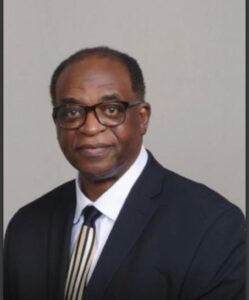
Isaac Megbolugbe
May 27, 2026
Introduction
A seed is a living entity, but its true potential is entirely dependent on the conditions of the soil it inhabits. True legacy operates on this exact principle; merely honoring the past with monuments traps it in time, whereas rooting the core values of our ancestors in the present ensures they grow and multiply.
A seed is a living thing, possessing the inherent righteousness of potential. Yet, the act of sowing is never simply about the seed itself; it is profoundly about the conditions of the ground—the soil. Plants wither, die, and eventually become things of the past, dead and buried. This inevitable cycle is why we must actively search for the “seed” within a heritage or legacy, purposefully inhabiting it to keep that legacy alive and continually growing.
The Limitation of Static Reminders
A grand tree or a small tree can equally die or flourish. Similarly, a single life can be fruitful and accomplished, while another could be troubled and tragic. However, when a person passes away, that specific temporal life is gone, and the best we can do in physical terms is to mount a tomb. This is why ornaments and tombs built in honor of a departed life essentially curate a dead legacy. They mark the end, preserving the memory strictly as history rather than as an active, breathing force.
The Living Seed of Heritage
A living legacy transcends the physical grave because it passes on the essence of the life lived, ready to be planted in new soil. This concept is vividly illustrated through the lens of faith and lineage.
Consider a father who courageously converts from paganism to Christianity. Upon his conversion, he changes his name, making a bold, definitive declaration to serve the Lord alongside his entire household—mirroring the ancient resolve of Joshua. While the father may eventually pass away, the seed of his faith does not die. Instead, his descendants can inhabit that exact seed, using it to root their own lives and actions in Jesus Christ.
Concluding Thoughts
By taking the core elements of a spiritual heritage and planting them in the fertile soil of our own daily lives, we transform historical memories into active, breathing realities. This process shifts a legacy from a static monument into a living journey, anchoring us to a universal truth. Such is the essence of a living legacy: it makes the narrative of our faith consequentially generalizable and universally compelling, ensuring that the seeds sown by past generations continue to bear abundant fruit for those yet to come.
The Soil of Identity: Perceiving and Inhabiting the Living Seed
In Matthew 13, Jesus delivers the Parable of the Sower, a profound discourse on the mechanics of spiritual and personal growth. While the seed—the Word or the heritage of truth—remains constant, the harvest is entirely dictated by the soil. This soil represents the human heart, but more specifically, it represents the “truth identity” we choose to inhabit. How we perceive our origin and our purpose determines whether we are a graveyard for the past or a garden for the future.
The Perception of Heritage
Growth begins with how you perceive your heritage. If you view your history merely as a series of events to be memorialized, you create a hard path where the seed cannot penetrate. However, if you perceive your heritage as a living seed containing the DNA of divine purpose, you gain the ability to inhabit it. To inhabit a legacy is to move beyond observing it; it is to breathe life into ancestral values so they become the governing principles of your own generation.
The Conditions of the Heart
Jesus describes various soil conditions that represent identities unsuitable for flourishing:
In contrast, the “good soil” is an identity rooted in right perception. It is the heart that has been tilled by the realization that it was made for the seed. When you rightly perceive your identity in Christ, you soften the ground of your heart, creating an environment where truth can take root without resistance.
The Mandate to Search and Nurture
To ensure a legacy survives, one must actively search for the seed within their lineage. Like a father who leaves behind a declaration of faith, that “seed” must be found, embraced, and nurtured. You do not just inherit a legacy; you must receive it with intention. By protecting this seed from the “birds” of doubt and the “thorns” of distraction, you allow it to flourish into something uniquely powerful for your time.
The Flourishing Life
A life that is fruitful and accomplished is the direct result of a well-conditioned heart. When you inhabit your true identity, the legacy you carry ceases to be a static ornament of a dead past. Instead, it becomes a living, breathing force that produces a crop—thirty, sixty, or a hundredfold. By aligning your self-perception with the truth of the Living Lord, you ensure that the faith of the past becomes the flourishing reality of your present.
The Hindsight of Seventy Years: Discovering the Living Seed of Ancestral Faith
There is a profound clarity that arrives after seven decades of existence. It is a season where the raw materials of a long life—the triumphs, the tragedies, and the quiet transitions—can finally be processed, refined, and understood. For many, this reflection reveals a startling truth: the faith we thought we were building on our own was actually a seed planted long ago by those who came before us.
The Revelation of Hindsight
At 70 years of age, the benefit of hindsight acts as a spiritual lens. Once you begin to assess the fruits of your life, you may realize that the seed of faith in your parents’ lives is the same seed that has been working within you. What once seemed like personal effort or mere survival is revealed as the enduring presence of Christ, passed down through the lineage.
This realization changes everything. It bridges the gap between generations, showing that the “righteous thing”—the living seed—never truly died; it simply waited for the right soil and the right season to be fully recognized.
Life as Divine Intervention
When you process your history through the lens of this inherited faith, the narrative of your life shifts. Events that once felt like coincidences, luck, or even hardships are recontextualized as divine interventions.
By embracing this perspective, your entire biography is transformed from a series of random occurrences into a curated journey of God’s work. You begin to see that you were never walking alone; you were inhabiting a seed that was already rooted in the soil of your family’s devotion.
The Post-70 Witness: A Living Legacy
Entering the “70-plus” season is not a retirement from purpose, but a graduation into a life of living witness. At this stage, life is no longer about striving to become, but about testifying to what is. The life you live now is a conscious inhabitancy of Christ through the Holy Spirit.
This is the essence of a living legacy. By recognizing the faith of your parents and seeing its fruition in your own white-haired years, you validate the continuity of God’s promise. Your life becomes a bridge, proving that the seed sown in a previous generation is still vibrant, still growing, and still producing fruit. You are not just a keeper of a tomb; you are the evidence of a resurrection.
The Divine Echo: Transcribing God’s Story Through the Lens of Memoir
Writing a memoir or autobiography is often viewed as an act of personal reflection, but for the believer, it is a sacred mandate. It is a rigorous investigation into the echoes of the divine that have reverberated through decades of living. When we align our personal history with the patterns of revelation found in the Word of God, the act of writing transcends mere storytelling—it becomes a bridge between the eternal and the emerging generation.
Investigating the Pattern of Revelation
The Word of God provides the ultimate map for the human experience. It establishes patterns of wilderness and promised lands, of exile and return, and of death and resurrection. By holding our life experiences up to the light of Scripture, we begin to see that our “raw materials”—the struggles of middle age, the conversion of a father, or the quiet interventions of the Spirit—are not random.
They are specific instances of God’s ancient patterns being re-enacted in a contemporary life. Investigating these echoes allows the author to categorize their experiences not by chronological age, but by theological significance, identifying exactly where the Living Lord stepped into the narrative.
Translating the Eternal into the Contemporary
The greatest challenge of any generation is maintaining the relevance of faith without compromising its truth. An autobiography serves as a unique translation tool. It allows you to tell “God’s Story” using the specific language, culture, and technology of your own lived experience.
When a 70-year journey is documented with honesty, it provides a “proof of concept” for the next generation. They may struggle to connect with ancient texts in isolation, but they cannot easily dismiss a living witness that demonstrates how those same ancient truths navigated the complexities of the 20th and 21st centuries. Your life becomes the medium through which the character of God is made tangible and accessible.
A Transformative Legacy
A memoir written under this mandate does more than preserve a name; it enlivens a seed. By documenting the “divine encounters” discovered in hindsight, you offer the next generation a soil that is already tilled and ready for their own faith to take root.
This approach to life-writing is transformative because it shifts the focus from the “self” to the “Sower.” It reveals that while the person may eventually pass, the work of God in that person is a living, breathing legacy. It is a narrative of integrity that proves God is not a figure of the past, but a Living Lord who continues to write His story through the lives of those who inhabit His truth.
The Unified Life: A Journey from Justification to the Hope of Glory
The ultimate destination of the human experience is the realization of a unified self, existing within a unified reality. This is not a fragmented existence, split between the secular and the sacred, but a single, congruent life where the past, present, and future are held together by the person of Jesus Christ. By embracing this integrated reality, we move beyond a disjointed history into a transformative embodiment of faith that spans the entirety of our days.
The Foundation: Justification as the Root
Every living seed requires a definitive beginning. In the life of faith, this is justification—the moment of legal and spiritual alignment with God. For the author reflecting on a seventy-year journey, justification is the “seed” inherited and inhabited. It is the bedrock truth that provides the initial identity, shifting the narrative from a pagan past to a redirected future. This is the root that secures the soil of the heart.
The Process: Ongoing Sanctification as the Growth
If justification is the root, sanctification is the visible growth of the tree. It is the “ongoing” work of the Holy Spirit, processing the raw materials of daily life—the interventions, the trials, and the quiet revelations. In this stage, the self becomes congruent. The identity declared by the parent becomes the identity embodied by the child. Sanctification is the tilling of the soil, ensuring that the heart remains a receptive environment where the living seed can continue to flourish into old age.
The Horizon: Participatory Hope of Glorification
A unified reality must have a trajectory. The journey from the “post-70” perspective is characterized by the participatory hope of glorification. This is not a passive waiting for the end, but an active engagement with the eternal. It is the recognition that the life of Christ within us is a preview of the glory to come. As we document our memoirs and testify to God’s work, we are participating in the unfolding of a story that does not end at the tomb, but culminates in a final, glorious flourishing.
⚓ The Anchor of Narrative Integrity
The beauty of an integrated life lies in its narrative integrity. When justification, sanctification, and glorification are viewed as a single, continuous reality, the “unified self” emerges.
By weaving these theological truths into the language of our personal experience, we create a legacy that is both universally compelling and deeply personal. We prove that the seed of faith is not just an idea, but a living, breathing person—Jesus Christ—inhabiting the soil of our lives.
Concluding Remarks: From Monument to Multiplication
A tomb remembers. A seed multiplies.
The difference between a dead legacy and a living one is not the size of the monument, but the state of the soil. Monuments curate endings. Seeds demand inhabiting.
Legacy is not inherited. It is inhabited.
We do not receive a faith the way we receive an heirloom. We receive it the way soil receives a seed: by being broken open. The father’s conversion, Joshua’s declaration, the “righteous thing” in your parents’ lives — these are not trophies to polish. They are DNA to express. At seventy or at seventeen, the question is the same: Will you be a museum for what was, or a garden for what must be?
Entropy is the enemy. Hindsight is the plow.
Left alone, every heart hardens, every church cools, every story stalls. That is spiritual entropy. But seventy years of reflection is not nostalgia; it is agriculture. Hindsight tills. It reveals that what felt like your grit was actually His grace, what looked like coincidence was actually covenant. The post-70 witness does not retire — it testifies. It says: “The Seed never died. It just waited for me to see it.”
The soil is identity, and identity is Christ.
Matthew 13 makes it plain: the harvest never exceeds the honesty of the soil. Path, rocks, thorns — these are identities we choose when we let the world name us. Good soil is the heart that accepts one name: “in Christ.” Justification roots us. Sanctification grows us. Glorification will complete us. That is the Unified Life — no split between Sunday and Monday, between autobiography and theology, between ancestry and destiny.
Memoir is mission.
When we transcribe God’s story through our own, we do more than record. We translate. Ancient patterns become contemporary proof. The next generation may not read Leviticus, but they will read your life. If your story shows the Living Lord intervening in boardrooms and hospital beds, in conversions and close calls, then your memoir becomes pre-tilled soil for their faith. You turn your “raw materials” into revelatory material.
The harvest is not personal. It is generational.
“Thirty, sixty, hundredfold” — that is not self-help math. That is covenant math. The fruit is never just for the branch. The seed the father planted becomes the shade the grandchild rests under. The declaration in one household becomes the default in another. This is how Babylon is outlasted: not by louder monuments, but by living fields.
The anchor holds:
Justification planted you.
Sanctification is processing you.
Glorification will perfect you.
So tend the soil. Inhabit the Seed. Write the witness.
Because when the Living Lord is the Sower, no life is buried. It is sown.
And what is sown in weakness is raised in power.
What is sown in one generation is reaped in the next.
That is the essence of a living legacy: Christ in you, the hope of glory — not on a tomb, but in a tree, bearing fruit that will not see decay.
The story isn’t over. It’s just rooting deeper.
Isaac Megbolugbe, Director of GIVA Ministries International. He is a recipient of Albert Nelson Marquis Lifetime Achievement Award in business and academia in the United States of America. He is retired professor at Johns Hopkins University, Former Vice President at Fannie Mae, Former Practice Leader at PricewaterhouseCoopers, and a Fellow of the Royal Institution of Chartered Surveyors. He is resident in the United States of America.
