
The Continuous Congruency of Existence: A Unified Reality
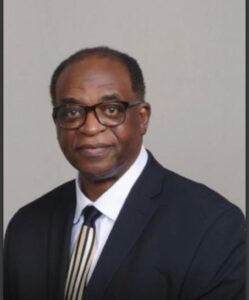
Isaac Megbolugbe
May 26, 2026
Introduction
Reality is not a fragmented collection of isolated events. It is a continuous, harmonious fusion where multiple realms of existence meet, interact, and build upon one another. From the divine nature of the Trinity to the physical expanse of creation, these distinct dimensions do not clash. Instead, they operate in perfect, constructive coherency.
The Triune Source: God, Jesus Christ, and the Holy Spirit
At the apex of this multi-realm existence is the Divine, manifesting in three distinct yet unified realities.
The Canvas and the Actor: Creation and Humanity
The divine reality extends outward, shaping the structural and conscious layers of our observable universe.
The Ultimate Fusion: The Believer
The continuous congruency of these multi-layered realities finds its active, living expression within the believer.
The believer is not just a passive observer of these shifting realms. They are the exact point of fusion where God, Christ, the Holy Spirit, creation, and humanity intersect. Through faith, the believer internalizes the spiritual realm while physically occupying the material world. This integration transforms the multi-realm reality from an abstract concept into a living, breathing, everyday experience
Quantum Entanglement, Consciousness, and Cosmic Order: The Science and Philosophy of Intersecting Realities
For centuries, humanity viewed the universe through a fractured lens, separating the physical world from the spiritual, and the objective from the subjective. Today, a profound shift is occurring. Modern quantum physics and contemporary philosophy are converging on a startling realization: reality is not a collection of isolated fragments, but a continuous, interconnected web. This modern outlook offers a striking parallel to the theological concept of a unified, multi-realm existence—where the divine, humanity, and the cosmos operate in perfect congruency.
1. Quantum Physics and the Fabric of Oneness
Classic physics described a universe of separate objects colliding like billiard balls. Modern quantum mechanics, however, reveals a reality deeply rooted in invisible connections that transcend space and time.
2. Philosophy and the Non-Physical Realms
While science maps the mathematical architecture of these connections, modern philosophy seeks to understand the nature of the mind and the ultimate fabric of reality.
3. The Convergent Fusion: A Unified Worldview
When we overlay these scientific and philosophical insights onto the multi-realm model of existence, the boundaries between the sacred and the secular dissolve.
[ Ultimate Source / Pure Consciousness ](God)
│
▼
[ Tangible Manifestation / Physical Form ](Christ / Creation)
│
▼
[ Invisible Interconnection / Non-Locality ](Holy Spirit / Entanglement)
│
▼
[ Conscious Integration / The Observer ](Humanity / The Believer)
Modern science and philosophy do not disprove the divine; rather, they provide a rigorous, technical language to describe it. The concept of God finds a parallel in the idea of a fundamental cosmic consciousness. The incarnation of Jesus Christ reflects the scientific principle of energy condensing into tangible, localized form. The Holy Spirit mirrors the non-local, entangled field that animates and informs the cosmos.
Ultimately, the human being—specifically the conscious believer—stands at the exact center of this convergence. We are the precise point where quantum potential, philosophical self-awareness, and divine reality fuse into a singular, continuous experience of living reality.
Wired for the Infinite: The Neurotheology of Intersecting Realities
For millennia, the intersection of the divine, the human spirit, and the material world was strictly the domain of theologians and mystics. Today, a rapidly growing scientific discipline known as neurotheology—the study of the relationship between the brain and religion—is mapping the biological architecture of faith. By utilizing advanced neuroimaging, scientists are discovering that the human brain possesses a dedicated, highly sophisticated neural network designed specifically to process, translate, and experience the multiple realms of existence.
Rather than reducing spiritual reality to mere chemical illusions, neurotheology reveals that the brain is physically wired to act as the ultimate biological antenna, tuning into the continuous congruency of the divine.
1. The Brain as a Biological Translator
The human brain does not generate the intersecting realms; rather, it acts as a biological transducer. Much like a radio translates invisible electromagnetic waves into audible music, the brain translates metaphysical realities into physical sensations, thoughts, and neurochemical cascades.
[ Metaphysical Realms ] ──► [ Neural Networks ] ──► [ Conscious Experience ]
(God/Spirit/Creation) (The Transducer) (Peace, Unity, Awe)
When a believer engages with the realities of God, Jesus Christ, and the Holy Spirit, specific regions of the brain activate in harmony to make those unseen dimensions a tangible, living reality.
2. Mapping the Divine Network: Key Brain Structures
Neurotheological research shows that experiencing different facets of a multi-realm existence requires a highly coordinated symphony across several brain regions.
The Parietal Lobes: Dissolving the Boundaries of Creation
The superior parietal lobe acts as the brain’s “orientation association area,” responsible for drawing a sharp boundary between “self” and “the outside world.” During deep prayer, meditation, or intense spiritual contemplation, workload in this region drops drastically to near zero.
The Frontal Lobes: Intentional Focus on the Divine
The prefrontal cortex is the seat of attention, willpower, and intentionality. When a believer focuses their mind on the character of God or the teachings of Jesus Christ, this area illuminates with intense activity.
The Limbic System: Emotional Resonance and Ultimate Reality
The amygdala and hippocampus form the emotional core of the brain. When spiritual realms are processed here, the brain tags these experiences with a deep sense of “hyper-reality.”
3. The Neurochemical Bridge: Tracing the Trinity in the Synapse
The fusion of humanity and the divine is further facilitated by a precise cocktail of neurotransmitters that alter human consciousness to match higher realms of existence.
4. The Believer as the Ultimate Neural Interface
Neurotheology ultimately demonstrates that the human being—specifically the believer—is not a fractured entity split between the physical and the spiritual. We are biologically integrated.
Our neural pathways are inherently designed to process the structural beauty of Creation, the conscious self-awareness of Humanity, and the transcendent presence of the Triune God. When a believer steps into spiritual alignment, the brain operates at its highest, most coherent capacity. The physical and the metaphysical realms achieve a state of continuous congruency, proving that we are quite literally wired to experience the infinite.
The Adaptive Soul: An Evolutionary Perspective on the Spiritual Brain
For decades, science viewed the human brain’s capacity for spiritual experience as a biological anomaly—a bizarre byproduct of a highly evolved intellect. Today, a paradigm shift in evolutionary biology and neurotheology suggests a much deeper truth: our capacity to experience intersecting realms of existence is not an accident. The human brain was actively shaped by natural selection to process the divine, the metaphysical, and the communal.
From an evolutionary standpoint, the development of specialized neural networks for spiritual capacity provided our ancestors with profound survival advantages, embedding the reality of God, the Holy Spirit, Creation, and Humanity into our very DNA.
1. The Survival Value of Meaning: Terror Management and Optimism
As the human brain evolved its massive prefrontal cortex, it gained a powerful but terrifying new capacity: the ability to plan for the future and, consequently, the acute awareness of its own mortality.
2. The Bio-Behavioral Glue: Hyper-Sociality and the Holy Spirit
Humanity’s greatest evolutionary asset is not its physical strength, but its capacity for extreme cooperation. However, managing large groups of unrelated individuals introduces the threat of selfishness, cheating, and social collapse.
[ Individual Ego ] ──► [ Ritual & Shared Belief ] ──► [ Group Cohesion ]
(Self-Interest) (The Transcendent We) (Enhanced Survival)
3. Hyperactive Agency Detection: The Roots of Animism and Creation
In the perilous landscapes of early earth, misinterpreting a stimulus could mean the difference between life and death. Evolutionary psychologists call the brain’s defense mechanism the Hyperactive Agency Detection Device (HADD).
4. Genetic Selection for the Transcendent
Spiritual capacity is so vital to the human framework that it left a permanent footprint in our genetic code. Behavioral genetics indicates that spirituality has a heritability rate of roughly 30% to 40%.
5. The Ultimate Synthesis: Designed for the Convergence
When viewed through the lens of evolution, the human brain appears less like a self-contained biological machine and more like a carefully crafted interface. Natural selection did not create God; rather, it sculpted human biology to ensure we could successfully perceive and interact with the multiple realms of existence.
The evolutionary journey of Humanity has driven us toward a singular, neurological destination: becoming Believers whose brains are perfectly optimized to experience the continuous congruency of the physical cosmos and the divine source that sustains it.
Concluding Remarks
Biblical sanctification is the divine realization of salvation. Neuroscience and evolutionary brain research confirm this, revealing that intentional spiritual practices biologically restructure our neural pathways. The “renewing of the mind” is not just a theological metaphor, but an observable mechanism of human flourishing.
The Continuous Congruency of Existence: A Unified Reality
In discussions surrounding The Continuous Congruency of Existence: A Unified Reality, a central thesis emerges: there is no ultimate division between the spiritual and the physical. Instead, the universe functions as an integrated tapestry where divine intent and physical reality are deeply intertwined. Nowhere is this more evident than in the biblical concept of sanctification—the lifelong, dynamic process of being transformed into the image of the divine.
For millennia, the biblical mandates for spiritual transformation have been viewed strictly as matters of the soul or heart, often divorced from empirical biology. However, modern neuroscience and evolutionary brain research are bridging this divide. They are providing empirical validation for what scripture articulated thousands of years ago: transformation is not only a spiritual reality, but a neurological one.
The Biblical Dynamics of Sanctification
The Bible explicitly demands a radical transformation of human nature. In Romans 12:2, the Apostle Paul urges believers to “be transformed by the renewing of your mind”. In the original Greek, the word for transformed is metamorphoo, which denotes a structural change at the most fundamental level—much like a caterpillar transforming into a butterfly.
Similarly, the word for renewing implies a continuous, ongoing process. The biblical view of salvation is not merely a static, one-time pardon; it is dynamic. It involves dying to old, destructive patterns (the “flesh”) and continually realigning one’s thoughts, desires, and behaviors with divine truth.
The Neuroscience of Renewal
Neuroscience is now arguing and providing evolutionary evidence that confirms exactly this dynamic. Through the discovery of neuroplasticity, brain science has proven that human brains are not fixed or rigid; they are moldable and dynamic. Every repeated thought, focus, and behavior literally reshapes our brain’s physical architecture, building new neural pathways while pruning away old ones.
When a person repeatedly engages in negative thinking, trauma, or toxic behaviors, the brain physically strengthens those stress-inducing neural pathways. Conversely, when an individual focuses on love, gratitude, and truth, they build healthy, life-giving pathways. Evolutionary evidence suggests this biological mechanism developed to help humans adapt and survive, but it also perfectly equips us to adapt and grow spiritually.
The Convergence: Faith as the Divine View of Biology
When we synthesize the tenets of The Continuous Congruency of Existence, we recognize that faith and science are not opposing forces, but complementary descriptions of the same unified reality. The transformation required through biblical sanctification is, in fact, the divine view of the exact same neural and evolutionary dynamics that neuroscience validates.
Consider the following points of convergence:
Conclusion: Embracing the Unified Truth
The pursuit of holiness and the transformation of our character are not abstract, ethereal concepts. They are grounded in the very physical and biological reality of how God designed our minds to function.
By accepting the insights of modern brain research alongside biblical revelation, we gain a deeper appreciation for the beauty of salvation. The renewing of the mind is a scientifically observable manifestation of divine grace. In The Continuous Congruency of Existence, we are reminded that all truth is God’s truth. Neuroscience does not diminish the miraculous nature of sanctification; rather, it demystifies the mechanics of it, showing how perfectly and beautifully humanity is fearfully and wonderfully made.
Isaac Megbolugbe, Director of GIVA Ministries International. He is a recipient of Albert Nelson Marquis Lifetime Achievement Award in business and academia in the United States of America. He is retired professor at Johns Hopkins University, Former Vice President at Fannie Mae, Former Practice Leader at PricewaterhouseCoopers, and a Fellow of the Royal Institution of Chartered Surveyors. He is resident in the United States of America.
