From Eternity to the Temporal Branch: Mapping the Architecture of Future Grace
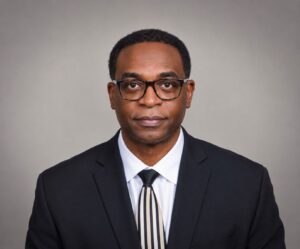
Isaac Megbolugbe
August 2026
Introduction
How can a time-bound human being live a life of stable faith, enduring peace, and genuine holiness in a world defined by constant change and personal struggle? The answer does not lie within the limits of human willpower, nor does it depend on our ability to manage our own spiritual growth. Instead, it requires a radical shift in perspective—moving away from our fluctuating human experiences and anchoring our minds in the unchanging, eternal nature of God.
This article traces a deliberate journey from the timeless mind of the Creator to the daily reality of the believer. By exploring the deep structural framework of divine grace, we examine how God’s eternal design systematically dismantles our deepest personal struggles and redefines our human responsibility.
The exploration unfolds across five key movements:
1. The Nature of Future Grace: We begin by redefining grace not merely as a past pardon, but as God’s active, moment-by-moment power. Drawing from foundational theological insights, we look at how trusting in God’s daily promises breaks the power of persistent sins like anxiety, pride, and greed.
2. The View from Eternity: We then shift our vantage point entirely to God’s perspective. Here, we see that God’s attributes and His architecture of creation, redemption, and restoration do not react to time; they exist eternally with Him. From this view, uncertainties disappear, and promises like Romans 8:28 become cosmic, unbreakable certainties.
3. The Power of Biblical Metaphors: To ground these profound realities, we analyze the organic imagery of Scripture. By examining the metaphors of the Vine and the Branches, the Potter and the Clay, and the Building and the Foundation, we discover how a timeless God practically relates to time-bound people.
4. Breaking Personal Chains: Next, we apply these divine models directly to the human heart. We explore how viewing ourselves as branches or clay provides a practical, psychological, and spiritual roadmap to conquer modern struggles like burnout, insecurity, control issues, and performance fatigue.
5. The Anchored Strive: Finally, we reconcile divine sovereignty with human effort. We conclude by exploring how knowing God’s perfection does not make us perfect overnight, but—as the Apostle Paul demonstrated—it frees us to press boldly toward the benchmark, confident that God’s future grace will perfect our weaknesses and secure our ultimate restoration.
Through this comprehensive framework, we discover that human responsibility is never about sustaining God’s grand design. It is about learning to rest, abide, and walk within an unshakeable eternal reality.
Chapter 1: The Foundations of Future Grace
Grace is not just a past pardon for sin. It is God’s active, ongoing power for every moment of life. Believers walk in true freedom when they trust God’s promises for tomorrow, next year, and eternity. This is the reality of living by faith in Future Grace, which provides God’s mercy, provision, and wisdom—everything needed—to accomplish His good plans.
The Dynamics of Divine Provision
• Present Power: Grace gives mercy, help, and wisdom right when people need it most today.
• Moment Trust: Following Jesus means trusting that God keeps His word every single day.
• Breaking Sin: Cherishing God’s promises breaks the power of old sins like worry, greed, anger, and pride.
• Deep Joy: Lasting peace and hope come from knowing God will always care for His people.
God’s Eternal Framework
• No Time Limits: God does not live inside past, present, or future. He is fully eternal.
• Divine Logistics: God’s plan relies on His own nature, not human strength or effort.
• Creation and Redemption: The structure of grace stands firm because of what God built and redeemed.
Holiness as Fruit
• The Vine and Branches: Believers are branches connected to Jesus, who is the True Vine.
• The Vine Dresser: God tends to His people like a careful worker in a garden.
• Spirit-Led Growth: Good actions and true holiness grow naturally from the Holy Spirit, not from human pride.
Chapter 2: The View from Eternity
Human experience is a landscape of shifting emotions, lingering doubts, and temporal limitations. When theology is viewed entirely through the lens of human experience, the operations of God can appear unpredictable or confusing. However, when the vantage point shifts to the nature of God Himself, these uncertainties vanish. God does not change, because He is eternal. His purposes do not react to time; time unfolds within His purposes.
The Timeless Blueprint: Creation, Redemption, and Restoration
From the perspective of the Creator, the divine plan is not a series of emergency reactions to human failure. It is an eternally existent reality.
• Static Perfection: God’s attributes—His wisdom, power, love, and justice—do not fluctuate, grow, or diminish. They exist in perfect, eternal plenitude.
• The Eternal Architecture: The grand narrative of creation, redemption, and restoration is not being drafted in real-time. It co-exists eternally with God’s very nature.
• The Sovereign Logistics: The provision of grace, the victory of the cross, and the final renewal of all things are structurally absolute. They are fixed realities in the divine mind, completely independent of human performance.
• The Limit of Human Experience: How humanity temporally experiences God’s design—whether through moments of trial, doubt, or breakthrough—does not define or alter the reality of God’s ultimate will.
The Sovereign Guarantee of Romans 8:28
Within this eternal framework, Romans 8:28 ceases to be a mere sentiment of comfort and becomes a cosmic certainty. The declaration that “all things work together for good to those who love God” is an architectural necessity built into creation.
• Built-In Consequences: God has engineered structural consequences into the fabric of reality. Just as physical laws ensure order in the material universe, divine decrees ensure moral order and ultimate accountability.
• The Mechanism of Good: Because God is eternal, He does not scramble to fix broken pieces. He has already structured reality so that even temporal suffering, human failure, and cosmic brokenness are bound by consequences that ultimately serve His restorative purposes.
• Guaranteed Alignment: Every event in time is forcefully funneled toward the final destinationthat God has already established: the absolute restoration of His creation.
The Reality of Human Response: Alignment, Not Achievement
Stating things from God’s perspective completely redefines what is required of humanity. It shifts the burden of spiritual life from self-willed achievement to humble alignment.
• The Illusion of Human Support: Human effort does not sustain the architecture of grace. Believers do not uphold the Vine; the Vine holds them.
• The Response of Abiding: Knowing that the future is already secured by an eternal Decree transforms human responsibility. Faith is no longer a frantic struggle to please a changing Deity, but a peaceful resting in an unshakeable Reality.
• Accountability as Mercy: The built-in consequences of existence provide a clear boundary line. They protect humanity from the chaos of lawlessness and constantly point the broken branch back to the True Vine.
• Fruit of the Spirit: True holiness is stripped of human pride. It is recognized purely as the natural, inevitable overflow of God’s eternal life flowing through temporal vessels.
Chapter 3: The Eternal Sovereign and the Temporal Branch
Human choices matter deeply because they are anchored in a God who exists outside of time. If God were bound by time, His future grace would be as uncertain as tomorrow’s weather. Because He is eternal, human responsibility becomes a meaningful response to His unshakeable reality, rather than a frantic effort to secure our own salvation.
The Timeless Anchor of Temporal Choices
• Unchanging Reality: God sees the past, present, and future as one simultaneous reality.
• Stable Promises: Future grace is certain because an eternal God has already guaranteed it.
• Meaningful Actions: Human choices carry eternal weight precisely because they respond to a timeless Creator.
• Freedom from Anxiety: Believers obey not to change God’s mind, but because His mind is already made up in love.
The Logistics of Grace and Human Response
• Initiated by God: The structure of redemption depends entirely on God’s eternal design.
• Sustained by the Spirit: Human efforts toward holiness are the direct result of the Holy Spirit’s ongoing work.
• The Duty of Abiding: The primary human responsibility is to abide in Christ, the True Vine.
• Fruit, Not Works: Good works do not earn grace; they are the natural evidence of being connected to the Vine.
Chapter 4: The Unshakable Blueprints: Clarifying Election and Glorification
When viewed from a human, time-bound perspective, doctrines like election and glorification can spark fierce debate and confusion. Election can feel arbitrary, and glorification can seem like a distant, uncertain wish. However, shifting to the perspective of an eternal God—where past, present, and future coexist in a single, timeless reality—shatters these illusions. From the vantage point of eternity, these doctrines are not chronological checkpoints, but fixed pillars of an unbreakable divine architecture.
Election: Chosen Before the Foundations of Time
• Outside the Timeline: God does not look down the corridors of time to see who will choose Him; He establishes His choice outside of time altogether.
• Stripped of Human Merit: Election cannot be earned by human effort, because the choice was finalized before human time even began.
• The Anchor of Security: A believer’s standing is completely secure because it is rooted in an eternal decree, making it entirely immune to the shifting failures of temporal life.
• An Act of Love, Not Arbitrariness: Election is the timeless expression of God’s character, ensuring that redemption is a guaranteed rescue mission rather than a cosmic gamble.
Glorification: A Finished Reality in the Divine Mind
• Already Completed: While believers experience glorification as a future event, to the eternal God, the final, perfected state of His people is already an accomplished fact.
• The Golden Chain: Romans 8:30 speaks of glorification in the past tense (“those he justified, he also glorified”); in eternity, the entire process of salvation is a single, unified reality.
• An End to Performance Anxiety: Believers do not strive to achieve perfection to be saved; they walk through time toward a state of glory that God has already structurally secured for them.
• Hope Amid Decay: Physical suffering and aging are recognized as temporary illusions of a passing timeline, easily eclipsed by the unchanging reality of eternal renewal.
The Harmony of Sovereignty and Responsibility
• A Response, Not an Initiative: Human faith and obedience do not trigger God’s favor; they are the temporal echoes of His eternal choice.
• The Catalyst for Holiness: Realizing that your final glorification is certain does not lead to laziness; it provides the deep peace and gratitude that fuel true, spirit-led obedience.
• Living from Victory: Believers do not fight for victory over sin; they live from a victory that the eternal God has already established in the architecture of His universe.
Chapter 5: Rooted in the Eternal: Biblical Metaphors
The Bible uses vivid, organic images to explain how a timeless God interacts with time-bound humans. These metaphors show that human responsibility is never about self-reliance. Instead, it is about staying connected to the eternal source of life, power, and transformation.
The Vine and the Branches (John 15)
• The Source: Jesus is the True Vine, holding all the life, nutrients, and power.
• The Caretaker: God the Father is the Vine Dresser, pruning and tending the plant.
• The Responsibility: The branch cannot produce fruit by itself; its sole duty is to abide in the Vine.
• The Outcome: Righteousness and obedience are the natural fruit produced by the Holy Spirit’s flow.
The Potter and the Clay (Isaiah 64 / Romans 9)
• The Sovereign Creator: God is the Potter, shaping history and individual lives according to His eternal plan.
• The Yielded Vessel: Humans are the clay, completely dependent on the Maker’s hands for shape and purpose.
• The Responsibility: The clay must yield to the Potter’s touch rather than resisting His design.
• The Outcome: A life beautifully formed to fulfill God’s good intentions and carry His grace to the world.
The Building and the Foundation (1 Corinthians 3 / Ephesians 2)
• The Unshaken Base: Jesus Christ is the firm foundation, set in place before the creation of the world.
• The Living Stones: Believers are individual stones built together into a holy temple.
• The Responsibility: Believers must build carefully upon the foundation using lasting materials like faith and truth.
• The Outcome: A structurally sound life that withstands storms because it rests on an eternal structure. [1]
Chapter 6: Breaking Personal Chains: Application to Daily Struggles
The metaphors of scripture are not just abstract pictures; they are practical tools for mental and spiritual freedom. By aligning our self-perception with these divine models, we can systematically dismantle the chronic anxieties, pride, and hurts that disrupt our daily peace.
Conquering Anxiety and Burnout (The Vine and the Branches)
• The Burden Removed: Branches do not strive to pump life into themselves; they simply receive it.
• Ending Performance Fatigue: Your worth and survival do not depend on your independent output or hustle.
• Resting in the Flow: Anxiety breaks when you realize the Vine carries the weight of producing the fruit.
• Focusing on Connection: Your single daily task is to stay closely attached to Jesus through prayer and trust.
Overcoming Control Issues and Shame (The Potter and the Clay)
• Surrendering the Blueprint: Frustration dies when you stop demanding to be the architect of your own life.
• Healing from Failure: Broken clay is never thrown away; the Potter simply molds it into something new.
• Silencing Self-Criticism: You can release the shame of your flaws by trusting the ongoing work of the Artisan.
• Accepting Divine Pace: Trusting the Pottermeans accepting that shaping a beautiful life takes time and pressure.
Defeating Insecurity and Inadequacy (The Building and the Foundation)
• An Unshakable Identity: Your emotional stability rests on the eternal Foundation, not your shifting feelings.
• Weathering Life’s Storms: When crises hit, your structural integrity is guaranteed by the bedrock beneath you.
• Value by Association: You belong in God’s house; you are a chosen stone, placed with deliberate purpose.
• Release from Comparison: A building needs different types of stones; your unique placement is exactly where you belong.
Chapter 7: Concluding Remarks: The Anchored Strive
To view reality from the vantage point of eternity is to recognize that the ultimate spiritual architecture—Creation, Redemption, and Restoration—is already complete, perfect, and unshakeable in the mind of God. Yet, this cosmic certainty does not render human action meaningless. Instead, it provides the only stable foundation upon which human action can truly matter.
The Distinction Between Knowledge and Transformation
A critical distinction must be made between recognizing a divine benchmark and achieving it by human effort. Knowing that God is perfectly holy, just, and eternal does not automatically make a human being holy or perfect.
• The Limit of Information: Merely understanding the doctrines of grace, election, or glorification cannot bridge the gap between our flawed temporal experience and God’s eternal perfection.
• The Trap of Self-Reliance: When believers try to copy God’s holiness using their own willpower, they inevitably run into frustration, pride, or deep despair.
• The Purpose of the Benchmark: God’s perfect standards are not ladders for us to climb to reach Him. They are mirrors that show us our need for Him, and signs that point to the beauty of His eternal plan.
The Pauline Framework: Striving Toward the Goal
The Apostle Paul understood this tension perfectly. In his letter to the Philippians, he acknowledged that he had not already obtained perfection, but he declared, “I press on toward the goal for the prize of the upward call of God in Christ Jesus.”
• Active Response to Static Reality: Paul’s striving was not a frantic effort to earn salvation or build his own righteousness. It was an active, energetic response to a prize that had already been secured for him in eternity.
• Running from Victory: Believers do not run to win God’s love; they run because they have already been captured by it. Human responsibility is the temporal unfolding of an eternal destiny.
• The Freedom to Fail: Because the foundational architecture of redemption is secure, the believer’s daily stumbles do not ruin the final design. This reality removes the paralyzing fear of failure, freeing the individual to press forward with courage.
The Divine Complement: Perfecting Human Weakness
What accounts for the gap between a believer’s imperfect daily walk and God’s perfect standard? It is the ongoing, operational logistics of Future Grace.
• Strength in Weakness: God explicitly promises that His grace is sufficient and that His power is made perfect in human weakness. Our limitations are the very canvas upon which His eternal strength is displayed.
• The Guarantee of Completion: The work of sanctification is ultimately a divine project. As Paul also noted, He who began a good work in you will carry it on to completion until the day of Christ Jesus.
• The Ultimate Outcome: The final goal of human responsibility is not human self-glory, but the magnification of God’s character. When weak, temporal branches bear rich, beautiful fruit, the world is forced to look past the branch and give all praise to the Glorious Vine Dresser.
Final Summary: Living in the Anchored Reality
Human responsibility is never about sustaining God’s architecture; it is about resting in it and being shaped by it. We do not hold up the Vine; the Vine holds us up. By aligning our daily choices with God’s unchanging nature, we stop trying to manufacture holiness and start receiving it. We press onward toward the benchmark, confident that our weaknesses are covered by His mercy, our steps are guided by His wisdom, and our final restoration is an absolute certainty already established in eternity.
Isaac Megbolugbe, Director of GIVA Ministries International. He is a recipient of Albert Nelson Marquis Lifetime Achievement Award in business and academia in the United States of America. He is retired professor at Johns Hopkins University and a Fellow of the Royal Institution of Chartered Surveyors. He is resident in the United States of America

