
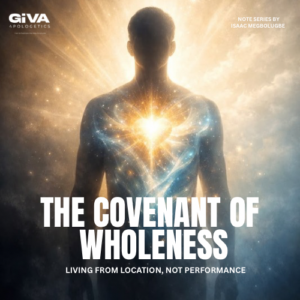
The Covenant of Wholeness: Living from Location, Not Performance
Isaac Megbolugbe
April 20, 2026
Introduction
There is a profound difference between a life spent striving for “wellness outcomes” and a life lived within the secure framework of a covenant of wellness. While secular society often views health and prosperity as rewards for rigorous performance, the biblical perspective suggests that true wellbeing is first a matter of location—where you are positioned—and second, a matter of foundation—who you are at the core of your being.
1. The Reality of Location: Positioning for the Divine Flow
In the traditional view, wellness is treated as a finish line to be reached through diet, exercise, and stress management. However, within a covenant framework, wellness is a territory you inhabit.
Location vs. Performance: Believers positioned on the “pathway of the divine flow” do not work for wellness; they share in the reality of wellness as a natural extension of their being. This spiritual wellness serves as a priority that influences every other dimension of health.
The Divine Flow: Just as a branch grafted into a healthy vine naturally receives nutrients, being “located” in God’s prosperity means participating in a flow that exists independently of human effort. Those located elsewhere may occasionally experience the outcomes of wellness through hard work, but they lack the consistent, foundational source provided by the covenant.
1. The Foundation of Being: Unified vs. Fragmented
The second distinction is structural. Wellness is not just about what you do, but whether your life is unified or fragmented.
The Unified Self: A unified self is whole and complete, where the “mind, body, and soul are cared for holistically” Ask The Scientists. This internal alignment creates a structure that naturally supports wellness. When you are unified, your actions, thoughts, and spiritual identity all point in the same direction.
The Fragmented Life: Many live lives “fragmented and scattered” by past experiences and the consequences of a performance-based lifestyle. This fragmentation creates structural leaks in a person’s wellbeing, where effort in one area (like physical health) is undermined by a lack of peace in another (like spiritual purpose).
Wholeness as a Pathway: True wellness is wholeness. It is the transformative journey from merely managing symptoms to embodying a state where vitality and emotional resilience converge because the foundation is solid.
1. A Distinct Reality: Covenant Living
Living in a covenant of wellness means moving from a lifestyle of “working and striving” to one of “being and flowing.”
Feature Performance-Based Wellness Covenant-Based Wellness
Primary Driver Personal effort and “striving” Divine location and “being”
Outcome Temporary or fluctuating health Constant flow of prosperity
Structure Often fragmented or scattered Unified, whole, and complete
Relationship Self-directed and self-reliant Relational and God-centered
Conclusion
Wellness is not merely the absence of illness, but the “presence of vitality” Global Wellness Institute that comes from a unified life. By shifting your focus from the performance of healthy habits to your position within God’s covenant, you move from a fragmented existence into a reality of wholeness. True wellbeing is found when we stop trying to manufacture wellness and instead start living from the location of our complete, unified self.
Professor Isaac Megbolugbe is the Director of GIVA Ministries International. He is resident in the United States of America.
