
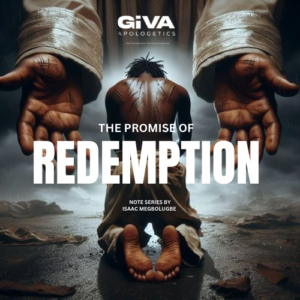
The Promise of Redemption
Isaac Megbolugbe
April 25, 2026
The story of the Bible begins with a catastrophic break in humanity’s relationship with God, but immediately following this fall, God pronounced a promise of redemption. Genesis 3:15, spoken to the serpent in the Garden of Eden after Adam and Eve sinned, stands as the foundation of the entire biblical narrative of salvation. Often referred to as the Protoevangelium(from the Greek for “first gospel”), this verse is God’s announcement that the enemy would not have the final victory.
The Context: A Promise Amidst Judgment
Following the temptation by the serpent, Adam and Eve disobeyed God, bringing sin and death into the world. However, even before pronouncing the full consequences of their actions, God offered a beacon of hope, telling the serpent (Satan) in Genesis 3:15:
“I will put enmity between you and the woman, and between your offspring and hers; he will crush your head, and you will strike his heel.” (Genesis 3:15)
This passage represents a crucial turning point:
The Proclamation of War: God declares “enmity” (hatred/war) between the serpent’s followers and the woman’s offspring, establishing an ongoing spiritual struggle between good and evil.
A Victory Already Planned: This promise was spoken before Adam and Eve were banished from the Garden, showing that God’s plan for redemption was not an afterthought, but a proactive response to human failure.
The First Gospel: It is called the “first gospel” because it contains the kernel of the entire good news: a redeemer will come to defeat Satan.
Key Components of the Protoevangelium
The “Seed” (Offspring) of the Woman: While “seed” often refers to many descendants, the text here points to a singular figure (“he” will crush) who would be born of a woman, a phrase that later theologians often link to the virgin birth of Jesus.
The Head and the Heel: The imagery describes a fatal blow to the serpent (“crush your head”) while the enemy only delivers a non-fatal injury (“strike his heel”).
The Promise of Victory: It promises a human savior who will defeat the serpent (Satan), undoing the damage of the fall.
Fulfillment in Jesus Christ
The Old Testament progressively reveals more about this “seed,” narrowing it down through the lines of Abraham, Judah, and David. The New Testament unequivocally identifies Jesus Christ as the fulfillment of this prophecy.
The Suffering Savior: Jesus’ death on the cross was the “strike to the heel.” He suffered at the hands of Satan, but this was necessary for redemption.
The Victorious Redeemer: By dying and rising again, Jesus crushed the head of the serpent, destroying the power of death and the devil (Hebrews 2:14).
The Final Triumph: While Christ won the decisive battle on the cross, the final culmination of this victory—the final banishment of evil—is shown in Revelation 20:10, where Satan is cast into the lake of fire, completing the promise of Genesis 3:15.
The Lasting Significance
Genesis 3:15 proves that from the very beginning of human history, God’s purpose was to restore the broken relationship with humanity. It is a declaration that sin will not have the final say and that a Redeemer would come to reverse the curse. For believers, this verse serves as a source of hope, reminding them that the battle against evil has already been won.
Isaac Megbolugbe, Director of GIVA Ministries International, retired professor at Johns Hopkins University, 2024 Marquis Organization’s Class of Top Executives in the United States of America and a Fellow of the Royal Institution of Chartered Surveyors. He is resident in the United States of America.
