
Guarding the Gateways: How What We See and Hear Shapes the Human Soul
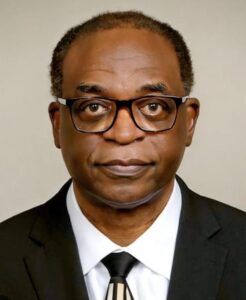
Isaac Megbolugbe
April 11, 2026
Introduction
The human soul is far more than an abstract concept; it is the vital, active, and governing agent of human existence. It acts as the internal operating system, responsible for managing the mind, will, emotions, and decisions that dictate the course of a person’s life. While the physical body needs sustenance to survive, the soul requires careful management of sensory input—what we see and hear—to maintain its health and fulfill its, and ultimately our, designated purpose.
The Soul as the Operating Capacity of Life
The soul is the “invisible software” of human existence that governs personality and directs our faculties. It is the center of consciousness, intellect, and desire, providing the ability to analyze, choose, and understand why we do what we do.
A “Life Operating System”: The soul acts as the “kernel of being,” directing habits, relationships, and emotional energy to ensure life flows toward a specific purpose.
Performing Activities: It governs the “needful activities” of daily life, transforming intangible values into tangible, actionable life choices.
Accountability to Divine Purpose
A crucial aspect of the soul is its immortal nature and its ultimate accountability to God. The life operated by the soul is not for selfish ends, but to achieve required outcomes based on God’s purposes.
Judgment and Stewardship: Every individual is accountable to God for the “stewardship” of their lives—how they used their time, talents, and opportunities.
Accountability for Actions: According to 1 Corinthians 3 and 2 Corinthians 5:10, individuals will stand before God to give an account of their works—whether they were “lasting” (valuable) or “worthless”.
The Goal of Maturity: The goal of life is to align the soul’s choices with God’s will, leading to a “well done, good and faithful servant” outcome, rather than enduring the “loss” of unproductive, self-centered living.
The Gateway of Soul Development
The health, capacity, and development of the soul are directly shaped by what is allowed to enter it through the “gateways” of the eyes and ears.
Eyes as the Lamp: Matthew 6:22-23 highlights that the eye is the lamp of the body, meaning that what we fix our eyes on fills our entire being with either light or darkness.
The Choice of Input: While people cannot always control the information that surrounds them, they have the authority—and responsibility—to choose what they pay attention to, listen to, or watch.
Garbage In, Garbage Out: Like a computer, the soul processes input. Allowing “darkness” (negative media, toxic conversations) to enter through the senses can corrupt the heart and twist one’s worldview.
Nurturing the Soul vs. Sustaining the Body
What we eat and drink impacts the physical body, but what we see and hear impacts the health and performance capacity of the soul.
The Danger of Neglect: A neglected soul can become weak, leading to a life that is chaotic and unaligned with divine purpose.
Protecting the Soul: A healthy soul—one that is guarded from negative input and filled with truth—brings life and “divine health” to the whole person.
Conclusion
The human soul is the active seat of governance for our lives, designed by God to operate under His purpose. By diligently managing the inputs of our lives—our sights and sounds—we exercise our authority to cultivate a healthy, purposeful soul that will be ready to give a positive account of its stewardship on earth.
The Human Soul: The Operating Capacity for Life’s Purpose
The human soul is often considered the essence of our being, the core of our identity, and the driving force behind our actions. But what exactly is the soul, and how does it impact our daily lives? In this article, we’ll explore the concept of the soul as the operating capacity for governing and performing life’s needful activities, and how our choices shape its health and performance.
The Soul’s Role in Life’s Purpose
The soul can be seen as the inner compass that guides us towards achieving our life’s purpose. It’s the capacity to make decisions, prioritize values, and pursue goals that align with our values and beliefs. Our soul’s operating capacity determines how effectively we navigate life’s challenges, build relationships, and make a meaningful impact.
The Gateway to the Soul: What We See and Hear
The soul is influenced by what we allow into our minds and hearts. Our eyes and ears are gateways to the soul, and what we see and hear shapes our thoughts, emotions, and actions. Just as what we eat and drink affect our physical body, what we see and hear affectthe health and performance capacity of our soul.
Choices and Consequences
We have the authority to choose what we see and hear, and these choices have consequences. Exposure to positivity, inspiration, and uplifting content can nourish our soul, while negativity, toxicity, and destructive influences can harm it. By being mindful of our media consumption, relationships, and surroundings, we can cultivate a healthy soul.
Accountability to God
For those who believe in a higher power, the soul’s operating capacity is also tied to accountability to God. Our choices, actions, and priorities will be accountable to God’s purposes for our life. This perspective adds a deeper sense of purpose and responsibility to our soul’s development.
Nourishing the Soul
So, how can we nourish our soul? Here are some strategies:
– Be intentional about what we see and hear: Choose uplifting content, surround ourselves with positive influences, and limit exposure to negativity.
– Prioritize soul-nourishing activities: Engage in prayer, meditation, journaling, or other practices that connect us to our inner selves and higher values.
– Cultivate gratitude and self-reflection: Regularly reflect on our thoughts, emotions, and actions, and express gratitude for life’s blessings.
By recognizing the soul as our operating capacity for life’s purpose, we can take intentional steps to nourish and strengthen it. By doing so, we’ll be better equipped to achieve our life’s required outcomes and fulfill our purpose.
Summary
– The human soul is the operating capacity for governing and performing life’s needful activities.
– Our choices, particularly what we see and hear, shape the soul’s health and performance.
– Nourishing the soul through intentional choices and practices can help us achieve our life’s purpose.
The Soul: The Internal Operating System of the Human Experience
In the modern era, we are quick to understand the importance of software. We know that even the most powerful hardware—a high-end computer or a sleek smartphone—is nothing more than a collection of metal and glass without an operating system to give it instructions. In the realm of human existence, the soul serves this exact function. It is the “invisible software” of our being, the governing capacity that directs our faculties and defines the trajectory of our lives.
The Center of Consciousness and Choice
The soul is not a passive passenger within the body; it is the active center of consciousness, intellect, and desire. It provides the unique human ability to analyze, choose, and understand the “why” behind our actions. While the body reacts to physical stimuli, the soul processes meaning. It is where our values are weighed and where our identity is forged. When we speak of “personality,” we are essentially describing the unique way an individual’s soul processes the world and expresses itself.
The “Life Operating System”
If the body is the hardware, the soul is the “kernel of being.” Just as a computer’s kernel manages the communication between software and hardware, the soul manages the flow of emotional energy and intellectual focus.
Directing Habits: Our daily routines are rarely the result of conscious physical effort alone; they are programmed into the soul. By governing our habits, the soul ensures that our lives move in a consistent direction.
Managing Relationships: The soul is the seat of empathy and connection. It dictates how we interact with others, how we resolve conflict, and how we distribute our emotional resources.
Defining Purpose: Without the soul’s governing capacity, human life would be a series of disconnected biological impulses. Instead, the soul synthesizes our experiences to ensure life flows toward a specific, intentional purpose.
Performing the “Needful Activities”
Beyond abstract thought, the soul is responsible for the “needful activities” of daily life. It acts as a bridge between the intangible and the tangible. Every significant achievement begins as an intangible value—such as integrity, ambition, or love—within the soul. The soul then performs the heavy lifting of transforming those values into actionable life choices.
Whether it is the discipline to finish a task, the courage to speak the truth, or the wisdom to manage resources, these are all outputs of the soul’s operating capacity. It governs the performance of our lives, ensuring that our internal convictions are manifested in our external reality.
Conclusion
Understanding the soul as our operating capacity shifts the way we view self-care and personal development. It suggests that the most important “upgrades” we can make are not external or physical, but internal. By nurturing the health and performance capacity of the soul, we ensure that the “software” of our lives is capable of achieving the high-level outcomes and divine purposes for which we were created.
The Eternal Audit: Understanding Our Accountability to Divine Purpose
While we often view our lives through the lens of personal preference or social success, there is a higher dimension of reality that governs our existence. Because the human soul is immortal, its actions carry weight far beyond the physical timeline of birth and death. The life operated by the soul is not an end in itself; it is a delegated assignment. To live with a healthy soul is to recognize that we are stewards of a life intended to achieve specific outcomes based on God’s divine purposes.
Life as Stewardship, Not Ownership
The fundamental shift in a purposeful life occurs when we stop viewing ourselves as owners and start seeing ourselves as stewards. Stewardship implies that the “resources” of our lives—our time, unique talents, and unfolding opportunities—have been entrusted to us by a higher authority.
Accountability to God is the natural byproduct of this relationship. Just as a manager must report on the growth of a company’s assets, every individual is called to give an account of how they invested the “capital” of their existence. This isn’t about mere moral perfection, but about whether we utilized what we were given to fulfill the intentions of the One who gave it.
The Final Review: Lasting vs. Worthless Works
The scriptures provide a sobering blueprint for this accountability. In 2 Corinthians 5:10, we are reminded that we must all appear before the judgment seat to receive what is due for things done while in the body. This is further clarified in 1 Corinthians 3, which describes a testing of our “works.”
In this divine audit, actions are categorized not just by their volume, but by their substance:
Lasting Works: These are actions aligned with God’s character and purposes. They are compared to gold, silver, and precious stones—materials that endure the “fire” of divine scrutiny.
Worthless Works: These are efforts driven by ego, selfishness, or temporary earthly gain. Described as wood, hay, or straw, they may look substantial in the moment, but they lack eternal value and are consumed when tested.
The Goal of Maturity: Alignment and Approval
The ultimate goal of a soul-led life is spiritual maturity. This maturity is defined by the degree to which our internal choices align with God’s external will. When the soul functions at its highest capacity, it filters every decision through the question: “Does this serve His purpose?”
The reward for such alignment is the ultimate commendation: “Well done, good and faithful servant.” This outcome represents a life that successfully translated its “operating capacity” into tangible kingdom results. Conversely, failing to align with this purpose results in a profound “loss”—not necessarily a loss of existence, but the tragedy of an unproductive, self-centered life that left its true potential untapped.
Conclusion
Accountability is not a burden; it is a mark of significance. It means that what you do with your soul matters to the Creator of the universe. By living with the “end in mind,” we can ensure that our soul’s governance leads to a legacy that is not only successful in time but significant in eternity.
Guardians of the Gateway: How Vision and Sound Shape the Soul
While we are often meticulous about the fuel we put into our physical bodies, we are frequently negligent regarding the “nutrients” we feed our inner selves. The health, capacity, and development of the soul are not random; they are directly shaped by what we allow to enter through the primary “gateways” of the eyes and ears. These sensory portals are the intake valves for the “invisible software” that runs our lives.
The Eye as the Lamp: Illuminating the Inner Man
The spiritual mechanics of sight are described profoundly in Matthew 6:22-23. Here, the eye is referred to as the “lamp of the body.” This metaphor suggests that the eye is not merely a lens for observing the world, but a conduit that transmits the nature of what it sees into the very core of our being.
If we fix our gaze on things that are pure, noble, and truthful, our entire “inner house” is filled with light. Conversely, if our focus is habitually set on darkness—bitterness, lust, or vanity—that darkness floods our internal world. What we “behold,” we eventually embody. The soul takes on the hue of its most frequent visual inputs.
The Authority of Choice: Mastering the Input
In a world saturated with digital noise and constant information, it is easy to feel like a passive victim of our environment. However, the soul possesses a critical “firewall”: the authority of choice. While we cannot always control every image or sound that crosses our path, we have the absolute responsibility to choose what we pay attention to.
To “pay” attention is to spend a limited currency. When we choose to linger on a toxic conversation or watch media that devalues human dignity, we are authorizing that content to influence our soul’s development. Exercising this authority means setting boundaries—deciding what stays on the screen of our minds and what is filtered out.
The “Garbage In, Garbage Out” Principle
The soul operates much like a high-powered computer processing complex algorithms. In the world of computing, the “GIGO” (Garbage In, Garbage Out) principle states that the quality of the output is determined by the quality of the input.
When we allow “darkness”—in the form of negative media, cynical worldview, or toxic speech—to enter through our senses, the soul’s “operating system” becomes corrupted. This corruption manifests as:
A Twisted Worldview: We begin to see the world through a lens of fear or hostility.
Diminished Performance: A soul cluttered with “garbage” lacks the clarity and peace necessary to perform the “needful activities” of a purposeful life.
Hardening of the Heart: Constant exposure to darkness desensitizes the soul to what is truly good and significant.
Conclusion: Cultivating a Healthy Soul
To maintain a high-performance soul, we must become intentional gatekeepers. By guarding what we see and hear, we ensure that our inner operating system remains clear, vibrant, and aligned with divine light. The health of your soul—and its ability to fulfill its eternal purpose—begins with what you choose to let through the gate today.
Beyond Bread and Water: Nurturing the Soul vs. Sustaining the Body
We often operate under the assumption that physical health is the primary metric of a well-lived life. We track our steps, count our calories, and monitor our hydration, understanding that what we put into our mouths directly impacts our physical vitality. However, a deeper reality exists: while food and drink sustain the body, the eyes and ears nurture the soul. True wellness requires a dual-track approach that recognizes the distinct “nutrients” required by our physical and spiritual halves.
Sensory Consumption: The Diet of the Soul
The body is a biological machine that requires tangible fuel to function. In contrast, the soul—the “operating system” of our existence—consumes information, images, and sounds. Just as a poor diet can lead to physical illness, a “sensory diet” of low-quality or toxic input can lead to a “sick” soul.
The Physical Impact: What we eat affects our energy levels, organ function, and longevity.
The Soul’s Impact: What we see and hear affects our internal peace, decision-making clarity, and performance capacity.
If you are filling your ears with gossip and your eyes with vanity, you are effectively feeding your soul “junk food.” It may provide a temporary rush of engagement, but it leaves the core of your being malnourished and sluggish.
The Danger of Neglect: A Weakened Operating System
One of the greatest risks to a purposeful life is soul neglect. Because the soul is invisible, its decline is often subtle. A neglected soul does not simply stop working; it becomes weak and susceptible to corruption.
The Chaos of Emptiness: Neglecting this vital part of ourselves can lead to feelings of disconnection and imbalance. Without intentional nourishment, the soul loses its governing power, leading to a life that feels chaotic, reactive, and disconnected from divine purpose.
Spiritual Orphaning: Research suggests that a lack of consistent spiritual practices can lead to “spiritual orphaning,” where an individual feels disconnected from their inner life and restorative power. This neglect often drives people toward external “quick fixes” like materialism or social media validation, which only exacerbate the internal emptiness.
Protecting the Soul: The Key to “Divine Health”
The most effective way to maintain a high-performance life is to become a vigilant guardian of your soul’s input. Protecting the soul is not about isolation, but about intentionality.
Filtering for Truth: A healthy soul is one that is guarded from negative input and consistently filled with truth. When the soul is saturated with wisdom and light, it acts as a “spiritual bulwark” against the pressures of life.
Radiating Life: A well-nurtured soul does more than just survive; it brings “divine health” to the whole person. Nurturing the spirit can lead to profound physical benefits, including reduced stress, boostedimmunity, and improved mental clarity.
Conclusion: A Holistic Stewardship
To achieve the outcomes for which we are accountable to God, we must move beyond mere physical maintenance. We must treat our sensory input with the same—if not more—seriousness as our physical diet. By feeding our souls on what is true, noble, and right, we ensure that our “internal software” remains strong, vibrant, and fully capable of governing a life of significance.
The Governing Soul: Exercising Authority for Eternal Impact
The human soul is not a passive passenger in our earthly journey; it is the active seat of governance for our entire lives. Designed by God with intentionality, it serves as the command center that directs our will, manages our emotions, and processes our thoughts to fulfill His specific purposes. To understand the soul is to understand the “invisible software” that determines whether we live lives of chaotic reaction or focused, divine stewardship.
A Design for Purpose
Our existence is a deliberate act of a loving Creator. God did not merely grant us life; He endowed our souls with the capacity to operate under His purpose. This means that every talent, relationship, and opportunity we encounter is a resource to be managed rather than a possession to be owned. When the soul is aligned with this divine “operating system,” life begins to flow toward the required outcomes God has set for us, moving beyond selfish ambition toward eternal significance.
Exercising Authority Over the Gateways
While God provides the purpose, He has given us the authority to manage the inputs. The soul’s health and performance capacity are directly tied to the primary gateways of our lives: our sights and sounds.
The Power of Sight: What we fix our eyes upon acts as a lamp, filling our inner world with either light or darkness.
The Stewardship of Attention: We have the responsibility to choose what we pay attention to. By diligently filtering what we see and hear, we protect the soul’s capacity from being corrupted by toxic information or negative media.
Cultivating a Healthy Soul
Cultivating a purposeful soul requires active discipline. Just as the body needs food, the soul requires the “nutrients” of truth and reflection. A soul that is well-guarded and regularly nourished with God’s Word develops the strength to remain steadfast amidst worldly pressures. This “spiritual mindset of order” prevents us from living chaotically and ensures our internal governance remains sharp.
The Accountable Steward
Ultimately, the performance of our soul is a matter of accountability. The Bible is clear that every individual will stand before God to give an account of their stewardship. This final “audit” will examine:
The Investment of Time and Talent:How we used the gifts entrusted to us.
The Quality of Our Works: Whether our actions were “lasting” (valuable) or “worthless” (unaligned with God’s will).
By living with the consciousness of this future account, we are empowered to make wiser choices today. Exercising our authority to guard our gateways ensures that when the time comes, we can present a soul that was found faithful, healthy, and fully matured in the service of God’s kingdom.
Conclusion
The soul is the engine of our destiny. By treating it as a sacred trust and managing its inputs with diligence, we align ourselves with the Creator’s design. We transition from being merely “alive” to being truly productive stewards, ready to hear the words: “Well done, good and faithful servant.
Isaac Megbolugbe, Director of GIVA Ministries International. He is a recipient of Albert Nelson Marquis Lifetime Achievement Award in business and academia in the United States of America. He is retired professor at Johns Hopkins University and a Fellow of the Royal Institution of Chartered Surveyors. He is resident in the United States of America.
